


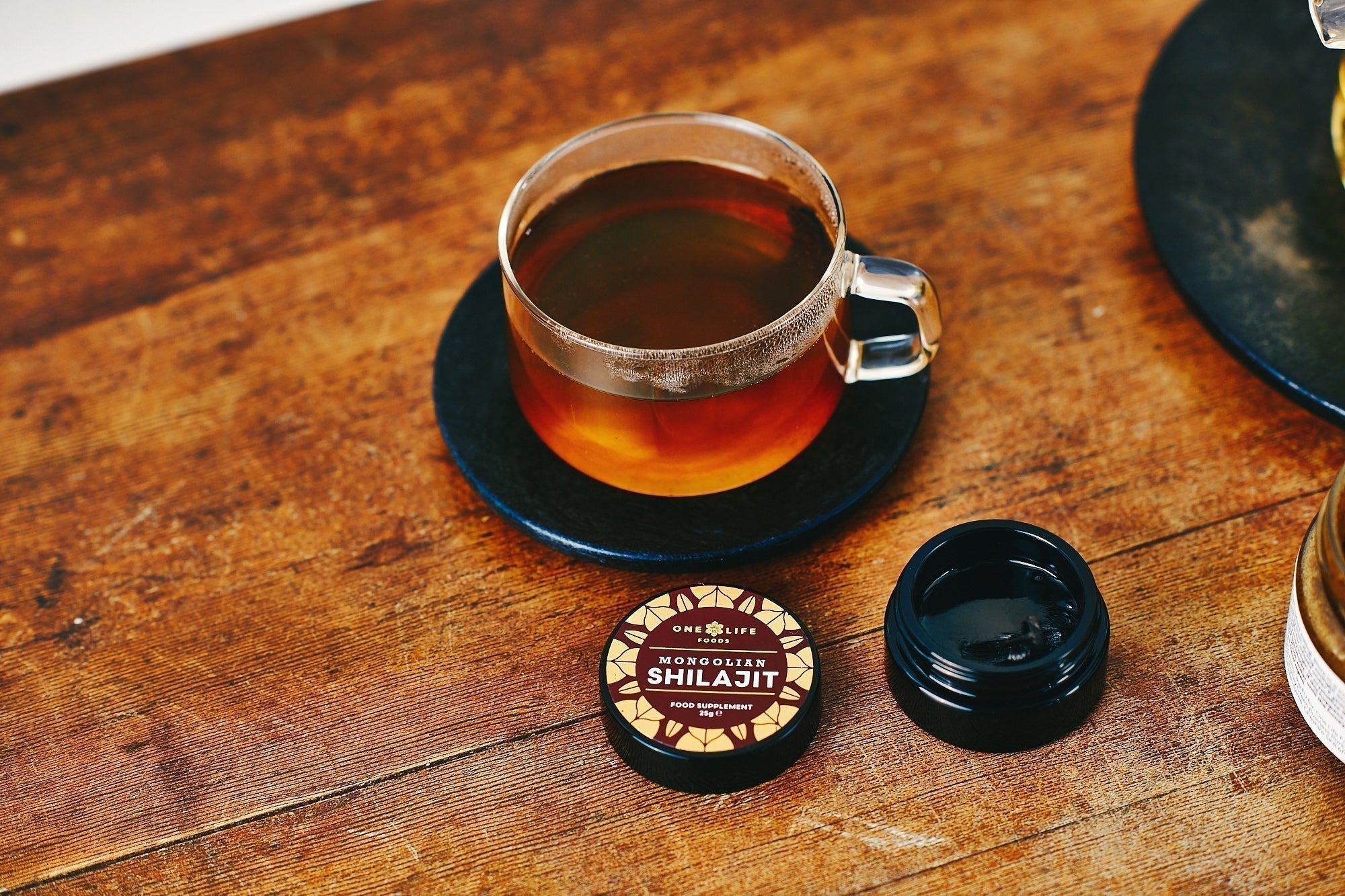
Shilajit has a marketing problem.
Search for it online and you’ll mostly find men talking about testosterone, gym performance and libido. You’d be forgiven for thinking the resin somehow stops working when a woman opens the jar.
It doesn’t.
The chemistry didn’t become male because the marketing did.
Shilajit is a complex organic-mineral matrix containing fulvic compounds, humic substances, trace elements and smaller organic components. These interact with biological systems involved in energy production, oxidative balance, connective tissue and mineral metabolism. None of these belong exclusively to men.
Women-specific human research has also started producing some genuinely interesting findings, particularly in relation to postmenopausal bone health and skin biology.
So, what are the potential benefits of Shilajit for women, and where does it realistically fit?
Can Women Take Shilajit?
Yes. Most healthy adult women can take purified, properly tested Shilajit.
The most relevant women-specific human research has examined:
-
bone mineral density after menopause
-
skin microperfusion
-
collagen and extracellular-matrix activity
-
biological markers associated with inflammation and oxidative stress
Its wider appeal comes from its potential to support cellular energy, physical resilience and connective-tissue health without behaving like a stimulant.
Shilajit isn’t oestrogen. It isn’t hormone replacement therapy, an iron treatment or a cure for fatigue.
It’s better understood as a long-term foundation supplement. It’s intended to support several interconnected systems rather than force one immediate outcome.
Women Don’t Need a “Female” Shilajit
There’s no separate female form of Shilajit.
Women don’t need pink packaging, a fertility promise or a sprinkle of cranberry powder to make the resin relevant.
What matters is whether the Shilajit has been:
-
correctly sourced
-
properly purified
-
independently tested
-
screened for contaminants
-
used consistently at a sensible amount
The starting material can vary considerably between mountain regions, but quality depends on much more than the name of the mountain printed on the label.
Our guide to how Shilajit works explains why its overall composition matters more than any single headline number.
What Does the Research on Shilajit for Women Actually Show?
The evidence is easier to understand when it’s divided into three areas.
Direct research in women includes studies examining postmenopausal bone health and skin biology.
Broader human research has explored fatigue resistance, muscular adaptation and connective-tissue markers. Some of this research included women, while other studies were conducted in men.
Mechanistic research looks at how compounds within Shilajit might interact with mitochondrial function, redox balance and mineral chemistry.
These areas shouldn’t be treated as equally conclusive, but together they create a far more useful picture than the usual list of generic “female wellness” claims.
Shilajit for Energy Without the Stimulant Hit
Energy is probably the most immediately relevant reason women become interested in Shilajit.
Daily energy demands rarely arrive one at a time. Work, training, family responsibilities, poor sleep, menstrual symptoms and changing hormones can all compete for the same physiological resources.
Shilajit doesn’t solve those pressures, but its potential value doesn’t depend on increasing testosterone.
The more interesting theory involves cellular energy.
Mitochondria convert nutrients into ATP, the usable energy that powers cellular activity. Compounds associated with Shilajit, including dibenzo-alpha-pyrones, have been studied in relation to mitochondrial and redox processes.
That doesn’t mean Shilajit behaves like caffeine or instantly creates energy.
A better way to think about it is this:
Caffeine pushes the nervous system. Shilajit is intended to support the systems producing and maintaining energy underneath it.
Human exercise research has also found that a purified Shilajit extract helped some participants retain more muscular strength following a fatiguing protocol after eight weeks of daily use.
That study wasn’t designed specifically around female physiology, so it shouldn’t be presented as definitive evidence for women. However, fatigue resistance and muscular energy aren’t male-only processes.
For a detailed look at this area, read our guide to Shilajit for exercise performance, fatigue and recovery.
Shilajit for Menopause and Bone Health
This is where the women-specific evidence becomes particularly interesting.
In a 48-week randomised, double-blind, placebo-controlled trial, 60 postmenopausal women aged 45 to 65 with osteopenia received either:
-
a placebo
-
250 mg of a standardised Shilajit extract daily
-
500 mg of the extract daily
Bone mineral density was measured at the lumbar spine and femoral neck.
Women receiving the placebo experienced a progressive reduction in bone mineral density. This decline was attenuated in both Shilajit groups, with the results showing a dose-dependent pattern.
The researchers also reported changes in markers associated with:
-
bone turnover
-
inflammation
-
oxidative stress
-
antioxidant status
That matters because the reduction in oestrogen after menopause can affect far more than hot flushes or mood. It also changes the environment in which bone is maintained and remodelled.
This doesn’t make Shilajit an osteoporosis treatment. It shouldn’t replace resistance training, adequate protein, calcium, vitamin D, prescribed medication or a conversation with your doctor.
It does, however, give Shilajit a far more credible role in women’s health than vague claims about “balancing hormones”.
The direct study wasn’t conducted in perimenopausal women, but it raises a worthwhile question. Could supporting oxidative balance, connective tissue and normal bone metabolism earlier in the transition be useful as part of a wider long-term routine?
That remains a hypothesis, but it’s a biologically coherent one.
Shilajit for Skin and Collagen Biology
Most supplement articles talk about “glowing skin” without explaining what that’s supposed to mean.
The research into Shilajit and skin is more specific.
In a 14-week placebo-controlled study, 45 healthy women aged 30 to 65 received either a placebo or one of two daily amounts of a standardised Shilajit extract.
At the higher studied amount, researchers reported improved skin microperfusion compared with placebo. Skin-biopsy analysis also identified changes in genes involved in:
-
blood-vessel development
-
endothelial-cell movement
-
extracellular-matrix organisation
-
collagen-related processes
The extracellular matrix is the structural network surrounding cells. Collagen forms an important part of that network in the skin, bone, tendons and other connective tissues.
This wasn’t a wrinkle trial, and it didn’t prove that Shilajit makes somebody look younger.
What it showed was arguably more interesting. Oral Shilajit appeared to influence biological pathways involved in skin circulation and structural maintenance.
That gives the usual “beauty from within” language some actual biology to work with.
It’s also a good example of why Shilajit shouldn’t be reduced to an antioxidant powder. Its different fractions may be interacting with several processes at once.
Does Shilajit Balance Female Hormones?
“Balancing hormones” sounds scientific, but it rarely tells you what is being measured.
Shilajit isn’t a source of oestrogen or progesterone, and it shouldn’t be presented as a direct hormonal treatment.
There’s also no good basis for claiming that it:
-
regulates menstrual cycles
-
treats polycystic ovary syndrome
-
restores fertility
-
corrects a diagnosed hormone disorder
-
replaces hormone replacement therapy
Its possible relationship with hormonal wellbeing is more indirect.
Energy availability, sleep, nutrition, training load, psychological stress and metabolic health can all affect how a woman feels across her cycle or during perimenopause. Supporting cellular energy or oxidative balance could theoretically help the body cope with periods of higher physiological demand.
That’s different from directly changing hormone concentrations.
It’s a more subtle claim, but it’s also a more useful one.
Will Shilajit Increase Testosterone in Women?
There’s no human evidence showing that Shilajit increases testosterone in women or causes masculinising effects.
A well-known Shilajit study reported changes in testosterone markers in healthy middle-aged men. Those results apply to the population studied. They don’t establish that women will have the same hormonal response.
Female endocrine physiology is regulated differently, and research conducted in men shouldn’t simply be copied and pasted onto women.
Women generally take Shilajit for its wider matrix, energy and resilience potential, not to increase testosterone.
Shilajit for Training and Recovery
Women who train regularly may be less interested in a dramatic pre-workout feeling and more interested in maintaining consistency.
That means being able to:
-
preserve training quality as fatigue builds
-
recover between demanding sessions
-
manage physical output alongside everyday stress
-
maintain connective-tissue health over time
Shilajit isn’t a replacement for carbohydrates, protein, hydration, sleep or appropriate programming. It also isn’t an acute performance booster.
Its potential role is further upstream.
Research into muscular fatigue, extracellular-matrix activity and collagen-related markers suggests it may be most relevant as a consistency supplement. In other words, it’s something used over weeks rather than swallowed ten minutes before a workout.
One small human study involving both men and women also found changes in skeletal-muscle genes associated with extracellular-matrix organisation after supplementation with a purified Shilajit extract.
That’s early-stage biology rather than proof of faster recovery, but it gives the recovery conversation a more credible direction.
What About Period Fatigue and Iron?
Some Shilajit contains measurable iron. The amount varies significantly with its geological origin and processing.
That doesn’t make Shilajit an iron supplement.
A normal serving of resin may provide only a small quantity of iron, and a laboratory mineral result doesn’t tell us how much of that iron will be absorbed. Iron still has to pass through the body’s regulated intestinal transport systems.
The claim that fulvic acid simply carries all minerals directly into cells is too simplistic. Humic and fulvic compounds may influence mineral solubility, binding and release during digestion, but that isn’t the same as guaranteed absorption.
You can explore the chemistry in our article on what the body actually absorbs from Shilajit.
Women experiencing persistent tiredness, breathlessness, weakness or heavy periods should speak to a healthcare professional and consider having iron and ferritin levels checked.
Shilajit may still form part of a wider energy routine, but it shouldn’t be used to guess at or treat an iron deficiency.
Can Shilajit Help With Stress or Mood?
Shilajit is sometimes described as an adaptogen, although that term is used so broadly that it can lose much of its meaning.
It isn’t a sedative and shouldn’t be marketed as an anxiety treatment.
Some women describe feeling more stable or less drained when taking it consistently. That could reflect changes in perceived energy, recovery or their wider routine rather than a direct calming action.
This is where expectations matter.
Shilajit may suit somebody looking for steady, non-stimulant support during a demanding period. It’s unlikely to feel like an immediate switch in mood, and an authentic resin shouldn’t produce a sudden pharmaceutical-style “kick”.
How Long Does Shilajit Take to Work for Women?
There’s no separate female timeline.
Some people report noticing subjective changes in energy or general wellbeing within days or weeks, but controlled human studies usually assess outcomes after longer periods.
Many of the more interesting findings have been measured after approximately 8 to 12 weeks of consistent daily use. Bone mineral density, unsurprisingly, was assessed over a much longer period.
That doesn’t prove nothing happens before week eight. It simply reflects when researchers took measurements.
A sensible approach is to decide what you’re trying to assess before starting. This might be:
-
afternoon energy
-
perceived training fatigue
-
recovery between sessions
-
consistency of your daily routine
-
general wellbeing
Keep the product, serving and wider routine stable. Starting six supplements at once makes it almost impossible to know which one is doing anything.
Read more about how long Shilajit may take to work.
How Much Shilajit Should a Woman Take?
There isn’t a special dosage based purely on being female.
Human studies have commonly used daily amounts between 250 mg and 500 mg of specific purified Shilajit extracts, although study products aren’t automatically equivalent to every resin sold online.
Always follow the instructions for the product you’re using.
With resin, it’s usually sensible to begin at the lower end of the recommended serving and assess tolerance before increasing it. More isn’t automatically better, and taking extra won’t turn Shilajit into a stimulant.
It can be stirred into:
-
warm water
-
tea
-
coffee
-
warm milk
-
another non-carbonated drink
Morning or early afternoon is a convenient starting point, particularly if you’re interested in energy. Consistency matters more than finding one supposedly perfect time.
Our full guide explains how to take Shilajit, including dosage and timing.
Which Shilajit Is Best for Women?
There isn’t one origin that becomes “best” because the customer is a woman.
Different Shilajit origins can have different mineral, fulvic and humic profiles, but the most important questions remain:
-
Has it been purified?
-
Has the finished product been independently tested?
-
Is the analytical method stated?
-
Has it been screened for heavy metals and other contaminants?
-
Can you see the actual results?
-
Is the recommended serving clear?
Altai and Mongolian resins are often accessible starting points for somebody new to Shilajit. Kashmiri and Hunza resins have different compositional profiles and may appeal to different preferences.
Origin creates character. It doesn’t guarantee quality.
Our comparison of Altai, Mongolian, Kashmiri and Hunza Shilajit explores those differences in more detail.
Most importantly, check the testing. One Life Foods publishes its Shilajit laboratory results and analytical methods, including humic and fulvic analysis, mineral profiles and contaminant screening.
Is Shilajit Safe for Women?
Purified Shilajit has generally been well tolerated in the human studies discussed here, but no supplement suits everybody.
Women who are pregnant or breastfeeding should avoid Shilajit unless specifically advised otherwise by a suitably qualified healthcare professional.
Speak to your GP, pharmacist or another qualified professional before taking it if you:
-
use prescription medication
-
have haemochromatosis or another iron-storage disorder
-
have kidney or liver disease
-
have gout
-
have an autoimmune condition
-
take medication affecting blood pressure or blood sugar
-
are being treated for a hormonal or reproductive condition
Stop using it and seek advice if you experience a persistent or concerning reaction.
Product quality is part of safety. Poorly purified Shilajit may contain excessive heavy metals, microbes, mycotoxins, solvent residues or other environmental contaminants.
“Purified” is a claim.
Independent testing is the evidence behind it.
Read our complete guide to Shilajit safety, side effects and who should avoid it.
Is Shilajit Good for Women?
Shilajit is relevant to women for a far more interesting reason than “hormonal balance”.
Its potential value spans several systems:
-
cellular energy
-
fatigue resistance
-
bone metabolism
-
oxidative balance
-
skin microperfusion
-
collagen and connective-tissue biology
-
long-term physical resilience
Some of the strongest women-specific findings relate to postmenopausal bone health and skin biology. Other potential benefits are supported by broader human research and plausible mechanisms rather than female-only clinical trials.
That distinction matters, but it doesn’t make Shilajit irrelevant to women.
It means the best case for it is specific, grounded and refreshingly free from pink-label wellness clichés.
Shilajit isn’t a quick hormone fix.
It’s a complex natural matrix that may support the systems women rely on every day. Those systems remain important as training demands, responsibilities and physiology change over time.
Explore the One Life Foods Shilajit range, or visit our complete Shilajit Guide to learn more about its science, sourcing, testing and practical use.
Research Referenced
Pingali U, Nutalapati C. Shilajit extract reduces oxidative stress, inflammation and bone loss to dose-dependently preserve bone mineral density in postmenopausal women with osteopenia. Phytomedicine. 2022;105:154334.
Das A, et al. Skin transcriptome of middle-aged women supplemented with natural herbo-mineral Shilajit shows induction of microvascular and extracellular-matrix mechanisms. Journal of the American College of Nutrition. 2019;38(6):526–536.
Keller JL, et al. The effects of Shilajit supplementation on fatigue-induced decreases in muscular strength and serum hydroxyproline levels. Journal of the International Society of Sports Nutrition. 2019;16:3.
Das A, et al. The human skeletal-muscle transcriptome in response to oral Shilajit supplementation. Journal of Medicinal Food. 2016;19(7):701–709.
Written By
Written by Chris Simon, Founder of One Life Foods.
Chris has worked in the supplement industry since 2009 and is known for seeking out exceptional ingredients, products, and formulations. Read more about Chris and the story behind One Life Foods.

Share:
Everything you need to know about raw honey
Lion’s Mane Mushroom: Cognitive Support, Nerve Health and Why This Functional Fungus Has Earned the Hype