


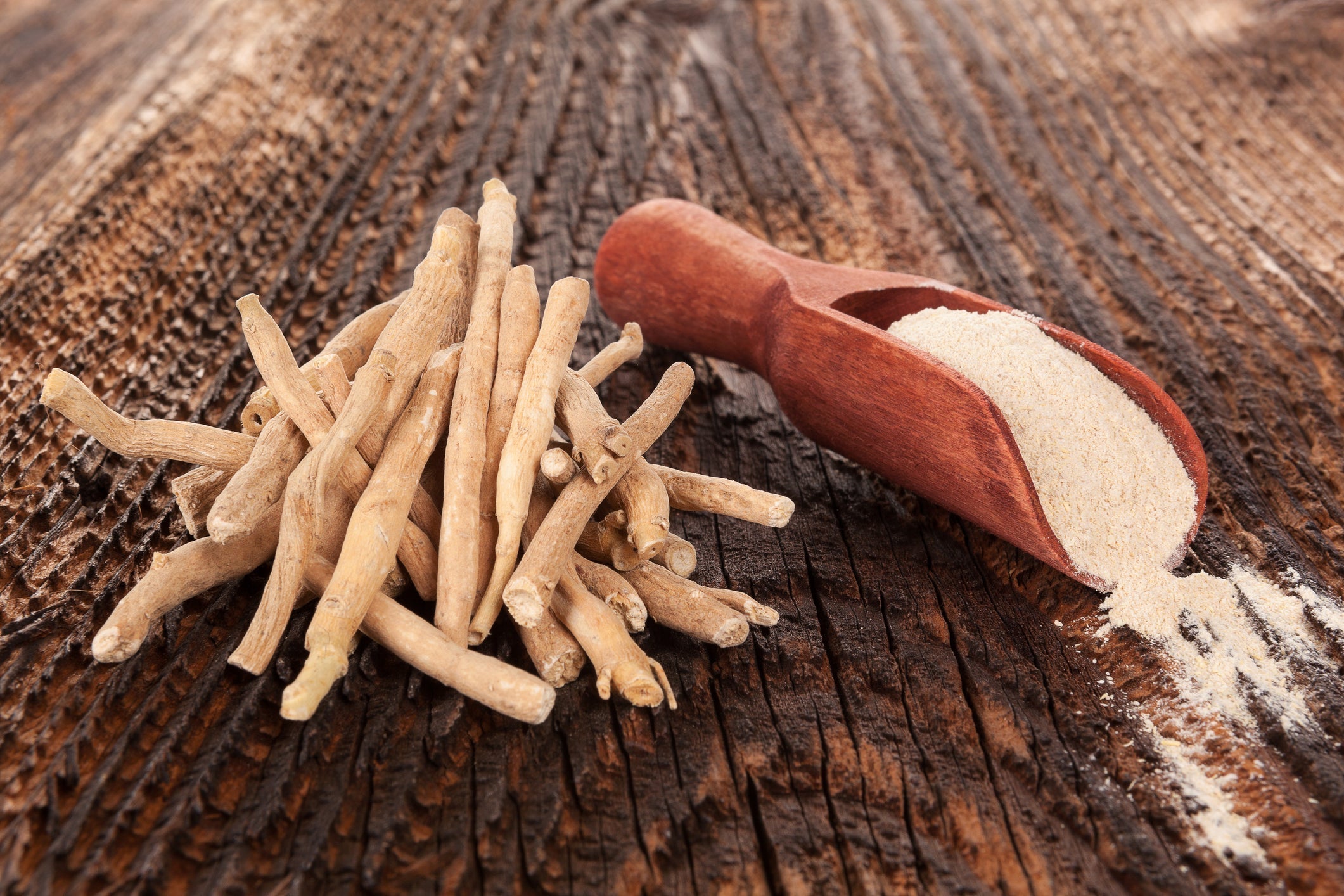
Ashwagandha is one of the best-known herbs in Ayurvedic tradition and one of the most widely researched adaptogens used today.
Also known as Indian ginseng or winter cherry, Ashwagandha has traditionally been associated with vitality, resilience, rest and recovery. Modern research has explored many of these uses, with some of the most promising human evidence relating to stress, anxiety, sleep and aspects of physical performance.
Its scientific name is Withania somnifera. The plant is a small evergreen shrub found across India, parts of Africa and the Middle East. Although different parts of the plant have been used traditionally, the root is the main ingredient found in most modern supplements.
In this guide, we’ll explore Ashwagandha’s history, natural compounds, potential benefits, different supplement formats and the important safety considerations to understand before using it.
Quick Answer: What Is Ashwagandha?
Ashwagandha is an adaptogenic herb with a long history of use in Ayurveda, the traditional system of medicine that developed in India.
It belongs to the nightshade family and produces small yellow-green flowers and red berries. The root is usually dried and prepared as a powder or extract.
Ashwagandha contains a family of naturally occurring compounds known as withanolides. Researchers are studying these compounds in relation to the body’s stress response, sleep, cognitive function, inflammation, physical performance and reproductive health.
Human studies have produced promising results, particularly for perceived stress and sleep. However, the results depend on the extract, dose, length of use and the people being studied.
Where Does Ashwagandha Come From?
Ashwagandha grows naturally in dry regions of India, North Africa and parts of the Middle East. It’s also cultivated in several countries for use in herbal preparations and food supplements.
The plant is well suited to relatively dry conditions and poor soils. It grows as a short shrub, usually reaching around half a metre to one metre in height.
India remains the country most closely associated with Ashwagandha because of the herb’s prominent place in Ayurvedic practice.
The root is normally harvested, cleaned and dried before being ground into powder or used to create an extract.
Why Is It Called Ashwagandha?
The name Ashwagandha comes from Sanskrit.
“Ashwa” means horse, while “gandha” refers to smell. The name is often interpreted as meaning “the smell of a horse”, referring partly to the distinctive scent of the fresh root.
Traditional interpretations also connect the name with the strength and vitality of a horse.
Ashwagandha is sometimes called Indian ginseng because both herbs are associated with resilience and vitality. However, Ashwagandha isn’t botanically related to true ginseng, which belongs to the Panax genus.
Its Latin species name, somnifera, means sleep-inducing or sleep-bearing. This reflects the plant’s long association with rest and relaxation.
The Traditional History of Ashwagandha
Ashwagandha has held an important place in Ayurveda for thousands of years.
Within this tradition, it’s commonly described as a Rasayana. Rasayana is a broad Ayurvedic concept associated with rejuvenation, nourishment, vitality and healthy ageing.
Traditional preparations have used Ashwagandha as part of routines focused on:
- Strength and stamina
- Rest and sleep
- Recovery from demanding periods
- General vitality
- Reproductive wellbeing
- Mental and physical resilience
The root has traditionally been ground into powder and combined with warm milk, ghee, honey or other herbs.
Traditional use doesn’t tell us exactly how an ingredient will perform in a modern clinical trial. It does, however, provide valuable historical context and often helps researchers decide which herbs and applications are worth investigating.
Today, Ashwagandha is available as root powder, capsules, tablets, liquid preparations and standardised extracts. It’s also combined with complementary ingredients such as Shilajit in products designed around vitality, balance and daily resilience.
What Is an Adaptogen?
Ashwagandha is widely described as an adaptogen.
Adaptogens are herbs or natural substances used to support the body during periods of physical or psychological demand. They’re generally associated with resilience and the ability to adapt to stress rather than with stimulation alone.
The term is useful, but it isn’t a guarantee that every adaptogenic ingredient has the same effects.
Ashwagandha is often discussed in relation to the hypothalamic-pituitary-adrenal axis, usually shortened to the HPA axis. This communication network connects the brain and adrenal glands and helps regulate cortisol and other aspects of the stress response.
Cortisol isn’t inherently harmful. It plays an essential role in waking, energy availability, immune activity and the response to immediate challenges.
The goal isn’t to eliminate cortisol. It’s to maintain an appropriate daily rhythm and avoid remaining in a prolonged state of stress activation.
Ashwagandha is sometimes marketed as a treatment for “adrenal fatigue”. However, adrenal fatigue isn’t a recognised medical diagnosis. Current research instead focuses on measurable outcomes such as perceived stress, anxiety scores, sleep quality and cortisol levels.
For a wider look at the evidence behind natural ingredients, read our guide to the most researched natural supplements.
What Are Withanolides?
Withanolides are naturally occurring steroidal lactones found in Ashwagandha.
They’re among the plant’s most widely studied compounds and are frequently used to standardise Ashwagandha extracts.
Standardisation means that a manufacturer aims to provide a consistent concentration of particular compounds in each batch.
Ashwagandha also contains:
- Alkaloids
- Flavonoids
- Saponins
- Fatty acids
- Amino acids
- Other plant sterols and phytochemicals
The balance of these compounds can vary according to:
- The part of the plant used
- Growing conditions
- Harvesting time
- Extraction method
- Root-to-leaf ratio
- Withanolide concentration
- Storage and processing
This is why studies using one specific Ashwagandha extract can’t automatically be applied to every Ashwagandha powder or blended product.
What Are the Potential Benefits of Ashwagandha?
Ashwagandha has been researched for a wide range of potential uses.
The strength of evidence isn’t equal across all of them. Human evidence is most encouraging in relation to stress, anxiety and sleep, while areas such as physical performance, cognition, reproductive health and metabolism remain promising but less conclusive.
Here’s what current research suggests.
1. Ashwagandha and Stress
Stress support is one of Ashwagandha’s most researched modern uses.
A 2024 systematic review and meta-analysis evaluated nine randomised controlled trials involving 558 participants. The analysis found improvements in perceived stress, anxiety scores and cortisol measurements among people using Ashwagandha formulations compared with placebo.
This supports Ashwagandha’s traditional reputation as a herb for resilience during demanding periods.
However, the studies used different:
- Ashwagandha extracts
- Daily doses
- Withanolide concentrations
- Study lengths
- Participant groups
- Stress and anxiety measurements
These differences make it difficult to identify one ideal product or dosage for everyone.
Ashwagandha may be most relevant as part of a wider stress-management routine that includes regular sleep, movement, adequate nutrition, time outdoors and sensible control of caffeine and alcohol.
It isn’t intended to make stressful circumstances disappear. It may help support the way the body responds to them.
2. Ashwagandha and Anxiety
Ashwagandha has also been studied in people experiencing anxiety symptoms.
Several clinical trials and reviews have reported improvements in self-reported anxiety measures. These findings may be connected with Ashwagandha’s effects on stress signalling, cortisol and sleep.
It’s important to distinguish everyday feelings of anxiety from an anxiety disorder that requires professional assessment and treatment.
Ashwagandha shouldn’t be presented as an alternative to prescribed medication or psychological therapy. Anyone experiencing persistent anxiety, panic attacks or symptoms that interfere with daily life should speak to a qualified healthcare professional.
For people managing periods of everyday pressure, Ashwagandha may provide additional support alongside established lifestyle and wellbeing practices.
3. Ashwagandha and Sleep
Ashwagandha’s relationship with sleep is reflected in its scientific name, Withania somnifera.
A systematic review and meta-analysis of five randomised controlled trials involving 400 participants found that Ashwagandha extract produced a small improvement in overall sleep.
Some studies have reported changes in:
- Sleep quality
- The time taken to fall asleep
- Total sleep time
- Time awake during the night
- Alertness after waking
The effects appear to be more noticeable in some people with existing sleep difficulties than in consistently good sleepers.
Ashwagandha isn’t generally used as a fast-acting sedative. It’s better understood as an ingredient that may support relaxation, stress regulation and the conditions needed for more consistent sleep.
Sleep quality still depends on the basics. These include regular sleeping hours, morning daylight, evening light exposure, caffeine timing, alcohol intake, room temperature and overall stress.
Our guide to getting the most out of your supplements explains how Ashwagandha can fit into a broader mood, stress and sleep routine.
4. Ashwagandha and Fatigue
Ashwagandha has traditionally been used as a rejuvenating tonic during periods of physical and mental fatigue.
Fatigue has many potential causes, including:
- Inadequate sleep
- Psychological stress
- Nutrient deficiencies
- Overtraining
- Low energy intake
- Infection or illness
- Thyroid conditions
- Anaemia
- Medication
- Other underlying health conditions
Ashwagandha may support fatigue that is closely connected with stress, disrupted sleep or recovery demands.
It shouldn’t be used to cover up unexplained or persistent exhaustion. Anyone experiencing ongoing fatigue should seek medical advice so that common underlying causes can be investigated.
Ashwagandha also isn’t a stimulant. It doesn’t work in the same way as caffeine or a conventional pre-workout supplement.
Its value is more closely linked with recovery and resilience than with producing an immediate burst of energy.
5. Ashwagandha and Physical Performance
Ashwagandha has become increasingly popular among active people and athletes.
A systematic review and meta-analysis of clinical trials reported promising findings for several aspects of physical performance, including:
- Strength
- Power
- Cardiorespiratory fitness
- Fatigue
- Exercise recovery
Some resistance-training studies have also reported improvements in muscle strength and muscle mass among participants using Ashwagandha extracts.
These results are encouraging, but Ashwagandha isn’t a replacement for progressive resistance training, sufficient protein, adequate calories or good sleep.
The preparation used also matters. Many exercise studies have used standardised extracts at controlled doses. Results from these trials shouldn’t be treated as proof that every Ashwagandha product will have the same effect.
Ashwagandha may be most useful when stress, poor sleep or inadequate recovery is limiting training consistency.
6. Ashwagandha and Muscle Strength
Research has explored whether Ashwagandha can complement a structured resistance-training programme.
Some trials have reported greater changes in strength, muscle size or recovery compared with placebo. Proposed explanations include effects on stress, sleep, exercise tolerance and hormonal or inflammatory signalling.
The important words are “complement a structured programme”.
Ashwagandha doesn’t build muscle without an appropriate training stimulus. Resistance exercise, sufficient dietary protein and recovery remain the foundations.
Its potential role is as part of a consistent performance routine, particularly for people balancing exercise with a demanding lifestyle.
7. Ashwagandha and Cognitive Function
Ashwagandha has traditionally been associated with memory and mental resilience.
Small human trials have explored its potential effects on:
- Memory
- Attention
- Processing speed
- Executive function
- Mental fatigue
- Focus
A systematic review of early clinical studies found some evidence that Ashwagandha may support aspects of cognitive function, although the number and size of the studies were limited.
This is an interesting area of research, particularly because stress and poor sleep can both affect concentration and memory.
There’s currently no good evidence that Ashwagandha prevents Alzheimer’s disease, Parkinson’s disease or other neurodegenerative conditions.
Laboratory and animal research into withanolides and brain health may help guide future human trials, but prevention and treatment claims would be premature.
8. Ashwagandha, Testosterone and Male Reproductive Health
Ashwagandha is often included in supplements marketed for male vitality and testosterone.
Some human studies have reported changes in testosterone, DHEA-S, sperm concentration, sperm motility or semen volume.
A review of research into male infertility found improvements in several reproductive markers, but it also highlighted limitations in the quality and quantity of the available evidence.
Results may depend on the population being studied. An effect observed in men with fertility difficulties, high stress or low baseline testosterone may not occur in every healthy man.
Ashwagandha is therefore better understood as an adaptogenic herb that may support stress, sleep and recovery, all of which are relevant to healthy hormonal function.
It shouldn’t be described as a herbal steroid or a guaranteed testosterone booster.
Our guide to testosterone-boosting herbal extracts explores this relationship in more detail.
Anyone concerned about fertility or testosterone should seek appropriate testing rather than relying on symptoms alone.
9. Ashwagandha and Sexual Wellbeing
Ashwagandha has a long history of use in traditional reproductive and vitality preparations.
Small studies have explored its effects on sexual wellbeing in both men and women. Some have reported improvements in areas such as desire, arousal, satisfaction and sexual function scores.
Stress, fatigue, sleep, relationship factors, medication, hormonal changes and physical health can all influence sexual wellbeing.
Ashwagandha may be relevant when stress and exhaustion are contributing factors, but it shouldn’t be presented as a universal treatment for low libido or sexual dysfunction.
Persistent changes in sexual function should be discussed with a healthcare professional, particularly when they begin suddenly or occur alongside other symptoms.
10. Ashwagandha and Blood Sugar
Laboratory, animal and small human studies have explored Ashwagandha in relation to glucose metabolism and insulin sensitivity.
Some early results are promising, but there isn’t enough consistent human evidence to recommend Ashwagandha as a treatment for diabetes or insulin resistance.
People taking insulin or blood glucose-lowering medication should seek professional advice before using Ashwagandha. Combining several products that affect blood glucose could alter blood sugar control.
Ashwagandha shouldn’t replace prescribed medication, glucose monitoring, nutrition advice or medical care.
11. Ashwagandha and Inflammation
Ashwagandha extracts and withanolides have demonstrated effects on inflammatory pathways in laboratory and animal studies.
This has led to interest in the herb’s potential role in exercise recovery, stress-related inflammation and general wellbeing.
Human research is still developing, and Ashwagandha hasn’t been established as a treatment for inflammatory or autoimmune conditions.
People with autoimmune conditions should be particularly careful. Ashwagandha may influence immune activity and isn’t recommended for everyone in this group without professional guidance.
Ashwagandha Root Powder Versus Extract
Ashwagandha is sold in several different forms.
These include:
- Traditional root powder
- Standardised root extract
- Root and leaf extract
- Capsules
- Tablets
- Liquid extracts
- Herbal blends
- Resin-based combinations
Traditional root powder contains dried, ground Ashwagandha root. It generally provides a wider whole-root profile but requires a larger serving than most concentrated extracts.
An extract has been processed to make particular compounds more concentrated or consistent. Standardised extracts often state their withanolide content.
Neither format is automatically the best choice.
What matters is whether the ingredient, dose and format are appropriate for the intended use.
When assessing an Ashwagandha study, check:
- Whether it used root, leaf or both
- Whether it used a powder or extract
- The withanolide concentration
- The daily dose
- How long the trial lasted
- The health and age of participants
- Whether the study was independently funded
A result from one specific extract can’t always be applied to a different formulation.
How Long Does Ashwagandha Take to Work?
Ashwagandha isn’t normally used for an immediate effect.
Many human trials have lasted between six and twelve weeks, although the study periods and preparations vary.
Some people may notice changes in relaxation or sleep sooner, while outcomes connected with training, recovery or reproductive health may take longer to assess.
Consistency matters more than taking an unnecessarily large amount.
It’s also useful to decide what you’re trying to measure. This might be:
- Perceived stress
- Sleep quality
- Training recovery
- Energy consistency
- Mood
- Strength progression
Changing several supplements and lifestyle habits at the same time makes it difficult to know what has helped.
Our guide to why supplements take time to work explains why gradual changes are normal.
What Is the Best Time to Take Ashwagandha?
There isn’t one correct time for everyone.
Some people take Ashwagandha in the morning as part of a daytime resilience or performance routine.
Others prefer it in the evening because of its association with relaxation and sleep.
The best timing depends on:
- The product format
- The other ingredients in the formula
- The recommended directions
- Your daily routine
- How you personally respond
Ashwagandha can cause drowsiness in some people. Until you know how it affects you, avoid taking it before driving or performing tasks that require full alertness.
Always follow the directions for the specific product rather than copying the dosage used in an unrelated clinical study.
Can Ashwagandha Be Taken With Other Supplements?
Ashwagandha is often combined with ingredients used in stress, recovery and vitality routines.
These may include:
- Shilajit
- Magnesium
- Lion’s Mane
- Reishi
- Vitamin D
- Omega-3 fatty acids
More ingredients don’t always create a better result.
A well-planned combination should have a clear purpose, avoid unnecessary overlap and account for possible interactions.
Read our guide to stacking supplements safely before building a complex routine.
Is Ashwagandha Safe?
Ashwagandha is generally well tolerated by many healthy adults when used in appropriate amounts for a limited period.
However, it isn’t suitable for everyone.
Possible side effects include:
- Drowsiness
- Stomach discomfort
- Diarrhoea
- Nausea
- Vomiting
- Headache
Rare cases of liver injury have also been linked with Ashwagandha supplements. Anyone who develops yellowing of the skin or eyes, dark urine, unusual itching, abdominal pain or persistent nausea should stop using the product and seek medical advice.
Long-term safety data remains limited.
Ashwagandha should be avoided during pregnancy and isn’t recommended while breastfeeding.
Seek professional advice before using Ashwagandha if you:
- Have a thyroid condition
- Have an autoimmune condition
- Have liver disease
- Have diabetes
- Have high or low blood pressure
- Are preparing for surgery
- Take sedatives
- Take thyroid medication
- Take diabetes medication
- Take blood pressure medication
- Take anticonvulsants
- Take immunosuppressive medication
- Take regular prescription medicines
People with an existing medical condition shouldn’t assume that a traditional herb is automatically compatible with their treatment.
How to Choose an Ashwagandha Product
A good Ashwagandha product should make it clear what you’re actually buying.
Look for the following information.
Botanical Name
The label should identify the plant as Withania somnifera.
Plant Part
Check whether the product contains root, leaf or a combination.
Whole-root preparations and root-and-leaf extracts can have different chemical profiles.
Extract Type
The manufacturer should state whether the ingredient is a traditional powder or concentrated extract.
Withanolide Information
Standardised extracts may state their withanolide concentration. This can help with consistency, although it shouldn’t be treated as the only measure of quality.
Serving Size
Check the actual amount of Ashwagandha in each serving rather than relying on front-label descriptions.
Additional Ingredients
Blended products may contain minerals, other herbs or complementary extracts. These ingredients can alter the product’s intended use and safety considerations.
Quality and Testing
Choose a supplier that provides clear information about sourcing, processing, contaminants and batch testing.
Ashwagandha and Shilajit
Ashwagandha and Shilajit are often combined in routines focused on resilience, vitality and recovery.
They’re very different natural ingredients.
Ashwagandha is a botanical extract containing withanolides and related plant compounds.
Shilajit is a complex organic-mineral substance containing fulvic and humic compounds alongside naturally occurring trace minerals.
Ashwagandha is generally associated with stress balance, recovery and relaxation. Shilajit is commonly used in routines focused on vitality, mineral-rich nutrition and consistent performance.
A combined formulation offers a convenient way to use both ingredients without building an unnecessarily complicated supplement stack.
Our Shilajit and Ashwagandha Resin
Our Shilajit and Ashwagandha Resin combines:
- Pure activated Kashmiri Shilajit resin
- Full-spectrum whole Ashwagandha root extract
- Liquorice root extract
The Shilajit is sourced from the Pir Panjal region and retained in its resin form. The Ashwagandha is included as a complementary botanical rather than as an isolated high-dose ingredient.
The formulation is designed for people looking for a measured, non-stimulant addition to a routine focused on daily vitality, balance and recovery.
It’s a blended product, so studies using standalone Ashwagandha capsules or specific branded extracts shouldn’t be assumed to produce an identical result.
How to Take Our Shilajit and Ashwagandha Resin
Take a large pea-sized amount once daily, or up to twice daily if required.
Dissolve it into:
- Warm water
- Black coffee
- Green tea
- Cacao
- Warm milk
Use a clean, dry spoon or knife tip to place the resin against the inside of the cup, just below the liquid line.
Leave it for a couple of minutes to soften, then stir or press it against the side of the cup until dissolved.
Avoid adding it to boiling liquid. Allow your drink to cool slightly first.
We recommend using the product for four to eight weeks, followed by a four-week break before restarting.
Always follow the directions on the product label and don’t exceed the recommended daily intake.
Because this product also contains liquorice root extract, people with high blood pressure, cardiovascular conditions or medicines that affect blood pressure or potassium should seek professional advice before use.
Our Approach to Ashwagandha
Ashwagandha has earned its place as one of the most respected adaptogenic herbs.
Its long Ayurvedic history is supported by a growing body of modern human research, particularly around stress, anxiety, sleep and aspects of physical performance.
The evidence is still developing. Results vary between extracts, doses and individuals, and Ashwagandha isn’t suitable for everyone.
Used thoughtfully, it can form part of a balanced routine built around resilience, recovery, sleep and consistent daily wellbeing.
Its value doesn’t depend on extreme promises.
It comes from the combination of traditional knowledge, careful formulation and an increasingly substantial scientific record.
Frequently Asked Questions
What is Ashwagandha?
Ashwagandha is an adaptogenic herb known scientifically as Withania somnifera. It has a long history of use in Ayurveda and is commonly included in supplements for stress, sleep, recovery and vitality.
What are the main benefits of Ashwagandha?
Human studies have produced the most promising results for perceived stress, anxiety and sleep. Research has also explored physical performance, cognition, testosterone, fertility and metabolic health.
Does Ashwagandha reduce stress?
Several randomised controlled trials and systematic reviews have reported improvements in perceived stress and anxiety scores. Results vary according to the extract, dose and individual.
Does Ashwagandha lower cortisol?
Some studies have reported reductions in cortisol among stressed participants. Cortisol is an essential hormone, so the aim isn’t to eliminate it but to support a healthy stress response.
Can Ashwagandha help with sleep?
Research suggests Ashwagandha extract may produce a small improvement in sleep quality, particularly among people experiencing sleep difficulties. It isn’t usually considered a fast-acting sedative.
Does Ashwagandha increase energy?
Ashwagandha isn’t a stimulant. Its potential effects on energy are more likely to be connected with stress regulation, sleep and recovery.
Can Ashwagandha improve muscle strength?
Some trials have reported improvements in strength and muscle-related outcomes when Ashwagandha was combined with resistance training. Exercise, protein and recovery remain essential.
Does Ashwagandha increase testosterone?
Some studies have reported increased testosterone in specific groups, including stressed men, older men and men following resistance training. It doesn’t reliably increase testosterone in everyone.
Is Ashwagandha good for fertility?
Small human studies have reported improvements in some male fertility markers, including sperm concentration and motility. More high-quality research is needed, and fertility problems should be professionally investigated.
Can Ashwagandha treat anxiety or depression?
Ashwagandha has been researched for stress and anxiety symptoms, but it shouldn’t replace prescribed medication or psychological treatment. Evidence for depression remains limited.
Does Ashwagandha treat adrenal fatigue?
Adrenal fatigue isn’t a recognised medical diagnosis. Ashwagandha research instead examines areas such as perceived stress, anxiety, sleep and cortisol.
Is Ashwagandha safe to take every day?
Short-term use appears to be well tolerated by many healthy adults, but long-term safety data is limited. Follow the product directions and seek advice if you take medication or have a medical condition.
Who shouldn’t take Ashwagandha?
Ashwagandha should be avoided during pregnancy and breastfeeding. People with thyroid, autoimmune or liver conditions, those preparing for surgery and anyone taking regular medication should seek professional advice first.
What’s the difference between Ashwagandha powder and extract?
Powder contains dried, ground root. An extract has been processed to concentrate or standardise certain compounds, often including withanolides.
Can you take Ashwagandha and Shilajit together?
They’re commonly combined in routines focused on balance, vitality and recovery. Follow the directions for the specific product and consider any medication or health conditions before use.
Sources and Further Reading
- Ashwagandha: Usefulness and Safety, National Center for Complementary and Integrative Health
- Effects of Ashwagandha on Stress and Anxiety: A Systematic Review and Meta-Analysis
- Does Ashwagandha Supplementation Benefit Stress and Anxiety?
- Effect of Ashwagandha Extract on Sleep: A Systematic Review and Meta-Analysis
- Effects of Ashwagandha on Physical Performance
- Clinical Use of Ashwagandha for Cognitive Dysfunction
- Ashwagandha in Male Infertility
- Ashwagandha-Induced Liver Injury: A Case Series
- An Overview of Ashwagandha as a Rasayana of Ayurveda
Disclaimer
This article is for informational purposes only and isn’t intended to diagnose, treat, cure or prevent any disease. Food supplements shouldn’t be used as a substitute for a varied, balanced diet and healthy lifestyle.
Speak to a qualified healthcare professional before starting a new supplement, particularly if you’re pregnant, breastfeeding, taking medication or have an existing medical condition.

Share:
Does Shilajit Contain Vitamins? What's True, What's Unproven and What's Marketing
How Much Shilajit Is Actually in Your Shilajit?