


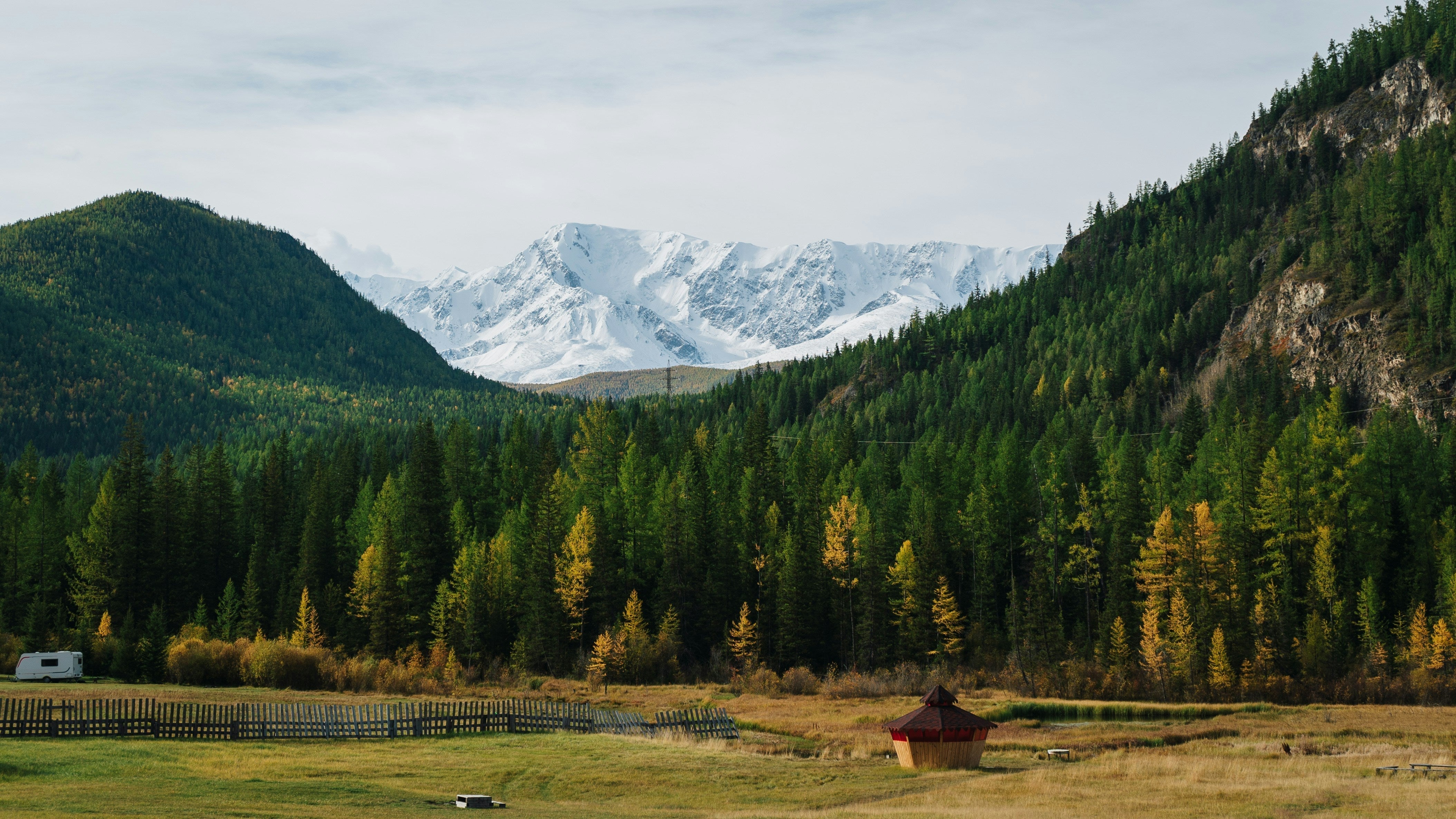
Altai vs Himalayan Shilajit sounds like a simple comparison.
Take one resin from the Altai Mountains, take another from the Himalayas, compare the minerals and fulvic acid, then decide which mountain produces the better Shilajit.
The difficulty is that this isn’t how natural materials work.
Altai Shilajit isn’t one standardised substance.
Himalayan Shilajit isn’t one standardised substance either.
Both names cover large areas containing different geology, vegetation, climates, elevations and local environments. The material is then collected, purified, filtered and concentrated using methods that can substantially change the composition of the finished resin.
That leaves us with a more interesting question.
Can science actually show that Altai or Himalayan Shilajit is inherently better?
At present, the answer is no.
There isn’t enough controlled comparative evidence to establish either region as universally superior. Individual batches can be analysed and compared, but one set of results can’t be expanded into a permanent rule for an entire mountain system.
That distinction matters.
There may be excellent Altai Shilajit.
There may be excellent Himalayan Shilajit.
There may also be weak, poorly purified or analytically unremarkable material from either region.
Geography influences Shilajit.
It doesn’t determine quality on its own.
Quick answer: Is Altai or Himalayan Shilajit better?
Neither Altai nor Himalayan Shilajit has been scientifically proven to be better.
The two regions haven’t been compared through sufficiently large, controlled studies using authenticated samples, identical purification, equivalent moisture levels and the same analytical methods.
Claims that Himalayan Shilajit always contains more minerals, or that Altai Shilajit always contains more fulvic acid, go beyond the available evidence.
The composition of a finished resin depends on several variables:
-
its precise collection environment
-
the original organic and mineral material
-
local geology
-
vegetation and biological activity
-
altitude and climate
-
purification
-
filtration
-
moisture
-
concentration
-
storage
-
the laboratory method used to analyse it
The scientifically honest answer is therefore batch-specific.
A tested Altai batch may outperform a particular Himalayan batch in one area. A different Himalayan batch may show a stronger result in another.
Neither comparison establishes a universal winner.
What does Altai vs Himalayan actually compare?
Before comparing the chemistry, we need to define the categories.
Altai Shilajit generally refers to Shilajit or Mumiyo collected within the Altai mountain system, particularly the Siberian and Mongolian Altai.
Himalayan Shilajit generally refers to material associated with the Himalayas and the broader high-mountain regions of South Asia.
The problem is scale.
A mountain system isn’t a single chemical environment.
Different parts of the Altai contain forest, steppe, alpine meadow, exposed rock, river valleys and high-elevation terrain.
The Himalayas contain subtropical valleys, temperate forest, alpine vegetation, cold desert, high plateaux and heavily glaciated environments.
Even before processing begins, there’s no sound reason to expect every sample from either system to have the same composition.
A useful scientific comparison would need to specify something much narrower, such as:
-
Siberian Altai versus Pir Panjal
-
Mongolian Altai versus Hunza
-
one authenticated valley versus another
-
one collection environment versus another
-
one finished batch versus another
“Altai” and “Himalayan” are useful geographical starting points.
They’re not precise chemical classifications.
For a practical comparison of our individual regional resins, read which Shilajit is best: Siberian Altai vs Mongolian Altai vs Kashmiri vs Hunza.
Are Shilajit and Mumiyo the same substance?
Broadly, yes.
Shilajit and Mumiyo are regional names for the same general class of naturally occurring organic-mineral mountain exudate.
The substance is found emerging from cracks, cavities and rock faces, particularly when temperatures rise and the material softens.
In South Asia and Ayurveda, it’s most commonly called Shilajit, Shilajeet or Silajit.
Across Russia, Siberia, the Altai and parts of Central Asia, it’s more commonly known as Mumiyo, Mumie, Mumiye or a related regional name.
The traditions surrounding them developed separately, but the names don’t describe two fundamentally different substances.
That doesn’t mean every sample is identical.
A Siberian Mumiyo may differ considerably from a Kashmiri Shilajit in:
-
fulvic composition
-
humic composition
-
elemental profile
-
moisture
-
organic constituents
-
colour
-
aroma
-
texture
-
sediment
-
contaminant levels
Those differences occur within the broader natural category.
They don’t make one an entirely separate substance from the other.
The cultural language is different.
The mountain exudate is broadly the same kind of material.
For the wider chemistry and formation process, read what is Shilajit and how does it form?
Ayurveda and Mumiyo: which tradition is older?
Ayurveda provides the older clearly traceable written record.
Shilajit was discussed in classical Ayurvedic literature as part of the wider Rasayana tradition. These texts dealt with restoration, resilience, ageing and the maintenance of health, although ancient concepts shouldn’t be treated as direct equivalents of modern clinical claims.
Dating early Ayurvedic texts precisely is difficult because they developed through oral transmission, compilation and later revision.
It’s reasonable to say that Shilajit has a clearly documented Ayurvedic history extending back roughly two thousand years.
The practical or oral tradition may be older.
Claims of an exact 3,000, 4,000 or 5,000 years of use are harder to establish confidently.
Mumiyo also has a long history across Siberia, Central Asia, Persia, Mongolia, Tibet and neighbouring regions.
It was traditionally associated with fractures, wounds, physical recovery, vitality and resilience.
Its early timeline is less clearly documented.
The historical record is distributed across different countries, languages, names and medical traditions. That makes it difficult to assign Mumiyo one neat starting date.
The fairest conclusion is:
-
Ayurveda contains the older clearly identifiable written tradition
-
Mumiyo also has a long traditional history, probably extending back many centuries
-
the underlying substance is the same broad class of mountain exudate
-
different historical systems don’t prove different modern levels of quality
Tradition tells us how people understood and used the material.
It doesn’t tell us which present-day batch has the better chemical or safety profile.
For a deeper look at the northern tradition, read Siberian Altai Shilajit: Mumiyo, cold mountains and the folklore of stone.
Why a regional comparison is scientifically difficult
To claim that one region produces better Shilajit, researchers would first need to separate regional influence from every other variable.
That isn’t easy.
Imagine testing one Altai resin and one Himalayan resin.
The Altai sample returns more magnesium, calcium and iron.
Can we conclude that Altai Shilajit is more mineral-rich?
Not yet.
The difference might be caused by:
-
local geology
-
collection depth
-
sediment retained during processing
-
filtration pore size
-
water extraction
-
moisture
-
concentration
-
contamination from equipment
-
the number of elements included in the test
-
natural batch variation
Now imagine the Himalayan sample returns more fulvic acid.
Can we conclude that Himalayan Shilajit naturally contains more fulvic material?
Again, not yet.
The result could be affected by:
-
the analytical definition of fulvic acid
-
the extraction method
-
whether the resin was tested wet or dry
-
the amount of moisture
-
removal of humic and insoluble material
-
concentration during processing
-
the laboratory method
-
the way the percentage was calculated
This is the central weakness in most Altai vs Himalayan comparisons.
The result may be real.
The explanation attached to it may not be.
What would a valid Altai vs Himalayan study require?
A scientifically useful regional comparison would need far more than two laboratory certificates.
Ideally, it would include:
-
numerous independently authenticated samples from each region
-
precise collection areas
-
documented altitudes
-
comparable collection seasons
-
information about vegetation and geology
-
equivalent raw-material handling
-
identical purification
-
identical filtration
-
equivalent moisture levels
-
the same laboratory
-
the same analytical methods
-
results reported using the same units and calculation basis
-
enough samples to account for natural variation
-
appropriate statistical analysis
Without those controls, researchers couldn’t tell whether a difference came from the mountain region or from something that happened after collection.
No large comparative body of evidence currently allows us to rank all Altai Shilajit against all Himalayan Shilajit in this way.
That doesn’t mean regional differences don’t exist.
It means they haven’t been mapped well enough to justify the certainty seen in many commercial comparisons.
Shilajit is a heterogeneous natural matrix
One reason this comparison is so difficult is that Shilajit isn’t a single compound.
It’s a heterogeneous matrix.
In plain English, that means it contains a complex and variable mixture rather than one fixed active ingredient.
Depending on the sample and analytical method, Shilajit may contain:
-
fulvic fractions
-
humic fractions
-
mineral elements
-
low-molecular-weight organic compounds
-
amino acids
-
fatty acids
-
aromatic compounds
-
plant-derived metabolites
-
microbial metabolites
-
other organic constituents
The proportions aren’t fixed.
Shilajit doesn’t come with a natural recipe stating:
-
50% fulvic acid
-
10% humic acid
-
5% minerals
-
35% everything else
Each sample reflects its own formation environment and subsequent processing.
This makes Shilajit scientifically interesting.
It also makes broad regional marketing claims rather easy to overstate.
Does Himalayan Shilajit contain more minerals?
There’s no convincing evidence that all Himalayan Shilajit contains more minerals than all Altai Shilajit.
An individual Himalayan sample may contain more detectable elements than an individual Altai sample.
Another Altai sample may show the opposite.
The number of reported minerals depends partly on what the laboratory was asked to look for.
A 22-element ICP-MS panel can’t establish that a product contains 85 minerals.
It can only report the elements included in the analysis.
A laboratory using a wider panel and lower detection limits may identify more elements, including those present at tiny concentrations.
This raises another important point.
Detecting more elements isn’t automatically beneficial.
Some may be present at nutritionally insignificant levels.
Others may be undesirable.
Arsenic, lead, mercury and cadmium belong to the periodic table too.
A mineral profile only becomes meaningful when we know:
-
which elements were measured
-
their concentrations
-
the analytical method
-
the detection and reporting limits
-
whether the results relate to the finished product
-
whether the levels are safe
-
whether any are present in nutritionally relevant amounts
A long list looks impressive.
It doesn’t interpret itself.
Read does Shilajit really contain 85 minerals? for a closer examination of one of the industry’s most repeated claims.
What our own mineral testing shows
Our own results provide a useful example of why regional stereotypes break down.
Our Siberian Altai Shilajit has shown a stronger and broader mineral profile than our Hunza Shilajit.
That’s interesting because Himalayan and neighbouring South Asian material is often described as inherently more mineral-rich.
Our results don’t support that assumption.
But they don’t prove the opposite universal rule either.
We can’t take our Siberian Altai and Hunza results and conclude that all Altai Shilajit contains more minerals than all Hunza or Himalayan material.
The results apply to the batches tested.
The difference could reflect:
-
natural geology
-
the type of mineral compounds present
-
the original raw material
-
purification
-
filtration
-
concentration
-
moisture
-
the amount of insoluble material removed
The scientifically responsible conclusion is limited but useful:
A Himalayan or Himalayan-associated origin doesn’t guarantee a stronger finished mineral profile.
That’s what the data show.
Anything broader would be speculation.
Purification changes the material being compared
Regional comparisons often treat purification as if it simply removes dirt while leaving the rest of the Shilajit unchanged.
In practice, it may have a much greater effect.
Raw Shilajit can contain:
-
rock
-
sand
-
clay
-
soil
-
insoluble mineral particles
-
plant debris
-
microbial material
-
undesirable environmental contaminants
Purification aims to separate the useful soluble and dispersible fractions from unwanted material.
The process may involve:
-
water extraction
-
settling
-
decanting
-
filtration
-
repeated washing
-
controlled heating
-
evaporation
-
concentration
Each stage can influence the final composition.
For example, a finer filtration process may remove more suspended mineral particles and humic material.
A coarser process may retain more mineral-rich sediment.
Repeated extraction may favour water-soluble fractions.
Concentration changes the amount of each component measured per gram.
Moisture changes the apparent percentage again.
This means that the final mineral profile isn’t simply a geological fingerprint of the mountain.
It’s the result of geology plus processing.
The raw material provides the starting composition.
Purification decides which parts remain.
For more on this distinction, read raw vs purified Shilajit: why processing matters.
Filtration may explain apparently lighter mineral profiles
Filtration deserves particular attention because it’s rarely discussed in regional comparisons.
Imagine two raw Shilajit materials with broadly similar amounts of mineral matter.
One is filtered very finely until almost all suspended material has been removed.
The other is filtered less aggressively and retains a greater proportion of fine mineral particles.
The second product may return a broader elemental profile.
That doesn’t necessarily mean it began as better or more mineral-rich Shilajit.
It may simply contain more retained mineral material.
The first product might show:
-
less sediment
-
lower humic material
-
lower measured mineral concentrations
-
a lighter appearance
-
a larger proportion of soluble fulvic fractions
The second might show:
-
more sediment
-
more humic material
-
a broader mineral profile
-
a darker or fuller appearance
Neither pattern automatically proves superiority.
They represent different finished matrices.
This may help explain why our Hunza resin can display a high fulvic result while showing a lighter mineral and humic profile than our Siberian Altai.
It isn’t necessarily a contradiction.
It may be evidence of a different starting material, a different purification profile, or both.
Does Altai Shilajit contain more fulvic acid?
There’s no basis for saying that Altai Shilajit always contains more fulvic acid.
Some Altai resins may produce high results.
Some Himalayan or neighbouring regional resins may produce higher ones.
Our own Hunza Shilajit has shown a higher measured fulvic profile than our Siberian Altai.
That directly contradicts the common claim that Altai material is always more fulvic-rich because of its colder climate or forest environment.
Again, this doesn’t prove Hunza is universally higher in fulvic acid.
It proves the regional rule doesn’t hold.
Fulvic results also need cautious interpretation because there’s no value in comparing numbers produced through fundamentally different methods.
Before comparing two certificates, ask:
-
Was the same method used?
-
Were both products tested as finished resins?
-
Were the results calculated on the same moisture basis?
-
Was the same definition of fulvic acid applied?
-
Was the laboratory competent for the method?
-
Were the samples similarly concentrated?
-
Were the results reported using comparable units?
An 80% result from one method doesn’t automatically beat a 40% result from another.
The larger number may reflect chemistry.
It may reflect methodology.
It may reflect both.
Read fulvic acid testing in Shilajit: which result can you trust? for a detailed explanation of why the method matters.
Why fulvic acid can’t decide the winner
Even if every resin were analysed using exactly the same method, fulvic acid alone still wouldn’t define quality.
Shilajit isn’t just a delivery system for one headline fraction.
Its composition may also include:
-
humic material
-
minerals
-
low-molecular-weight organic compounds
-
plant-derived substances
-
microbial metabolites
-
other components within the matrix
A higher fulvic result may indicate a more fulvic-dominant resin.
It doesn’t automatically prove:
-
better safety
-
greater mineral density
-
stronger biological effects
-
better authenticity
-
more complete composition
-
superior purification
-
better suitability for every user
A highly filtered resin might show a particularly strong soluble fulvic fraction but relatively little humic or suspended mineral material.
A fuller resin might show a more substantial humic and elemental profile with a lower fulvic percentage.
Calling either one better requires a defined reason.
Otherwise, “best” simply means whichever number the seller happens to have won.
For the wider matrix, read why humic acid matters in full-spectrum Shilajit.
Does altitude make Himalayan Shilajit better?
Altitude can influence the environment in which Shilajit develops.
It may affect:
-
temperature
-
rainfall
-
freeze and thaw activity
-
oxygen
-
UV exposure
-
vegetation
-
microorganisms
-
water movement
-
weathering
That makes altitude relevant.
It doesn’t make quality rise in a straight line with elevation.
Higher isn’t endlessly better.
As altitude increases, temperatures generally fall and growing seasons become shorter. Vegetation may become sparse, soils thinner and biological productivity lower.
Eventually, alpine environments give way to bare rock, permanent snow and ice.
This matters because Shilajit is generally understood to involve organic material and biological transformation interacting with the mineral environment.
A mountain area containing vegetation, moisture and microbial activity may provide more of the necessary biological inputs than an almost sterile rock face several thousand feet higher.
There probably isn’t one universal ideal altitude.
Mountain ecology varies with:
-
latitude
-
slope direction
-
local rainfall
-
temperature
-
vegetation zone
-
geology
-
exposure
The alpine tree line doesn’t occur at the same elevation everywhere.
Nor does biological activity stop at one neat height.
The important scientific point is that altitude can’t be interpreted separately from ecology.
A product collected at a claimed 18,000 feet isn’t automatically better than one collected at 10,000 feet.
At extreme elevation, the number may become more impressive while the biological environment becomes less diverse.
Read does altitude matter for Shilajit quality? for the full examination of high-altitude marketing claims.
Biodiversity matters more than the altitude number
It’s tempting to imagine Shilajit formation as a purely geological process.
Rock plus pressure plus time.
That explanation is probably incomplete.
Current theories commonly involve the gradual transformation of plant-derived and other organic material through microbial activity, combined with mineral components from the surrounding environment.
If organic inputs matter, biodiversity becomes relevant.
A biologically active mountain zone may contain:
-
plant roots
-
mosses
-
lichens
-
microbial communities
-
decomposing vegetation
-
flowing water
-
seasonal warmth
-
mineral-rich substrate
A much higher zone may contain less vegetation, less soil and lower biological productivity.
This doesn’t mean lower-altitude Shilajit is always better.
It means the simplistic equation:
higher altitude = more powerful Shilajit
has no clear biological basis.
The relevant variable isn’t height by itself.
It’s the whole ecological system.
Can mineral and fulvic profiles identify geographical origin?
Not reliably on their own.
In theory, a sufficiently large database of authenticated samples might reveal patterns associated with particular regions.
Researchers could examine:
-
elemental ratios
-
organic markers
-
isotope patterns
-
humic fractions
-
characteristic metabolites
-
geological signatures
With enough validated samples, it might become possible to estimate whether an unknown material resembles a known geographical group.
We don’t currently have a widely accepted reference database capable of definitively assigning ordinary commercial Shilajit to the Altai or Himalayas from a routine certificate of analysis.
A mineral test may show what elements are present.
It doesn’t automatically show where the resin came from.
A fulvic acid percentage tells us even less about geographical identity.
The same broad result could occur in samples from several locations.
This is another reason regional superiority claims are difficult to prove. Before comparing the regions, researchers would first need confidence that every sample had been assigned to the correct one.
For the separate question of source credibility and how geographical labels are used commercially, read is Himalayan Shilajit really the best? A more honest look at source and supply.
What about colour, taste and texture?
Altai and Himalayan resins may show different sensory characteristics.
A sample may be:
-
dark brown
-
black-brown
-
reddish-brown
-
strongly bitter
-
smoky
-
earthy
-
astringent
-
soft
-
firm
-
glassy when cold
-
tacky when warm
These observations may help an experienced supplier compare a new batch with earlier material from the same source.
They can’t establish regional superiority.
Colour and texture are influenced by:
-
moisture
-
temperature
-
concentration
-
filtration
-
oxidation
-
particle content
-
storage
-
processing
Taste can also change through purification and concentration.
A strong taste isn’t proof of greater potency.
A darker colour isn’t proof of more fulvic acid.
A thicker texture isn’t proof of authenticity.
These characteristics are worth recording.
They shouldn’t be asked to do the job of analytical chemistry.
Read why is Shilajit resin so sticky? and does Shilajit completely dissolve? for more on physical behaviour and sediment.
Can human studies tell us which region is better?
Not at present.
Most human Shilajit research investigates a specific purified preparation, standardised extract or branded ingredient.
That may tell us something about the tested preparation.
It doesn’t establish a class effect for every resin from the same general region.
To prove that Altai or Himalayan Shilajit was clinically superior, researchers would need to compare well-characterised products directly.
The trial would need to control:
-
dose
-
fulvic and humic composition
-
mineral content
-
purification
-
contamination
-
participant characteristics
-
duration
-
measured outcomes
Even then, the result would apply most confidently to the tested products.
It wouldn’t necessarily prove that every resin from the winning region would behave in the same way.
At present, claims such as these aren’t supported by regional comparative trials:
-
Himalayan Shilajit is better for testosterone
-
Altai Shilajit is better for cognition
-
Himalayan Shilajit gives more energy
-
Altai Shilajit is better for recovery
-
one region is better for men
-
one region is better for women
-
one works faster because it comes from a higher mountain
These are regional personalities created by marketing.
They’re not established scientific categories.
For a wider examination of the human evidence, read Shilajit benefits: what the research actually suggests.
Our own testing challenges both regional stereotypes
Working with several origins has made one thing clear.
The regional rules regularly repeated online aren’t reliable.
Our Hunza resin has shown a higher measured fulvic profile than our Siberian Altai resin.
Our Siberian Altai has shown the broader and stronger mineral profile.
Those findings challenge two common claims:
-
Himalayan or Himalayan-associated Shilajit is always more mineral-rich.
-
Altai Shilajit is always higher in fulvic acid.
Neither rule survives contact with our own batch data.
But our results don’t allow us to replace them with two new rules.
We can’t claim:
-
Altai is always more mineral-rich
-
Hunza is always more fulvic-rich
Our results apply to the batches tested.
Different harvests, source areas, purification methods and analytical conditions could produce different outcomes.
What the results demonstrate is more important than which product won each column.
They demonstrate that the composition of a finished Shilajit resin can’t be predicted from the regional name alone.
Nature supplies the material, processing shapes the result
It’s tempting to place every difference at the feet of geology.
The mountain must have caused it.
Sometimes it may have.
But the finished resin is the result of two broad stages:
Stage one: natural formation
This may be influenced by:
-
geology
-
organic matter
-
vegetation
-
microorganisms
-
moisture
-
altitude
-
temperature
-
time
-
local environmental conditions
Stage two: human processing
This may include:
-
collection
-
cleaning
-
extraction
-
settling
-
filtration
-
heating
-
concentration
-
drying
-
storage
The laboratory analyses the result of both stages.
It can’t necessarily tell us how much of the result came from each one.
That’s why a more mineral-rich resin doesn’t automatically prove a more mineral-rich mountain.
It may reflect:
-
source geology
-
retained sediment
-
less aggressive filtration
-
higher concentration
-
lower moisture
-
several of these together
Likewise, a high fulvic result may reflect:
-
natural chemistry
-
greater extraction of soluble fractions
-
removal of humic material
-
concentration
-
lower moisture
-
the test method
The finished product isn’t simply nature placed into a jar.
It’s nature interpreted through a processing system.
Is one tradition more scientifically valid?
No.
Ayurveda and the Mumiyo traditions provide historical and cultural frameworks.
Modern analytical science asks different questions.
Ayurveda may tell us:
-
how Shilajit was classified
-
how it was purified
-
how it was combined with other substances
-
the conditions in which it was traditionally used
Mumiyo traditions may tell us:
-
how northern cultures recognised the material
-
how it was prepared
-
its role in traditional recovery practices
-
how it was understood across Russia and Central Asia
Neither tradition supplies a modern comparative dataset proving that its regional material is chemically or clinically superior.
Historical continuity and analytical quality aren’t the same measurement.
A product can have an ancient story and poor modern quality control.
Another can come from a less commercially familiar tradition and have excellent analytical results.
Ideally, modern Shilajit should respect its traditional context while still being subjected to modern purification and testing.
The two approaches don’t need to compete.
The regional superiority problem
The argument that one mountain system must produce better Shilajit usually follows a predictable pattern.
A seller begins with a real regional characteristic:
-
the Himalayas are very high
-
the Altai is very cold
-
one region contains rich mineral geology
-
another contains ancient forest ecosystems
That characteristic is then converted into a chemical assumption:
-
higher means more potent
-
colder means purer
-
more rock means more minerals
-
more forest means more fulvic acid
The chemical assumption then becomes a product claim:
-
therefore, this region produces the best Shilajit
Each step sounds plausible.
The complete chain usually lacks direct evidence.
A characteristic of a mountain system doesn’t automatically become a characteristic of every resin collected within it.
A characteristic of a resin doesn’t automatically produce a greater human effect.
There are too many unmeasured steps in between.
What can we say with reasonable confidence?
Although science can’t declare a regional winner, it can help establish some useful principles.
Shilajit composition varies
Different samples can contain different fulvic, humic, mineral and organic profiles.
Geography may contribute to that variation
Local geology, vegetation, climate and biological activity are likely to influence the starting material.
Altitude isn’t a linear quality scale
Higher elevation changes the environment, but quality doesn’t automatically increase with height.
Purification and filtration matter
They can alter sediment, mineral content, humic fractions, moisture and the balance of the finished resin.
Laboratory methods affect the apparent result
Fulvic percentages and mineral counts can’t be compared sensibly without understanding how they were measured.
Individual batches can be compared
When equivalent methods are used, two finished products can be compared analytically.
Whole regions can’t be ranked from one batch
One Siberian Altai result doesn’t represent the entire Altai.
One Hunza or Kashmiri result doesn’t represent the entire Himalayas or adjoining ranges.
This may sound less decisive than the usual comparison article.
That’s because the evidence is less decisive than the usual comparison article.
Altai vs Himalayan Shilajit: the scientific verdict
There’s currently no sound scientific basis for declaring Altai or Himalayan Shilajit universally better.
Both categories are too broad.
The natural material is too variable.
Purification and filtration have too much influence.
Testing methods differ too widely.
Controlled regional comparisons are too limited.
What we can say is that Altai and Himalayan Shilajit belong to the same broad class of organic-mineral mountain exudate, known through different regional names and traditions.
Ayurveda provides the older clearly documented written history.
The Mumiyo tradition has its own long and widespread cultural record across Siberia and Central Asia.
Neither history establishes modern chemical superiority.
Our own testing reflects the wider scientific problem.
Our Hunza resin has shown the higher fulvic profile.
Our Siberian Altai has shown the stronger mineral profile.
Neither product wins every measurement.
Neither batch creates a permanent regional rule.
That’s probably the most honest conclusion available.
There’s no scientifically proven best mountain for Shilajit.
There are individual source materials, individual processing methods and individual batches.
The regional name gives us context.
The analysis tells us what’s actually in the jar.
Looking for independently tested Shilajit?
If you're comparing Altai and Himalayan Shilajit, the regional name is only part of the picture. Our Shilajit resins are selected for specific origins, appropriate purification and independent laboratory testing, allowing you to compare batches based on evidence rather than marketing.
Explore our Shilajit collection.
Continue learning
-
Which Shilajit is best: Siberian Altai vs Mongolian Altai vs Kashmiri vs Hunza
-
Is Himalayan Shilajit really the best? A more honest look at source and supply
-
Fulvic acid testing in Shilajit: which result can you trust?
- Explore the Full Shilajit Guide
Written By
Written by Chris Simon, Founder of One Life Foods.
Chris has worked in the supplement industry since 2009 and is known for seeking out exceptional ingredients, products, and formulations. Read more about Chris and the story behind One Life Foods.

Share:
Refueling After a Weight Cut: What Fighters Should Eat After Weigh-In
Does Shilajit Increase Testosterone? What the Human Research Actually Shows