


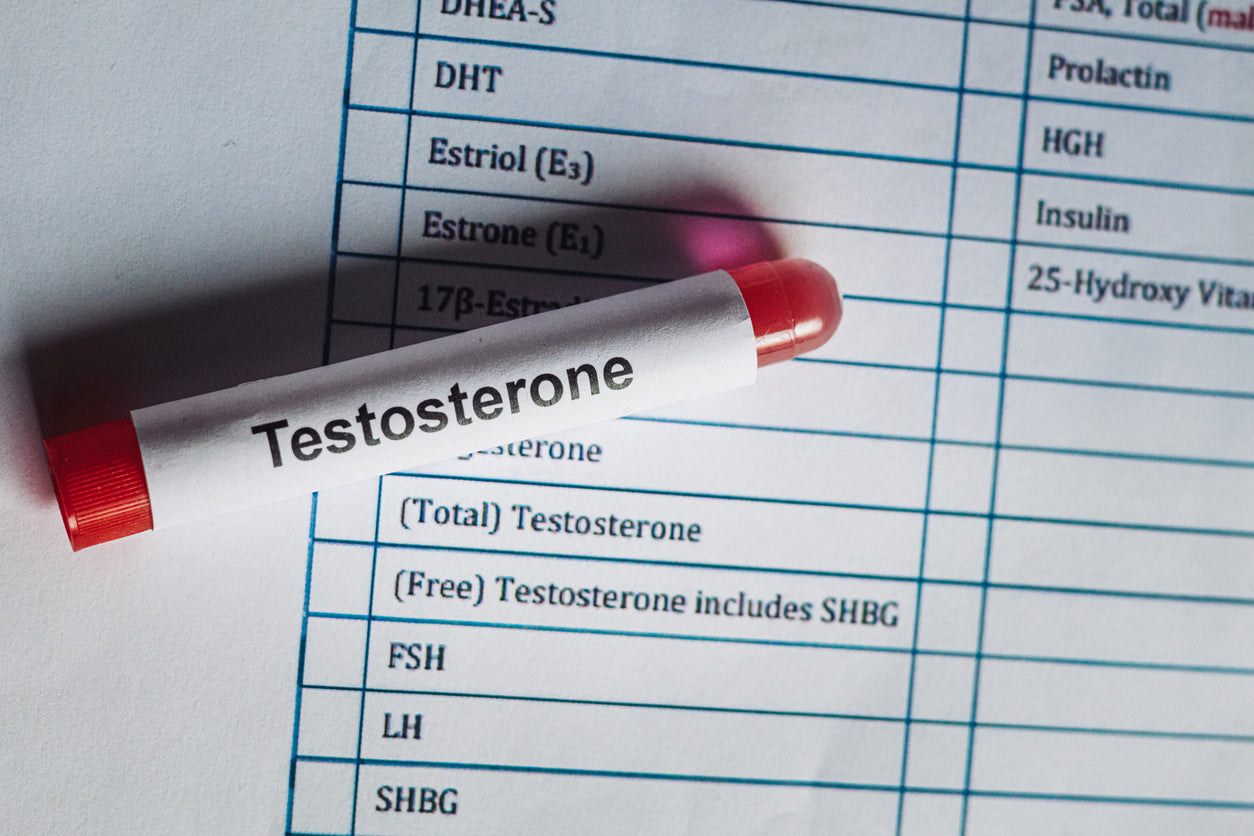
Most Shilajit brands have already written this article.
They cite one study. They quote the percentage increase. They put it in bold. Then they invite you to buy something.
This isn't that article.
Because the Shilajit and testosterone conversation is genuinely interesting, and it deserves better than a dramatic headline bolted onto a product page.
There's real human research here.
There is also a biologically plausible explanation for the findings.
But the evidence is small, the main study used a specific standardised extract, and neither trial proves that every form of Shilajit will increase testosterone in every man who takes it.
That part tends to receive slightly less attention.
So let’s go through it properly.
Does Shilajit increase testosterone?
Human research has found that a purified, standardised Shilajit extract increased total testosterone, free testosterone and DHEA-S in healthy men aged 45 to 55 after 90 days.
However, this finding comes mainly from one relatively small, manufacturer-funded trial using a branded extract called PrimaVie.
A second study found increases in testosterone and improvements in sperm parameters in men with oligospermia, but it did not include a placebo control.
The evidence is therefore promising, but limited.
It doesn't prove that all Shilajit products raise testosterone, that the same effect occurs in younger men, or that the changes produce noticeable improvements in strength, libido, energy or wellbeing.
That's the short answer.
The longer answer is more useful.
If you are still getting to grips with the substance itself, begin with our guide to what Shilajit is and how it is formed.
What does “increasing testosterone” actually mean?
Testosterone is not a simple dial that can be turned upwards without consequence.
Its production is controlled through the hypothalamic-pituitary-testicular axis, usually shortened to the HPT axis.
The hypothalamus releases gonadotropin-releasing hormone. This signals the pituitary gland to release luteinising hormone and follicle-stimulating hormone.
Luteinising hormone then acts on Leydig cells in the testes, where most male testosterone is produced.
As testosterone levels change, signals are fed back to the brain and pituitary gland. The system constantly adjusts itself rather than simply producing more indefinitely.
This distinction matters.
Shilajit is not testosterone.
It doesn't supply an external hormone, and it should not be confused with testosterone replacement therapy or anabolic steroids.
At most, the current evidence suggests that a particular purified Shilajit preparation may influence the conditions or pathways involved in normal hormone production.
That's a much narrower claim than saying Shilajit is a natural form of TRT.
It's not.
For a wider comparison, our guide to testosterone-supporting herbal extracts looks at how Shilajit sits alongside ingredients such as Ashwagandha, fenugreek and Tongkat Ali.
What did the main Shilajit testosterone study find?
The study most often cited was conducted by Pandit and colleagues and published in Andrologia.
It was a randomised, double-blind, placebo-controlled trial involving healthy men aged 45 to 55.
Seventy-five men were enrolled, with 60 completing the study and being included in the final analysis.
Participants received either:
-
250 mg of purified Shilajit twice daily
-
or a placebo
The intervention lasted 90 consecutive days.
At the end of the study, the Shilajit group showed statistically significant increases in:
-
total testosterone
-
free testosterone
-
DHEA-S
Luteinising hormone and follicle-stimulating hormone remained within normal ranges.
That's an interesting result, particularly because the trial was placebo-controlled and measured several related hormone markers rather than relying on questionnaires.
But there are important limitations.
The trial used PrimaVie, not generic Shilajit resin
The product was PrimaVie, a purified and standardised Shilajit extract manufactured by Natreon.
That matters because Shilajit is not a single uniform molecule.
It's a complex mountain exudate containing humic substances and numerous smaller organic and mineral components. Its composition can vary according to source, processing, purification and analytical method.
PrimaVie is produced to defined compositional specifications.
A jar of unverified black resin from an unknown supplier cannot automatically be assumed to be chemically equivalent to the preparation used in the study.
This doesn't mean that resin cannot contain relevant compounds.
It means the study cannot be used as proof for every product sold under the name Shilajit.
The substance may be broadly the same category of mountain exudate, but the finished preparations are not necessarily interchangeable.
The participants were healthy middle-aged men
The volunteers were aged 45 to 55.
That makes the study directly relevant to healthy men within that age range.
It doesn't establish that the same response occurs in:
-
men in their twenties
-
older men
-
women
-
highly trained athletes
-
men with medically diagnosed hypogonadism
-
men already using testosterone therapy
The participants were also described as healthy. They were not specifically recruited because they had clinically low testosterone.
It's therefore inaccurate to describe this as a trial in men with testosterone deficiency.
The study measured hormones, not symptoms
The trial found statistically significant changes in blood markers.
It didn't establish that the participants experienced meaningful improvements in:
-
libido
-
erectile function
-
strength
-
muscle mass
-
mood
-
fatigue
-
body composition
-
quality of life
A statistically significant laboratory change is not automatically a clinically meaningful benefit.
It may be important. It may not.
Without symptom or performance outcomes, we cannot tell from this study alone.
The trial was relatively small
Sixty participants completed the study.
That is enough to produce a result worth investigating, but it's nowhere near enough to settle the question.
Larger studies across different ages, populations and preparations would be needed before broad conclusions could be made.
The trial was commercially connected
The trial used a branded ingredient and was funded by the company connected with its manufacture.
A later systematic review rated the study as having a high risk of bias, with commercial funding being one of the concerns.
Commercial funding does not automatically make a study false.
Plenty of useful research begins with companies willing to pay for it.
But manufacturer-funded findings carry more weight when they are independently replicated.
That independent replication has not yet happened.
What did the Shilajit fertility study find?
The second relevant human study was published by Biswas and colleagues in Andrologia in 2010.
It involved 35 men with oligospermia, meaning a clinically low sperm concentration. Twenty-eight completed the 90-day study.
Participants took processed Shilajit twice daily.
After 90 days, the researchers reported improvements from baseline in:
-
total sperm count
-
sperm motility
-
the proportion of normally formed sperm
-
semen oxidative stress markers
-
serum testosterone
-
follicle-stimulating hormone
These findings are interesting because testosterone changed alongside semen quality and oxidative stress markers.
However, this study was not equivalent to the placebo-controlled Pandit trial.
It didn't include a matched placebo group.
That means the results could have been influenced by other variables, including natural fluctuation, lifestyle changes, regression to the mean or aspects of the participants’ fertility treatment that were not fully controlled.
It also studied men with a specific reproductive health problem.
Its results cannot be transferred automatically to healthy men without fertility concerns.
What do the two studies tell us?
Taken together, the studies suggest that certain purified or processed Shilajit preparations may affect testosterone and reproductive markers in some men after around 90 days of consistent use.
But that sentence contains several important qualifiers:
-
certain preparations
-
some men
-
specific populations
-
around 90 days
-
limited research
The evidence does not show that every Shilajit product increases testosterone.
It does not show that everyone will respond.
It does not establish that a rise in a blood marker produces noticeable physical or psychological changes.
And it does not make Shilajit a treatment for low testosterone or male infertility.
The most accurate conclusion is:
Purified Shilajit has produced positive changes in testosterone markers in two small human studies, but the evidence remains preliminary and requires independent replication.
Less dramatic than “boost testosterone by 20%”.
More accurate, though.
How could Shilajit affect testosterone?
This is where the subject becomes biologically interesting.
It's also where we need to separate established human physiology from a proposed Shilajit mechanism.
Testosterone production depends on mitochondria
Testosterone is primarily made in Leydig cells within the testes.
The process begins with cholesterol.
Before cholesterol can be converted into pregnenolone, the precursor from which steroid hormones are made, it must be transported from the outer mitochondrial membrane to the inner mitochondrial membrane.
A protein called steroidogenic acute regulatory protein, or StAR, plays an important role in this transport.
This mitochondrial stage is essential to normal steroid hormone production.
That part is established physiology.
What has not been established is whether Shilajit increased testosterone in the human trials by directly improving this process.
The studies didn't measure:
-
mitochondrial ATP production
-
Leydig cell mitochondrial function
-
StAR activity
-
cholesterol transport inside the testes
-
oxidative stress within Leydig cells
-
mitochondrial enzyme activity
So we cannot say that Shilajit raised testosterone through mitochondrial support.
We can only say that mitochondrial biology offers one plausible area for further investigation.
Why are Shilajit and mitochondrial function linked?
Some characterised Shilajit preparations contain dibenzo-alpha-pyrone derivatives and related compounds that have been proposed to possess antioxidant or mitochondrial activity.
Laboratory and preclinical research has explored whether these compounds may influence electron-transfer systems or protect mitochondrial structures from oxidative stress.
That makes them relevant to a discussion about steroidogenesis, because the early stages of steroid hormone production take place inside mitochondria.
But this remains a proposed link.
There is no human study showing the following chain directly:
Shilajit enters the body, improves Leydig cell mitochondria, increases StAR activity and therefore raises testosterone.
It's a coherent hypothesis.
It is not yet a demonstrated mechanism.
Oxidative stress may also be relevant
Both sperm production and testicular hormone production can be affected by excessive oxidative stress.
Reactive oxygen species are not inherently bad. They are part of normal cellular signalling.
The problem is imbalance.
When oxidative stress becomes excessive, it can damage sperm membranes, mitochondrial structures and other components involved in reproductive function.
The Biswas study reported changes in semen oxidative stress markers alongside improvements in sperm parameters and testosterone.
That supports the idea that oxidative stress may be relevant.
However, because the study lacked a placebo group, it still cannot prove that reducing oxidative stress caused the hormonal changes.
The mechanism is plausible.
The causal chain remains unconfirmed.
Does fulvic acid increase testosterone?
There is no good human evidence showing that isolated fulvic acid increases testosterone.
Fulvic substances form an important part of Shilajit, but Shilajit is a complex material rather than a single-ingredient fulvic acid supplement.
The testosterone studies used whole purified or processed Shilajit preparations.
They didn't isolate fulvic acid and compare it with the rest of the material.
It's therefore inaccurate to credit the hormone findings specifically to fulvic acid.
This is a recurring problem in supplement marketing.
A complex substance produces an interesting result, so the result is assigned to whichever component sounds easiest to place on the front of a label.
Biochemistry is not always so obliging.
What about reports of improved libido and energy?
Men commonly describe changes in libido, energy, training capacity or general wellbeing after taking Shilajit.
These experiences may be genuine.
But they do not prove that testosterone increased.
Libido can change because of:
-
sleep
-
stress
-
mood
-
relationship factors
-
medication
-
training load
-
calorie intake
-
expectations
-
general health
Energy is equally complicated.
Feeling more energetic is not a home testosterone test.
Anecdotal reports can help identify patterns worth studying, but they cannot confirm a hormone change or tell us why that change occurred.
The only reliable way to know whether testosterone has changed is through appropriately timed blood testing interpreted in its clinical context.
Who is the testosterone research most relevant to?
The evidence is most directly relevant to the people who resembled the study participants.
That means:
-
healthy men aged 45 to 55, based on the placebo-controlled trial
-
men with oligospermia, based on the smaller uncontrolled fertility study
The evidence is much less direct for:
-
young men with normal testosterone
-
women
-
men with diagnosed hypogonadism
-
men using TRT
-
competitive athletes
-
people expecting an immediate effect
It's reasonable to hypothesise that age, baseline hormone status, health and product composition could influence the response.
But these possibilities have not been properly tested.
Does Shilajit work better for men over 40?
The strongest testosterone study was conducted in men aged 45 to 55, so the available evidence is more applicable to middle-aged men than younger men.
That doesn't prove Shilajit only works after 40.
It means younger men have not been studied adequately.
A healthy 25-year-old with normal testosterone may respond differently from a 50-year-old man. He may also have less room for any measurable change.
At present, claims about younger men are largely extrapolation rather than direct evidence.
Is Shilajit the same as testosterone replacement therapy?
No.
Testosterone replacement therapy introduces testosterone into the body under medical supervision.
Shilajit does not contain testosterone and has not been shown to reproduce the effects of TRT.
It shouldn't be used as a substitute for medical investigation or treatment where testosterone deficiency is suspected.
Symptoms such as reduced libido, persistent fatigue, loss of strength, erectile problems and low mood can have many causes.
A supplement jar is not a diagnostic department.
Can Shilajit treat low testosterone?
Shilajit hasn't been established as a treatment for hypogonadism or clinically low testosterone.
The main trial involved healthy middle-aged men, not patients selected for testosterone deficiency.
Anyone concerned about low testosterone should seek appropriate medical assessment.
Diagnosis usually depends on symptoms, repeat morning blood tests and consideration of related markers rather than one isolated reading.
Treating a hormone disorder based on internet symptoms and a resin spoon is not a serious clinical strategy.
Does the form of Shilajit matter?
Yes, particularly when interpreting the research.
The main testosterone trial used a standardised powdered extract.
Many commercial products are sold as resin, capsules, powders or gummies.
These may differ in:
-
source material
-
purification
-
water content
-
concentration
-
fulvic and humic composition
-
smaller organic compounds
-
contaminants
-
dosage
-
additives
A resin is not automatically inferior to an extract.
But a resin cannot borrow the exact clinical evidence for PrimaVie unless its relevant composition and dose have been shown to be comparable.
That comparison has not been established.
This is why source stories and photographs of mountains are not enough.
Proper Shilajit quality assessment should include purification records and independent testing for:
-
heavy metals
-
microbiology
-
relevant contaminants
-
compositional markers
-
batch consistency
Our guide to understanding Shilajit laboratory results explains what useful testing looks like and which headline numbers are often less meaningful than they appear.
How much Shilajit was used in the testosterone study?
The Pandit trial used 250 mg of purified Shilajit twice daily, giving a total daily intake of 500 mg.
The intervention lasted 90 days.
This tells us what was studied.
It does not automatically establish the correct dose for every Shilajit product, because different preparations can have different concentrations, moisture levels and composition.
A 500 mg dose of one standardised extract is not necessarily equivalent to 500 mg of every resin or powder.
How long does Shilajit take to affect testosterone?
The main controlled trial measured results over 90 days.
It doesn't provide a reliable timetable for when any change began, nor does it prove that users should feel something after a particular number of days.
Claims that Shilajit “starts working” after one week, two weeks or any other precise period are not supported by the testosterone study.
All we can say confidently is that the positive hormone findings were reported after a 90-day intervention.
We also do not know whether the changes persist after use stops or what happens with continuous use beyond the study period.
What Shilajit is not
Shilajit is not:
-
testosterone
-
TRT
-
an anabolic steroid
-
a proven treatment for hypogonadism
-
a proven fertility treatment
-
a substitute for sleep, nutrition or medical care
-
guaranteed to raise testosterone in everyone
-
interchangeable across every product and preparation
It is a complex natural substance with a small but genuinely interesting body of human research.
There's no need to make it more dramatic than that.
The practical takeaway
If you are considering Shilajit because of the testosterone research, keep the following points in mind.
Look at the actual product
The strongest trial used a purified, standardised extract.
Do not assume that every resin, capsule or gummy reproduces that preparation.
Testing matters
Choose purified Shilajit supported by credible testing for heavy metals, microbiology and relevant composition.
A flame test does not count.
Neither does somebody stretching resin between two fingers on TikTok.
Be realistic about the evidence
The research is promising, not conclusive.
Do not expect Shilajit to function like TRT or correct a medical hormone disorder.
Do not judge testosterone by feeling alone
Changes in energy, libido or training can come from many variables.
Baseline and follow-up blood testing is the only practical way to establish whether hormone markers changed, and results should be interpreted appropriately.
Give more attention to the foundations
Sleep, adequate energy intake, resistance training, healthy body composition and management of excessive stress all matter to normal hormone function.
Shilajit cannot negotiate with four hours of sleep and a permanent calorie deficit.
The bottom line
So, does Shilajit increase testosterone?
One randomised, placebo-controlled trial found that 500 mg per day of a purified, standardised Shilajit extract increased total testosterone, free testosterone and DHEA-S in healthy men aged 45 to 55 after 90 days.
A second, uncontrolled study reported increased testosterone and improved sperm parameters in men with oligospermia.
Those findings are worth taking seriously.
But they don't prove that every Shilajit product raises testosterone, that the effect occurs in every population, or that the laboratory changes produce noticeable clinical benefits.
The proposed connection with mitochondrial function and oxidative stress is biologically plausible.
It hasn't been demonstrated as the mechanism in humans.
The honest conclusion is therefore straightforward.
Purified Shilajit may influence testosterone markers in some men when used consistently over several months, but the human evidence remains limited, product-specific and in need of independent replication.
That isn't the loudest version of the story.
It's the most defensible one.
Continue Learning
Explore the Full Shilajit Guide
What Is Shilajit and How Does It Work?
How to Read a Shilajit Laboratory Report
Shilajit and Ashwagandha: Can You Take Them Together?
The Best Testosterone-Supporting Herbal Extracts
References
-
-
Pandit S, Biswas S, Jana U, De RK, Mukhopadhyay SC, Biswas TK. Clinical evaluation of purified Shilajit on testosterone levels in healthy volunteers. Andrologia. 2016;48(5):570–575. doi:10.1111/and.12482.
-
Biswas TK, Pandit S, Mondal S, et al. Clinical evaluation of spermatogenic activity of processed Shilajit in oligospermia. Andrologia. 2010;42(1):48–56. doi:10.1111/j.1439-0272.2009.00956.x.
-
Morgado A, Tsampoukas G, Sokolakis I, Schoentgen N, Urkmez A. Do “testosterone boosters” really increase serum total testosterone? A systematic review. International Journal of Impotence Research. 2024.
-
Stocco DM. StAR protein and the regulation of steroid hormone biosynthesis. Annual Review of Physiology. 2001;63:193–213.
-
Bhattacharyya S, Pal D, Banerjee D, et al. Shilajit dibenzo-alpha-pyrones: mitochondria-targeted antioxidants. Research Journal of Medicine and Medical Sciences. 2009;4(2):690–698.
-
Agarwal A, Prabakaran SA, Said TM. Prevention of oxidative stress injury to sperm. Journal of Andrology. 2005;26(6):654–660.
-
Written By
Written by Chris Simon, Founder of One Life Foods.
Chris has worked in the supplement industry since 2009 and is known for seeking out exceptional ingredients, products, and formulations. Read more about Chris and the story behind One Life Foods.
Share:
Altai vs Himalayan Shilajit: Which Is Better According to Science?
Shilajit and Coffee: Can You Take Them Together?