


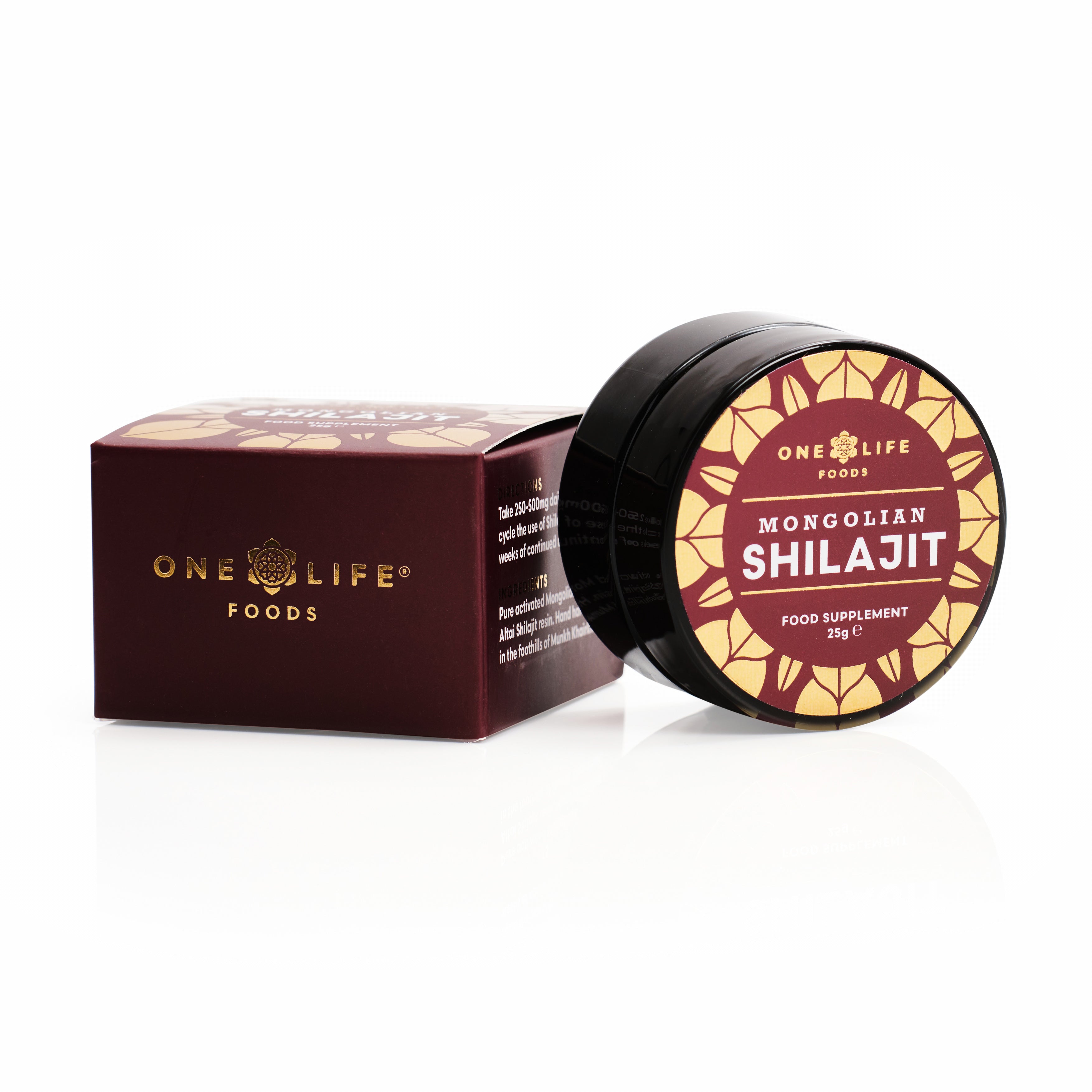
Purified Shilajit resin should disperse readily in warm water.
That doesn’t mean every authentic resin will disappear into a perfectly clear, sediment-free drink.
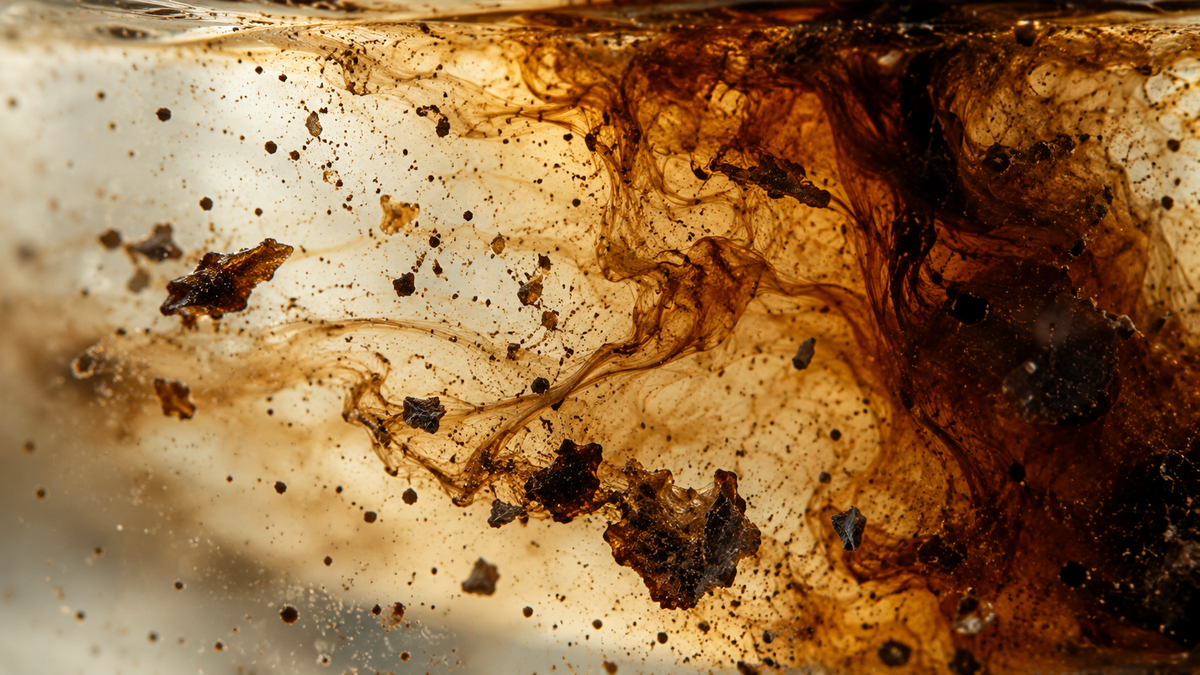
Shilajit is a complex natural matrix rather than one purified chemical. Depending on its composition, concentration and the water used, a small amount of extremely fine material may remain suspended or settle at the bottom of the cup.
The important words here are small and fine.
A faint dusting of dark, soft residue isn’t the same as sand, grit, fibres, stones or obvious debris. It also isn’t automatically evidence that the Shilajit is more potent.
Does Shilajit Dissolve in Water? The Quick Answer
Does Shilajit completely dissolve?
Most purified resin should disperse almost completely in warm water, producing a dark brown liquid. A trace amount of extremely fine residue can sometimes remain.
This may be related to:
-
humic material forming fine aggregates
-
naturally occurring mineral-organic complexes
-
a small insoluble humin-like fraction
-
the pH and mineral content of the water
-
serving size, temperature and mixing
A dissolve test can show you how a product behaves in water. It can’t prove authenticity, purity, potency or safety.
Dissolved, Dispersed and Settled Aren’t Quite the Same Thing
When people say Shilajit has “dissolved”, they usually mean the visible lump of resin has disappeared and the water has turned uniformly dark.
Chemically, the situation can be more complicated.
Some components may be present in a true molecular solution. Others may exist as extremely small colloidal particles dispersed throughout the water. Some of those particles can remain suspended for a long time, while others gradually join together and settle.
To the eye, all three situations may initially look like complete dissolution.
That’s why a cup can appear evenly mixed when first stirred, then develop a faint deposit after standing for several minutes.
It doesn’t necessarily mean the resin failed to dissolve. It may mean that a small dispersed fraction has aggregated or settled.
The Role of Fulvic Acid, Humic Acid and Humin
Humic substances are commonly separated into fractions according to how they behave during laboratory extraction.
Fulvic acid
Fulvic acid remains soluble across a broad range of pH conditions.
This generally makes the fulvic fraction less likely to create visible sediment when Shilajit is mixed into water. However, fulvic compounds can still interact with minerals and other components within the wider matrix.
Humic acid
Humic acid is operationally defined as the fraction that can be extracted in alkaline conditions but precipitates under strongly acidic conditions.
That definition is more accurate than simply calling it “partially soluble”.
Humic acid is a heterogeneous mixture, not one molecule. Its behaviour in water can change according to:
-
pH
-
ionic strength
-
mineral content
-
concentration
-
temperature
-
functional-group composition
-
the degree of aggregation
At neutral or mildly alkaline pH, some humic material can remain dispersed. Other portions may form colloidal aggregates or settle over time, particularly when they interact with minerals or dissolved ions.
Humin
Humin is the fraction that isn’t extracted by dilute acid or alkali under the traditional laboratory definition.
A purified resin may retain a small amount of highly insoluble organic or mineral-associated material, although its presence and quantity can’t be established by looking at a cup of prepared Shilajit.
These categories are analytical fractions. They shouldn’t be imagined as three neatly separated ingredients sitting independently inside the jar.
Can Higher Humic Acid Content Cause More Residue?
Possibly.
A resin with a higher humic acid content may contain more material capable of forming colloids, aggregates or fine sediment under ordinary drinking-water conditions.
That makes the theory chemically reasonable.
However, the amount of residue in a cup isn’t a reliable measurement of humic acid content.
Two products with the same measured humic acid percentage could behave differently because of:
-
the water’s pH
-
calcium, magnesium and other dissolved ions
-
serving concentration
-
purification and filtration
-
the structure of the humic fraction
-
mineral binding
-
storage conditions
-
mixing time and temperature
A small deposit might contain humic material, but it could also contain humin, mineral-organic complexes or another fine insoluble fraction.
Without collecting and chemically analysing the sediment, we can’t say exactly what it is.
The most accurate wording is:
Fine residue may be consistent with a less soluble or more aggregation-prone humic fraction, but sediment alone doesn’t demonstrate higher humic acid content.
What We See in Our Mongolian Altai Shilajit
Our independently produced laboratory results show that our Mongolian Altai resin contains:
-
51.93% fulvic acids
-
10.19% humic acids
Using the same ISO 19822:2018 method, our Siberian Altai resin returned:
-
41.19% fulvic acids
-
5.8% humic acids
In practice, the Mongolian resin can sometimes leave a slightly more noticeable fine deposit after it has been mixed and allowed to stand.
Its higher measured humic acid content is one plausible explanation for that difference.
We can’t prove the composition of the deposit without analysing the residue itself, so we don’t describe sediment as a direct humic acid test. Other differences between the products, including their mineral profiles and physical composition, may also contribute.
You can view the figures, laboratories and analytical methods on our page explaining how we test our Shilajit.
How Much Residue Is Normal?
There’s no validated visual standard defining an acceptable amount of Shilajit sediment.
As a practical distinction, a normal trace deposit would usually be:
-
very small in quantity
-
extremely fine
-
dark brown or black
-
soft rather than sandy
-
visible mainly after the drink has been left to stand
-
free from an obvious gritty mouthfeel
The drink itself should still appear evenly dark after thorough stirring.
A small dust-like layer is very different from a substantial pile of insoluble matter.
What Shouldn’t Be in Purified Shilajit?
Purification is intended to remove unwanted geological, plant and environmental material.
A properly purified resin shouldn’t contain obvious:
-
sand
-
stones
-
hard grit
-
plant fibres
-
wood fragments
-
large flakes
-
foreign particles
You should also be cautious if the product develops:
-
a large or increasing amount of debris
-
an unusual surface film
-
visible fungal growth
-
an unexpectedly sour or rotten smell
-
major changes in appearance between servings from the same jar
Physical appearance can raise questions, but it can’t identify contaminants. Relevant laboratory testing remains much more useful than informal inspection alone.
Read our guide to informal Shilajit tests and laboratory reports for a fuller explanation.
Does Sediment Mean the Shilajit Is Poorly Purified?
Not automatically.
Purification doesn’t necessarily mean removing every particle until the product behaves like a fully refined beverage powder.
A small amount of extremely fine material could remain within an otherwise appropriately purified resin. The relevant question is whether it represents harmless matrix material or unwanted contamination.
You can’t answer that question from the sediment alone.
This is why a responsible quality assessment should consider:
-
the purification process
-
the amount and character of the residue
-
batch consistency
-
finished-product testing
-
contaminant screening
-
the manufacturer’s transparency
Obvious grit may suggest inadequate filtration or poor handling. A barely visible fine deposit doesn’t justify the same conclusion.
Does More Sediment Mean Better Shilajit?
No.
This is the opposite mistake.
Some brands claim that perfectly dissolving Shilajit must be authentic. Others claim that sediment proves the product is natural and full-spectrum.
Neither position is scientifically reliable.
A highly filtered or processed product may dissolve cleanly. A genuine resin may leave a trace deposit. A contaminated or poorly purified product may also leave sediment.
The amount left at the bottom of the cup can’t tell you:
-
how much fulvic acid the resin contains
-
how much humic acid it contains
-
whether it has been adulterated
-
whether it is free from heavy metals
-
whether it contains microbes, mycotoxins, solvents or PAHs
-
whether the declared origin is accurate
-
whether it will produce a particular benefit
Sediment is an observation, not a certificate of quality.
Is the Fine Residue Beneficial?
We don’t currently have evidence showing that the residue left in a prepared cup provides an additional health benefit.
It may contain humic material or mineral-organic complexes. It may also contain a fraction that is less soluble or less bioaccessible.
Calling it “the most potent part” of the product would be speculation.
That doesn’t mean a trace deposit is harmful or should automatically be discarded. It means its biological significance hasn’t been established.
This is an important distinction:
A little residue can be normal without needing to be marketed as an extra benefit.
That’s a more honest conclusion than comparing it with pulp in orange juice. Orange pulp has a well-characterised composition. Fine Shilajit sediment generally hasn’t been separately analysed.
Should You Drink the Residue?
With a purified, independently tested resin, a trace amount of very fine sediment isn’t automatically concerning.
You can swirl the final mouthful before drinking if you prefer. You can also leave the tiny deposit behind.
We can’t honestly claim that consuming it provides extra benefit, or that leaving it behind removes a meaningful proportion of the product’s active matrix.
Don’t consume obvious sand, stones, fibres, large particles or anything else that looks like foreign debris. Contact the seller and retain the batch information if something appears unusual.
How to Dissolve Shilajit Properly
Preparation conditions can make a noticeable difference.
-
Add the measured serving to warm water.
-
Stir until the main resin has completely dispersed.
-
Allow harder resin a little time to soften.
-
Stir again before drinking.
-
Check the cup after several minutes rather than judging it immediately.
Warm water usually makes the resin easier to disperse because the material becomes softer and less viscous.
You don’t need boiling water. A comfortably warm drink is enough.
Using a very large serving in a small volume of water can also make settling more noticeable. That doesn’t necessarily indicate a product problem. It may simply mean the mixture is highly concentrated.
Our practical guide explains how to take Shilajit, including dosage, temperature and timing.
Why Different Water Can Produce Different Results
The same resin may behave differently in different homes.
Tap water varies in:
-
pH
-
calcium
-
magnesium
-
sodium
-
overall mineral content
-
ionic strength
These factors can influence how humic substances disperse, interact and aggregate.
Hard water may therefore produce a different appearance from soft or filtered water. The difference doesn’t necessarily mean the resin has changed.
For a more controlled comparison between two Shilajit products, use:
-
the same water
-
the same water temperature
-
the same serving weight
-
the same liquid volume
-
the same mixing time
-
identical glasses
Even then, the comparison only shows physical behaviour. It doesn’t identify the material that remains.
Can the Dissolve Test Prove Shilajit Is Authentic?
No.
The dissolve test can tell you whether the product disperses readily and whether it contains obvious insoluble debris.
It can’t establish authenticity.
A substitute material could be formulated to dissolve. A genuine resin could leave fine sediment. A product could dissolve perfectly while still containing excessive contaminants or being incorrectly labelled.
Likewise, a dark colour doesn’t prove origin, a flame test doesn’t prove purity and a stretchy texture doesn’t prove potency.
Useful quality evidence comes from several sources together:
-
clear ingredient information
-
credible sourcing
-
appropriate purification
-
batch identification
-
independent testing
-
disclosed analytical methods
-
relevant contaminant screening
Learn more in our guide to reading a Shilajit laboratory report.
The Bottom Line
Purified Shilajit resin should disperse readily in warm water, but it doesn’t always create a perfectly clear, sediment-free drink.
A trace amount of extremely fine residue can be normal.
Higher humic acid content is one plausible reason, particularly because humic material can form colloids and aggregates depending on pH, mineral content and other conditions. However, the sediment could also include humin, mineral-organic complexes or another insoluble fraction.
You can’t determine its composition by looking at it.
The fairest conclusion is neither “all sediment is contamination” nor “more sediment means better Shilajit”.
It’s this:
A tiny amount of fine residue may be compatible with a genuine, properly purified resin, but dissolution isn’t a reliable test of authenticity, composition or quality.
Judge the product by its sourcing, purification and laboratory evidence, not by whether the bottom of the glass looks perfectly polished.
View our Shilajit laboratory results, explore the One Life Foods Shilajit range, or return to the complete Shilajit Guide.
Research and Sources
International Humic Substances Society. What Are Humic Substances?
Lan T, Wu P, Liu Z, et al. Understanding the Effect of pH on the Solubility and Aggregation Extent of Humic Acid in Solution by Combining Simulation and Experiment. Environmental Science & Technology. 2022;56(2):917-927.
Klučáková M. Characterization of pH-fractionated humic acids with respect to their dissociation behaviour. Environmental Science and Pollution Research. 2016;23:7722-7731.
Baigorri R, Fuentes M, González-Gaitano G, et al. Complementary Multianalytical Approach to Study the Distinctive Structural Features of the Main Humic Fractions in Solution. Journal of Agricultural and Food Chemistry. 2009;57(8):3266-3272.
Zhernov YV, Konstantinov AI, Zherebker A, et al. Antiviral Activity of Natural Humic Substances and Shilajit Materials Against HIV-1: Relation to Structure. Environmental Research. 2021;193:110312.
One Life Foods. How We Test Our Shilajit.
Written By
Written by Chris Simon, Founder of One Life Foods.
Chris has worked in the supplement industry since 2009 and is known for seeking out exceptional ingredients, products, and formulations. Read more about Chris and the story behind One Life Foods.

Share:
Shilajit and Ashwagandha: Understanding the Science Behind the Stack
Why are cold process soaps better than conventional soaps?