


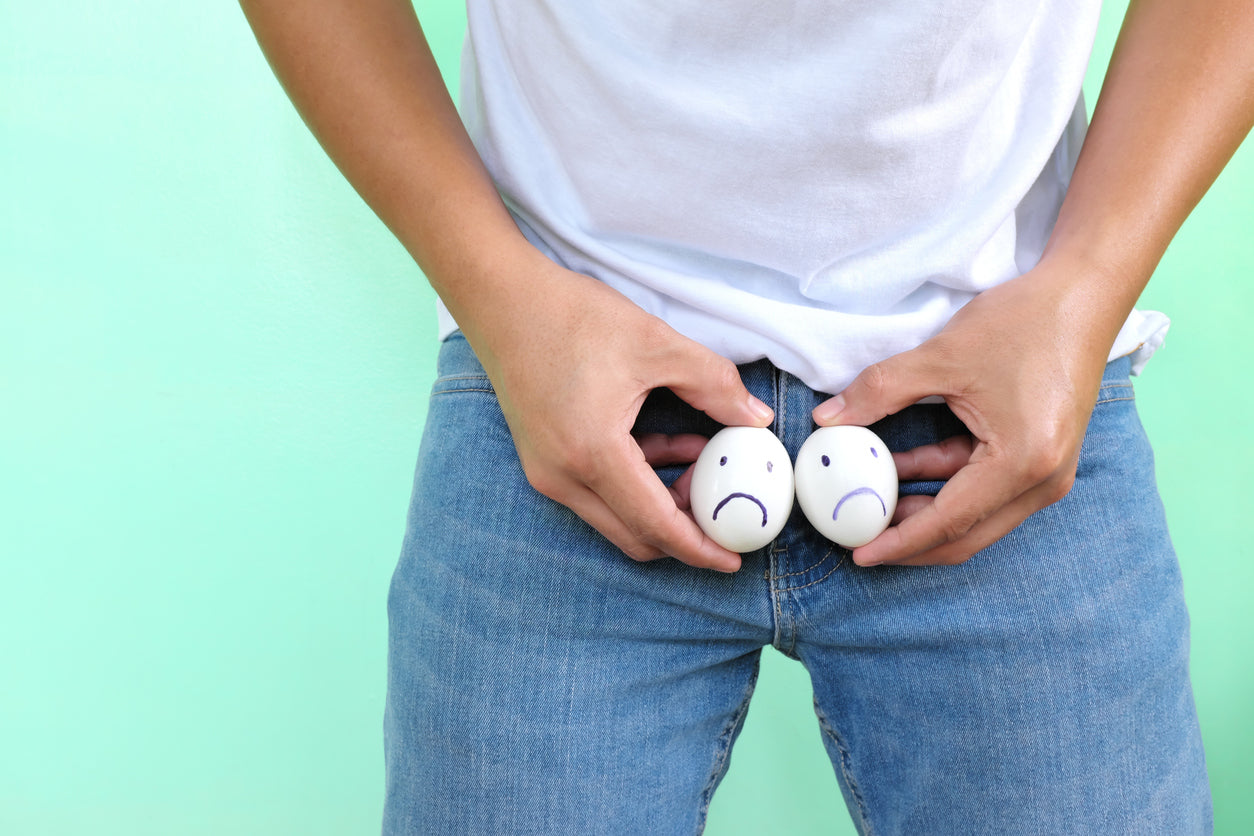
In the world of high-performance living, gym selfies and biohacking, testosterone has become the poster hormone for energy, muscle, libido and masculinity itself.
It is often called the “king of hormones”.
And where there is a king, there is usually a queue of supplements lining up to polish his crown.
Enter the booming market of testosterone-boosting herbal extracts.
Glossy labels. Influencer ads. “Natural anabolic” promises. A lot of men being told they are one capsule away from becoming a Greek statue with better Wi-Fi.
But how much of it is real science?
And how much is just well-branded nonsense?
The honest answer sits somewhere in the middle.
Some herbal extracts have meaningful evidence behind them. Some may support testosterone indirectly by improving stress, sleep, libido, training output or free testosterone availability. Some are interesting but early. And some are little more than aggressive label design with a plant name attached.
The short version is this: testosterone-support herbs can be useful, but they are not natural TRT. The better ones may support stress resilience, libido, free testosterone availability, recovery or the wider hormonal environment. The weaker ones mostly support marketing departments.
So let’s cut through the hype, get under the hood of hormone optimisation, and look at what these extracts can, and cannot, do.
First, What Does Testosterone Actually Do?
Testosterone is an androgen hormone involved in a wide range of male physiological functions, including:
muscle protein synthesis
libido and sexual function
sperm production
red blood cell formation
bone density
mood and motivation
fat distribution
recovery and physical performance
It is not the only hormone that matters.
It is not a personality trait.
And it is not a magic dial you simply turn up until life becomes a sports montage.
Testosterone sits inside a much larger system involving the brain, testes, adrenal glands, liver, sleep quality, nutrition, stress and overall metabolic health.
That is why testosterone support is never just about testosterone.
It is about the environment your body is operating in.
TRT, TOT and Herbal Support
Before we talk about herbs, we need to separate three very different ideas.
Testosterone Replacement Therapy
Testosterone Replacement Therapy, or TRT, is a medically prescribed treatment for men with clinically low testosterone, often due to hypogonadism.
The goal is to restore testosterone to an appropriate physiological range under medical supervision.
TRT can be highly effective when properly indicated.
It is also not the same thing as taking a supplement.
TRT introduces testosterone from outside the body. It can affect natural production, fertility, blood markers and long-term endocrine regulation, which is why it belongs in the medical lane.
Not the “my mate Dave said it changed his life” lane.
Testosterone Optimisation
Testosterone Optimisation Therapy, or TOT, is a broader idea. It may include medical intervention where appropriate, but it also looks at lifestyle, nutrition, sleep, training, body composition, stress management and supportive supplementation.
This is where herbal extracts often appear.
Not as replacements for testosterone.
Not as natural TRT.
But as supportive tools within a wider strategy.
Herbal Testosterone Support
Herbs such as fenugreek, ashwagandha, Tongkat Ali and Shilajit are often used in male vitality and performance formulas.
The best case for these ingredients is not that they override your endocrine system.
It is that they may support the conditions that allow it to function better.
That distinction matters.
TRT restores.
Lifestyle builds the foundation.
Herbs may support.
Each has its place.
Confusing them is how you end up expecting a fenugreek capsule to do the work of a prescription, eight hours of sleep and a less tragic diet.
Meanwhile, in Steroidland
Herbal extracts are not steroids in disguise.
They will not turn you into a walking deltoid or get you mistaken for a Marvel character.
That is the job of anabolic steroids, SARMs and other chemical wizardry designed to hijack the endocrine system and force dramatic changes.
Fast results?
Often, yes.
Free results?
Not usually.
The bill can include hormonal shutdown, acne, mood swings, fertility problems, blood pressure changes, liver strain and an endocrine system that starts filing complaints.
Herbal extracts do not play in that league.
And that is the point.
They work with biology rather than bulldozing it.
Less superhuman.
More sustainable.
Think better signal, not hormonal arson.
Herbal Extracts: Boost or Support?
This is where the language gets slippery.
Most supplement labels talk about “boosting” testosterone.
It sounds powerful.
It also sounds conveniently vague.
In reality, most herbal extracts do not crank testosterone into superhero territory. If they work, they usually support one or more related pathways.
That may include:
supporting luteinising hormone signalling
helping reduce stress-related suppression
supporting sleep and recovery
improving libido or sexual function
influencing SHBG and free testosterone availability
providing mineral or antioxidant support
supporting sperm parameters in specific populations
This is why the word “support” is often more accurate than “boost”.
Less exciting, perhaps.
More honest, definitely.
If a man has borderline-low testosterone because he is sleeping badly, training too hard, eating poorly and running on cortisol and resentment, supportive herbs may help as part of a wider reset.
If testosterone is clinically low due to hypogonadism, herbs alone are unlikely to solve the problem.
If the factory has slowed down, support may help.
If the factory has shut, no amount of maca is going to drag everyone back from lunch.
Age Matters: Who Actually Benefits?
The response to herbal testosterone support depends heavily on the person.
That includes age, baseline testosterone, stress load, body composition, sleep, training status, nutrient status and overall health.
Young Men: 18 to 35
In younger men, testosterone is often not the real issue.
Low energy, poor libido or flat mood may be caused by:
poor sleep
overtraining
undereating
chronic stress
excess alcohol
low vitamin D
low zinc or magnesium
high body fat
poor mental health
In this group, herbs may help if they address a real bottleneck, such as stress or recovery.
But if testosterone is already healthy, the increase may be modest or irrelevant.
You cannot optimise your way out of four hours of sleep and a breakfast that comes in a wrapper.
Midlife Men: 35 to 55
This is often the most interesting group for herbal support.
Testosterone may begin to decline gradually, stress tends to accumulate, sleep quality often worsens, training recovery becomes less forgiving, and metabolic health starts asking uncomfortable questions.
Herbal extracts may be more useful here because the system is still responsive, but the margin for support is wider.
For many men, this is the sweet spot for intelligent supplementation.
Not because herbs reverse ageing.
Because they may support the systems ageing tends to put under pressure.
Older Men: 55 Plus
In older men, testosterone levels may be significantly lower, but the reasons can be more complex.
Herbs may still have a role in vitality, libido, stress resilience and general wellbeing, but they should not be treated as a substitute for medical assessment.
If testosterone is clinically low, symptoms are significant, or fertility, prostate health, cardiovascular health or medication interactions are relevant, a qualified clinician should be involved.
There is nothing alpha about ignoring blood work.
The HPT Axis: The System Behind the Signal
Testosterone production is regulated through the hypothalamic-pituitary-testicular axis, usually shortened to the HPT axis because apparently medicine enjoys acronyms almost as much as supplements enjoy buzzwords.
The process works broadly like this:
The hypothalamus releases GnRH.
GnRH signals the pituitary gland.
The pituitary releases luteinising hormone, or LH.
LH signals the testes to produce testosterone.
Testosterone then feeds back into the system to regulate further production.
This is not a simple on-off switch.
It is a feedback loop.
Stress, calorie restriction, sleep deprivation, illness, inflammation, alcohol, excess body fat and certain medications can all influence the system.
That is why testosterone support is rarely about one ingredient.
It is about the whole environment.
A herb that supports stress resilience may indirectly support testosterone.
A mineral that supports normal hormone production may matter if intake is low.
A training programme that improves body composition may do more than any capsule.
Biology likes context.
Marketing prefers shortcuts.
This is also why how supplement stacking actually works matters more than simply adding every popular ingredient into one capsule and hoping the endocrine system applauds.
What the Research Actually Says: Herbs With Better Evidence
Some herbal extracts are more credible than others.
The question is not whether an ingredient has a traditional reputation. Many do.
The question is whether human evidence supports a realistic claim.
It also matters whether the ingredient is being used as a raw powder, a concentrated extract, or a standardised extract with measurable actives. That difference is not minor, as we explain in powdered herbs vs herbal extracts.
Let’s start with the stronger candidates.
Fenugreek: The Free Testosterone Candidate
Fenugreek is one of the more interesting herbs in the testosterone-support category.
It contains steroidal saponins and other compounds that may influence libido, body composition, strength outcomes and androgen availability.
Some research suggests fenugreek extract may affect free testosterone, possibly through mechanisms involving SHBG, aromatase or 5-alpha-reductase modulation, although the exact pathway is still not fully settled.
That matters because total testosterone and free testosterone are not the same thing.
Total testosterone is the amount circulating in the blood overall.
Free testosterone is the fraction not bound to proteins such as SHBG and albumin, meaning it is more biologically available.
A man can have total testosterone that looks acceptable on paper but still have a lower free testosterone picture if SHBG is high.
Fenugreek has been studied in men using standardised extracts, with some trials reporting improvements in free testosterone, strength, body composition or sexual function.
This does not make fenugreek a herbal steroid.
It makes it one of the more defensible ingredients in the category.
The sensible claim is not:
“Fenugreek massively boosts testosterone.”
It is:
“Fenugreek may support free testosterone availability, libido and training-related outcomes in certain men when used consistently.”
Less dramatic.
More useful.
Which is usually how reality dresses for work.
Ashwagandha: Stress, Cortisol and the Testosterone Connection
Ashwagandha is not best understood as a direct testosterone booster.
It is better understood as an adaptogenic herb that may help support stress resilience, recovery and sleep quality.
That matters because chronic stress and poor sleep are not exactly kind to hormonal health.
Cortisol and testosterone exist in a delicate relationship. Cortisol is not “bad”. You need it. But chronically elevated stress signalling can create an environment where recovery, libido and hormonal output all suffer.
Ashwagandha has been studied for stress, anxiety, cortisol, sleep, strength and male reproductive markers.
Some studies have reported improvements in testosterone or DHEA-S in specific groups, including stressed or ageing men. Others focus more on stress and wellbeing outcomes.
This makes ashwagandha particularly useful when the likely bottleneck is stress.
If the problem is burnout, poor sleep and recovery debt, ashwagandha makes more sense than throwing louder “testosterone booster” ingredients at the wall and hoping one sticks.
The serious view:
Ashwagandha may support testosterone indirectly by improving stress resilience, recovery and sleep-related foundations.
That is not as flashy as saying it turns cortisol into biceps.
But it is much more believable.
For more context on this type of ingredient, our guide to adaptogens and natural performance explains how adaptogenic herbs fit into wider resilience, recovery and formulation strategy.
Tongkat Ali: Promising, But Context Matters
Tongkat Ali, also known as Eurycoma longifolia, has become one of the most popular male vitality herbs.
It is traditionally used for libido, energy and male performance. Modern research has explored its effects on testosterone, stress hormones, erectile function, sexual wellbeing and physical performance.
Some human studies suggest Tongkat Ali may improve testosterone markers, particularly in men with lower baseline testosterone, older adults or those under stress.
It may also influence libido and mood.
That makes it interesting.
It also needs perspective.
Tongkat Ali does not reliably produce huge testosterone increases in already healthy young men with normal levels. The benefits appear more likely when there is something to correct or support.
In other words, Tongkat Ali may be more useful for men with lower baseline status than men already operating well.
This is a recurring theme.
Herbs tend to help most when the system has room to improve.
They are not magic. They are not useless.
Annoyingly, biology keeps refusing to be binary.
Shilajit: The Mitochondrial Ally
Shilajit sits slightly apart from the classic herbal testosterone category.
Strictly speaking, it is not a herb. It is a mineral-rich resinous substance containing fulvic compounds, humic substances, minerals and other organic constituents.
If you are new to the subject, it is worth starting with what Shilajit actually is before treating it like just another testosterone herb.
It is often discussed for vitality, energy metabolism, mitochondrial function, male fertility markers and testosterone.
One randomised, double-blind, placebo-controlled study using purified Shilajit at 250 mg twice daily for 90 days reported increases in total testosterone, free testosterone and DHEA-S in healthy men aged 45 to 55.
That is interesting.
It is also not a licence to claim every black resin in a jar will do the same thing.
The study used purified Shilajit.
The dose and duration mattered.
The population mattered.
The product quality mattered.
That last point is crucial with Shilajit because raw or poorly processed material can contain contaminants. With Shilajit, testing is not a nice extra. It is part of the product.
Shilajit is best viewed as a base-layer vitality ingredient rather than a direct testosterone hammer.
It may support the systems that make hormonal health possible: energy metabolism, mineral status, oxidative balance and overall resilience.
For a deeper evidence-led look, our guide to Shilajit benefits separates the realistic claims from the usual black-jar mythology.
Less “instant testosterone boost”.
More “support the machinery”.
A less glamorous slogan, admittedly, but a better one.
Herbs That Are Overhyped
Not every plant with a long name and exotic origin deserves a place in your stack.
Some ingredients are popular because they are proven.
Others are popular because the internet found a rat study and immediately built a cathedral around it.
Fadogia Agrestis
Fadogia agrestis is frequently marketed as a natural testosterone booster.
The problem is the evidence base is thin.
Much of the hype comes from animal research, with very limited human data. There are also safety questions that have not been adequately resolved.
That does not mean it can never be useful.
It means the confidence level is not high enough for serious formulation unless stronger human safety and efficacy data emerge.
For now, it belongs in the “interesting, but let’s not pretend” drawer.
A drawer supplement marketing opens surprisingly often.
Turkesterone
Turkesterone became internet-famous as a natural anabolic ingredient.
The pitch was seductive: plant-based muscle growth without hormonal suppression.
Lovely idea.
The human evidence has not caught up.
At present, there is not enough robust clinical data to support the louder testosterone or muscle-building claims.
It may still be biologically interesting, but “interesting” is not the same as “proven”.
Supplement history is full of ingredients that looked exciting on forums and less exciting under controlled conditions.
A moment of silence for the fallen tubs.
Safed Musli
Safed Musli has a long history of traditional use and is often positioned for libido, vitality and male performance.
The problem is not tradition.
The problem is the gap between traditional use and high-quality modern evidence.
There is some early research, but the evidence is not strong enough to put it in the same category as better-studied ingredients such as fenugreek, ashwagandha or Tongkat Ali.
It may have potential.
It does not yet have enough proof for big claims.
Libido Does Not Equal Testosterone
One of the biggest myths in the male health space is that libido equals testosterone.
It does not.
Libido is influenced by:
dopamine
serotonin
sleep
stress
relationship dynamics
mental health
blood flow
medications
alcohol
body image
training load
overall energy availability
Testosterone matters, but it is only one part of the story.
You can have normal testosterone and poor libido if you are exhausted, stressed, depressed or sleeping like a haunted owl.
You can also have decent libido despite testosterone that is not especially impressive on paper.
This is why libido herbs and testosterone herbs should not be treated as identical categories.
Libido-Specific Herbs That Do Not Reliably Boost Testosterone
Some herbs may support sexual desire or performance without meaningfully raising testosterone.
That is not a failure.
It is a different mechanism.
Maca Root
Maca is often used for libido and sexual wellbeing.
Human studies suggest it may improve sexual desire in some contexts, but it does not appear to reliably increase testosterone.
That makes maca more of a libido-support ingredient than a testosterone-support ingredient.
Useful distinction.
Frequently ignored.
Ginseng
Ginseng is often discussed for erectile function, energy and resilience.
Its mechanisms may involve nitric oxide signalling, blood flow, neurotransmitters and stress adaptation rather than direct testosterone elevation.
Again, this does not make it useless.
It means the claim should match the mechanism.
If an ingredient supports erectile function or libido, say that.
Do not drag testosterone into it just because the marketing team wanted a louder noun.
Synergy: Why Blends Can Work Better Than Single Herbs
Testosterone production is a team sport.
It is not just about what is happening in the testes. It is a coordinated effort involving the brain, pituitary gland, testes, adrenal system, liver, sleep quality and nutrient status.
For that hormonal orchestra to play in tune, the body needs more than one headline herb.
It needs cofactors.
These include vitamins, minerals and nutrients that support normal hormone production, energy metabolism, recovery and stress regulation.
Key cofactors include:
Zinc
Zinc is involved in normal reproductive function, testosterone metabolism and many enzymatic processes.
Low zinc status can negatively affect hormonal health.
That does not mean more zinc always equals more testosterone.
It means sufficiency matters.
Deficiency is a problem.
Megadosing is not a personality.
Vitamin D
Vitamin D acts more like a prohormone than a simple vitamin.
It is associated with muscle function, immune health and broader endocrine function. Low vitamin D status is common, especially in the UK, where the sun often behaves like a rumour.
Vitamin D may not be a testosterone booster in everyone, but maintaining adequate status is sensible for male health.
Magnesium
Magnesium supports muscle function, nervous system function and normal energy metabolism. It may also support sleep quality and recovery, which indirectly matter for testosterone.
Again, the point is not magic.
It is removing bottlenecks.
Boron
Boron is a trace mineral often discussed for its potential effects on free testosterone, SHBG, inflammation and vitamin D metabolism.
The research is still relatively limited, but it is an interesting cofactor in male vitality formulas when dosed sensibly.
A good formula does not just throw herbs into a capsule and hope they form a committee.
It builds a system.
Strategic Stacking: Blending for Results
The best supplement stacks do not rely on one heroic ingredient.
Hero ingredients are good for labels.
Systems are better for biology.
Fenugreek may support free testosterone availability and libido.
Tongkat Ali may support male vitality, especially where baseline status is lower.
Ashwagandha may support stress resilience and recovery.
Shilajit may support energy metabolism and the mineral-rich foundation beneath vitality.
Zinc, magnesium, vitamin D and boron may help remove nutritional bottlenecks.
Creatine may support training output, muscle performance and recovery.
Each ingredient has a role.
The point is not to shout “testosterone” louder.
The point is to support the conditions that make healthy testosterone more likely.
That is the difference between stacking and sprinkling.
One is formulation.
The other is supplement confetti.
This is exactly why synergy matters when building serious formulas, especially when herbs, minerals and performance ingredients are being used for different but connected mechanisms.
Fenugreek: Why It Deserves Attention
Of the herbs in the testosterone-support space, fenugreek remains one of the most practical.
It is reasonably well-studied, accessible, and fits well alongside cofactors such as zinc, vitamin D, magnesium and boron.
It may support:
free testosterone availability
libido
strength outcomes
body composition
male vitality
Not in everyone.
Not overnight.
Not like TRT.
But as part of a structured stack, it has a stronger case than many trendier ingredients.
That is why fenugreek continues to deserve serious attention in male performance and vitality formulations.
Creatine: The Unsung Amplifier
Creatine is often left out of testosterone discussions because it is not really a testosterone booster.
That does not make it irrelevant.
Creatine supports ATP regeneration, high-intensity performance, strength output and training capacity.
Better training output and recovery can support the wider environment in which testosterone health operates.
Some research has also explored creatine’s relationship with DHT, although this area is often overstated online.
The safe conclusion is this:
Creatine is not a hormone booster in the classic sense.
It is a performance foundation.
And foundations matter.
Especially if you are trying to build anything more ambitious than another tub of disappointment.
Do Not Skip the Basics
Before building a hormone stack, make sure the fundamentals are not actively sabotaging you.
The most potent herbs in the world will struggle if you are sleeping four hours a night, living off takeaway food and treating stress like a competitive sport.
Start with:
consistent sleep
resistance training
adequate calories
enough protein
healthy fats
micronutrient sufficiency
sunlight or vitamin D support
stress management
lower alcohol intake
healthy body composition
Then add intelligent supplementation.
Hormonal health starts with lifestyle.
Stacks are the upgrade.
Not the foundation.
Testing: Stop Guessing
If you want to know whether your testosterone strategy is working, test.
Do not rely on vibes.
Do not rely on a pump.
Do not rely on whether you briefly felt more confident after reading a Reddit thread at 1am.
Useful blood markers may include:
total testosterone
free testosterone
SHBG
LH
FSH
estradiol
prolactin
DHEA-S
cortisol
vitamin D
thyroid markers
fasting glucose and insulin
lipids
liver markers
Testing before and after a protocol gives you context.
Without it, you are guessing.
And guessing is not optimisation.
It is astrology with a shaker bottle.
A Note on UK Supplement Claims
There is one more grown-up point we need to make.
In the UK, supplement marketing claims are regulated. Brands cannot simply say an ingredient “boosts testosterone” or “balances hormones” unless the wording is permitted under the relevant nutrition and health claims rules.
Educational content can discuss research.
Product claims still need to be handled carefully.
That is why serious brands should separate scientific discussion from exaggerated sales language.
It is also why the most credible supplement companies sound measured.
Not because they lack confidence.
Because they understand the difference between evidence and advertising.
A rare condition in this industry, admittedly.
This is also where label transparency becomes important. A strong formula should be able to explain its ingredients, doses, forms and purpose without hiding behind gym-floor poetry.
Final Thoughts: Hype, Hope and Hormonal Health
Herbal extracts are not hormone therapy.
They will not triple testosterone.
They will not reverse ageing in seven days.
They will not turn a sleep-deprived man surviving on coffee and chaos into a fully optimised alpha organism by next Thursday.
But that does not mean they are useless.
Used intelligently, consistently and in the right context, certain herbal extracts may support male vitality, libido, stress resilience, recovery, free testosterone availability and the wider hormonal environment.
The strongest candidates include fenugreek, ashwagandha, Tongkat Ali and purified Shilajit, each for different reasons.
The weaker candidates are the ones leaning heavily on hype, animal data, influencer enthusiasm or suspiciously loud packaging.
Here is the simple version:
If your testosterone is clinically low, speak to a doctor.
If your lifestyle is poor, fix the foundation.
If you want additional support, use quality extracts, proper doses and relevant cofactors.
If you are comparing formulas, our performance supplement range shows how we think about herbs, cofactors, extracts and formulation structure.
And if a supplement promises to boost testosterone by 300 percent naturally?
Put the jar down.
Step away slowly.
The label has started lying to you.
Further Reading and References
-
Rao, A. J. et al. Testofen® fenugreek extract increases strength and improves body composition in recreationally active males. Translational Sports Medicine, 2020.
-
Mansoori, A. et al. Effect of fenugreek extract supplement on testosterone levels in male: A meta-analysis of clinical trials. Phytotherapy Research, 2020.
-
Lopresti, A. L. et al. A randomized, double-blind, placebo-controlled, crossover study examining the hormonal and vitality effects of ashwagandha in ageing, overweight males. American Journal of Men’s Health, 2019.
-
Chandrasekhar, K. et al. A prospective, randomized double-blind, placebo-controlled study of safety and efficacy of a high-concentration full-spectrum ashwagandha root extract in reducing stress and anxiety. Indian Journal of Psychological Medicine, 2012.
-
Henkel, R. R. et al. Tongkat Ali as a potential herbal supplement for physically active male and female seniors: A pilot study. Phytotherapy Research, 2014.
-
Ismail, S. B. et al. Randomized clinical trial on the use of PHYSTA freeze-dried water extract of Eurycoma longifolia for male sexual performance and wellbeing. Evidence-Based Complementary and Alternative Medicine, 2012.
-
Talbott, S. M. et al. Effect of Tongkat Ali on stress hormones and psychological mood state in moderately stressed subjects. Journal of the International Society of Sports Nutrition, 2013.
-
Leitão, A. E. et al. A 6-month randomized trial on Eurycoma longifolia and concurrent training in men with androgen deficiency symptoms. Maturitas, 2021.
-
Pandit, S. et al. Clinical evaluation of purified Shilajit on testosterone levels in healthy volunteers. Andrologia, 2016.
-
Maheshwari, A. et al. Efficacy of Furosap™, a novel fenugreek seed extract, in enhancing testosterone levels and sexual health in males. International Journal of Medical Sciences, 2017.
-
Government of the United Kingdom. Great Britain Nutrition and Health Claims Register.
-
Advertising Standards Authority. Food: Health claims guidance.
Written By
Written by Chris Simon, Founder of One Life Foods.
Chris has worked in the supplement industry since 2009 and is known for seeking out exceptional ingredients, products, and formulations. Read more about Chris and the story behind One Life Foods.
Share:
Is Your Shilajit Safe — or a Biohazard in a Jar?
Stacking Your Supplements: What Works, What Doesn’t?