


Shilajit is having a moment.
This strange black resin has travelled from the mountain ranges of Asia and Siberai into gyms, kitchen cupboards and Instagram adverts featuring enough misty peaks to trigger a weather warning.
Some Shilajit products are excellent.
Some are perfectly respectable.
And some are, to use the correct scientific terminology, absolute shite.
The bargain-basement end of the market is now crowded with suspiciously watery jars, vague origin stories, generic certificates and brands whose entire quality-control system appears to involve holding the product up to a ring light.
That doesn’t mean every soft Shilajit resin is fake.
It doesn’t mean every runny jar contains mould.
It certainly doesn’t mean you can establish microbiological safety by turning the jar upside down on TikTok.
But when a product is unusually watery, poorly concentrated or unstable, it raises legitimate questions about how it was made, how much actual Shilajit material it contains and whether microbial growth has been properly controlled.
We aren’t claiming that watery Shilajit is routinely contaminated or that every cheap jar is unsafe. We’re explaining how excess water, poor processing and weak microbial control can turn a natural product into a genuine food-safety problem.
In the worst cases, the answer may be sitting right there in the title.
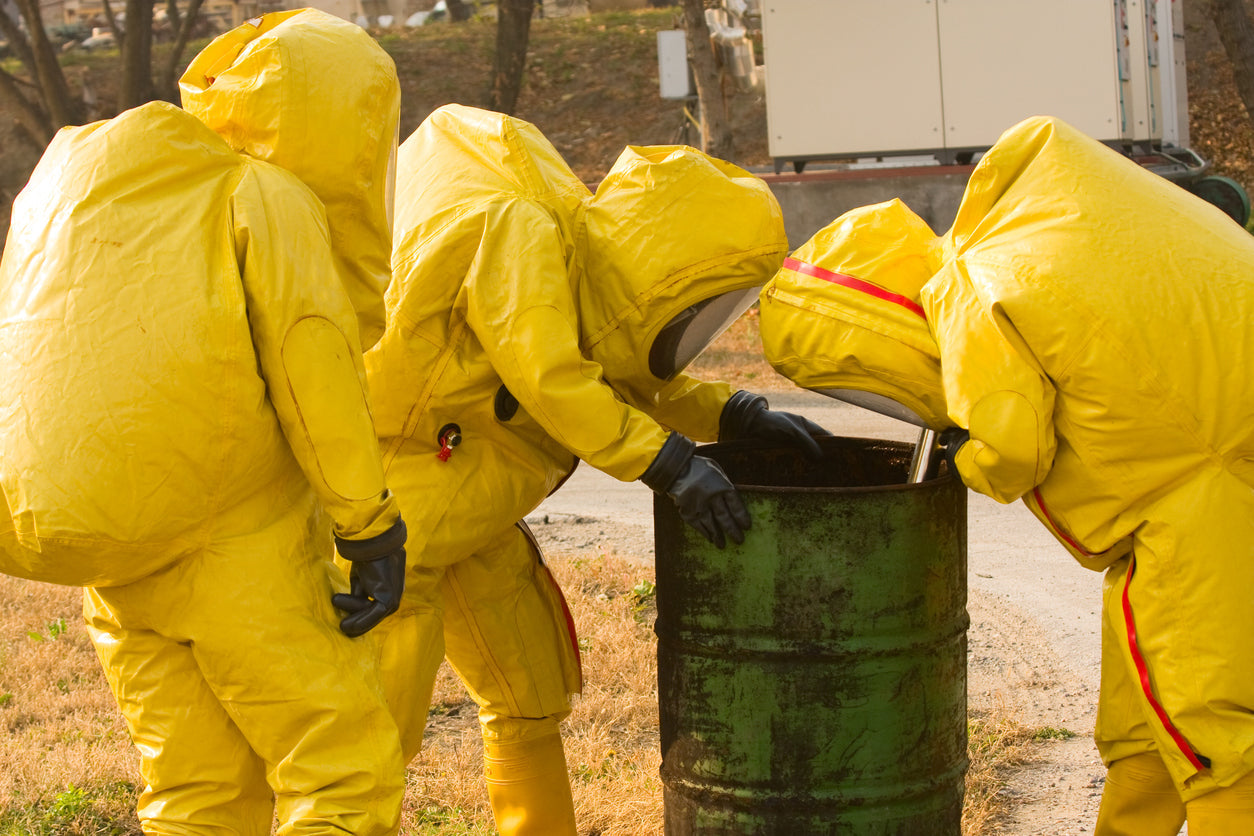
A biohazard in a jar.
Quick answer: Can Shilajit go mouldy?
Yes, Shilajit can potentially develop mould if viable fungal spores are present and the product provides suitable conditions for growth.
Runny texture alone doesn’t prove contamination. However, excess available water can make microbial stability more difficult to control.
A watery product may have been deliberately diluted. It may also have been insufficiently concentrated during production, leaving more residual water than intended.
Whether mould, yeast or bacteria will actually grow depends on several factors:
-
Water activity
-
Initial microbial contamination
-
Manufacturing hygiene
-
Temperature
-
pH
-
Packaging
-
Storage
-
Preservatives, where used
-
Time
The important distinction is simple:
A runny texture is a clue. It isn’t a laboratory result.
A thick product can still be unsafe. A softer product can remain stable if its formulation and manufacturing process have been properly controlled.
The real question is whether the brand can explain the product, measure the relevant risks and demonstrate that the finished batch meets an appropriate safety specification.
Soft Shilajit isn’t automatically watery Shilajit
Shilajit resin can be firm, soft, glossy, elastic or extremely tacky.
Temperature, composition, moisture, purification and geographical source can all influence how it behaves.
A soft-set resin may stretch into threads, cling aggressively to a spoon and smear itself across the worktop like it has a personal grievance against cleanliness.
That can be completely normal.
Soft and tacky isn’t the same as loose and watery.
A concentrated resin should generally remain cohesive. It may stretch, pull and slowly settle, but it shouldn’t necessarily pour around the jar like gravy.
We explain the physical chemistry in detail in Why Is Shilajit Resin So Sticky?.
This article is about what happens when softness crosses into excess water, poor stability and possible contamination.
Diluted or simply not concentrated properly?
A runny jar doesn’t necessarily mean someone stood over a vat with a hosepipe.
Deliberate dilution is one possibility.
Water is cheap. It adds weight. It allows more jars to be filled from the same quantity of concentrated material.
From a dishonest seller’s point of view, that’s a remarkably efficient way to turn tap water into profit.
But incompetence can produce a very similar product.
Shilajit is often purified by dispersing or extracting the raw material into water, removing insoluble rock and debris, and then concentrating the filtered liquid back into resin.
If concentration is stopped too early, too much residual water may remain in the finished product.
The manufacturer may not have deliberately diluted anything. They may simply have failed to dry or concentrate it properly.
From the customer’s perspective, the immediate result can be much the same:
-
Less Shilajit dry matter in every gram
-
More residual water
-
A looser product
-
Greater dependence on hygienic handling
-
A more demanding microbial-stability problem
-
A potentially less predictable shelf life
That doesn’t mean the jar will inevitably grow mould.
It means the manufacturer has created a problem that needs to be measured and controlled.
Whether the water was added deliberately or left behind through sloppy processing, “authentic consistency” isn’t an adequate answer.
Water-activity measurements, finished-product microbial testing and a properly supported shelf life are.
For the consumer maths behind dry matter, serving strength and paying Shilajit prices for unnecessary water, read How Much Shilajit Is Actually in Your Shilajit?.
More water can mean less actual Shilajit
Shilajit is usually sold by total weight.
That weight includes water.
A 30 gram jar containing a large amount of residual or added water may look like better value than a smaller jar of concentrated resin. In reality, you may be paying a premium price for something that comes freely from the kitchen tap.
A brand should therefore understand:
-
Whether it sells a resin or an intentionally diluted liquid
-
Whether water is deliberately added
-
How the concentration endpoint is controlled
-
How much non-water material the finished product contains
-
Whether batches remain reasonably consistent
-
How much product constitutes one serving
Cheap doesn’t always mean poor quality.
Expensive doesn’t guarantee excellence either.
But when a jar is implausibly cheap, unusually watery and supported by absolutely bugger-all analytical evidence, the clues are beginning to form an orderly queue.
For a broader discussion of price, concentration and genuine value, read How Much Should Shilajit Cost?.
Water content and water activity aren’t the same thing
This is where the science matters.
Water content tells us how much water is present in a product.
Water activity, written as aw, describes how available that water is to support microbial growth and participate in chemical reactions.
They aren’t interchangeable.
Some water can be associated with salts, minerals and organic components within the Shilajit matrix. That water may influence texture without being equally available to microorganisms.
Two products can therefore contain similar total quantities of water but have different water activities.
This is why a moisture percentage alone doesn’t answer the entire safety question.
It’s also why:
“Looks dry enough to me”
isn’t a recognised method of microbiological validation.
Water activity is measured on a scale between 0 and 1.
Pure water has a water activity close to 1. Lower values mean that less water is available.
An aw of 0.85 is widely used as an important reference point in food microbiology and US food regulation because many pathogenic bacteria require more available water than this to grow.
It isn’t a universal Shilajit safety limit.
Some moulds and yeasts can grow at lower water activities. The appropriate specification must be established for the finished product, its intended shelf life and its complete preservation system.
The simple version is:
Water content helps describe concentration. Water activity helps describe microbial opportunity.
Both can matter.
Neither can be assessed by watching resin slide down the side of a jar.
How can microorganisms get into Shilajit?
Shilajit is collected from open natural environments and passes through multiple stages before reaching the consumer.
Microorganisms may be introduced through:
-
Raw source material
-
Rock and soil
-
Collection water
-
Storage containers
-
Processing vessels
-
Filters
-
Drying or concentration equipment
-
Filling machinery
-
Packaging
-
Human handling
The purpose of controlled purification and hygienic manufacturing is to reduce and manage these risks.
Problems can arise when:
-
Raw material is stored while wet
-
Unsuitable water is used
-
Equipment isn’t properly cleaned
-
Processing takes place in poor conditions
-
Product is left exposed
-
Concentration is inconsistent
-
Filling is poorly controlled
-
Packaging doesn’t protect the product
-
Storage temperatures aren’t appropriate
A natural origin doesn’t make a product naturally sterile.
Mountains contain microbes too.
Can mould grow in Shilajit resin?
Potentially, yes.
If viable mould spores remain in the finished product and the conditions support germination and growth, visible mould may eventually develop.
Water availability is an important part of that environment.
So are temperature, oxygen, time and the surrounding chemical matrix.
A wetter product doesn’t guarantee mould growth.
It removes one potential barrier.
Think of it this way:
Leaving your front door unlocked doesn’t guarantee that you’ll be burgled.
It does make the security system considerably less impressive.
Does mould mean mycotoxins are present?
Not automatically.
Mycotoxins are toxic compounds produced by certain mould species under suitable environmental conditions.
Not every mould produces mycotoxins.
Even moulds capable of producing them won’t necessarily do so in every product or environment.
Mycotoxin formation may depend on:
-
Mould species
-
Temperature
-
Water activity
-
Nutrient availability
-
Oxygen
-
Storage time
-
The product matrix
The reverse problem is also possible.
A product can contain a mycotoxin even when living mould is no longer visible. Some mycotoxins are chemically stable and can remain after the original fungal growth has stopped or disappeared.
So the accurate position is:
Visible mould doesn’t prove that mycotoxins are present, but it is enough reason not to consume the product. No visible mould doesn’t prove that mycotoxins are absent.
You can’t identify a mould species by staring at it.
You can’t confirm aflatoxins by sniffing the jar.
And licking the suspicious patch to see whether it tastes wrong isn’t citizen science. It’s just a terrible idea.
Should every Shilajit product be tested for mycotoxins?
Not necessarily.
Testing should follow a product-specific risk assessment rather than treating every possible laboratory panel as automatically necessary.
Where the raw material, storage history, supplier evidence or manufacturing process identifies a credible fungal risk, testing may include relevant mycotoxins such as aflatoxins or ochratoxin A.
The appropriate panel may depend on:
-
Raw-material condition
-
Geographical source
-
Collection and storage practices
-
Moisture exposure
-
Previous supplier results
-
Manufacturing process
-
Complaint history
-
Evidence of fungal contamination
Adding every imaginable test to a certificate doesn’t automatically create a good quality system.
Equally, ignoring a credible risk because the test is inconvenient or expensive isn’t much of a system either.
What should you do if Shilajit has visible mould?
Don’t consume it.
Don’t scrape off the visible patch and carry on.
Don’t stir it back in.
Don’t warm the jar and assume that heat, optimism and ancient mountain energy have solved the problem.
Close the container and record:
-
Product name
-
Batch or lot number
-
Best-before date
-
Date of purchase
-
Date opened
-
Storage conditions
-
When the change was first noticed
Take clear photographs and contact the seller.
A responsible company should want to investigate the jar, the batch and the manufacturing records.
A less responsible one may offer you 10% off your next order and ask whether Mercury was in retrograde.
Mould isn’t the only microbial problem
Mould gets attention because it may be visible.
Bacteria and yeasts are less considerate.
A product can look, smell and taste normal while still containing an unacceptable microbial load.
Depending on the finished product, its intended use and its risk assessment, microbiological testing may include:
-
Total aerobic microbial count
-
Yeast and mould
-
Coliforms or Enterobacteriaceae
-
Escherichia coli
-
Salmonella
-
Coagulase-positive staphylococci
-
Other relevant organisms
There isn’t one universal microbiological panel or set of limits that automatically applies to every Shilajit resin.
The organisms tested and acceptance criteria should be selected by a competent food-safety professional using:
-
The product’s intended use
-
Its composition
-
The manufacturing process
-
Shelf life
-
Applicable food law
-
Recognised microbiological guidance
-
The company’s hazard analysis
UK Health Security Agency guidance can help professionals interpret microbiological findings in ready-to-eat foods. It isn’t a dedicated legal specification written specifically for Shilajit.
The decision should therefore be made by somebody with appropriate food-safety and microbiological knowledge.
Not by the marketing department.
Not by the person who designed the label.
And ideally not by Dave, who has watched three YouTube videos and now describes himself as a Shilajit alchemist.
Read PAHs, Solvents and Microbial Testing in Shilajit for a deeper explanation of the main contaminant categories.
No visible mould proves very little
Consumers naturally look for visual warning signs.
That makes sense, but appearance has limits.
A clean-looking jar doesn’t rule out:
-
Elevated microbial counts
-
Harmful bacteria
-
Mycotoxins
-
Heavy metals
-
PAHs
-
Residual solvents
-
Pesticide residues
-
Undeclared ingredients
-
Poor purification
A thick resin can fail safety tests.
A thin resin can pass them.
Texture is one physical characteristic.
Safety is the result of a controlled process.
This is why no home authenticity test, flame test, freezer test, spoon test or dissolve-it-in-water performance can replace laboratory analysis.
Preservatives aren’t automatically bad
Preservatives are often discussed as though adding one transforms a pure natural product into radioactive industrial sludge.
That isn’t how formulation works.
An appropriately used permitted preservative can form part of a sensible microbial-control system.
Its suitability depends on:
-
The specific preservative
-
Its concentration
-
Product pH
-
Water activity
-
Other ingredients
-
Packaging
-
Intended shelf life
-
Applicable food law
A preserved product isn’t automatically inferior.
An unpreserved product isn’t automatically cleaner or safer.
Microbial stability can be controlled using several complementary barriers:
-
Low water activity
-
Suitable pH
-
Hygienic manufacturing
-
Controlled heating or concentration
-
Appropriate preservatives
-
Protective packaging
-
Clean filling procedures
-
Correct storage
-
Shelf-life validation
The problem isn’t that a manufacturer used a preservative.
The problem is when a company produces a moist natural product with no obvious preservation strategy and appears to be relying on the antimicrobial properties of its logo.
“Preservative-free” is a formulation statement.
It isn’t a microbiology report.
What should a responsible manufacturer control?
Safe Shilajit production doesn’t begin when somebody sends a sample to a laboratory.
It begins with the supply chain and process.
Food businesses should identify and control microbiological, chemical and physical hazards through an appropriate food-safety management system.
For Shilajit, that should include consideration of the following areas.
Raw-material sourcing
The manufacturer should know where the material came from, who collected it and how it was stored before purification.
Water quality
Any water used for extraction, cleaning or processing should meet an appropriate specification.
Adding unsuitable water to a natural product and then printing “wild harvested” on the box doesn’t improve matters.
Purification
The process should reduce unwanted rock, grit, environmental debris and microbial contamination without introducing new hazards.
Read Is Raw Shilajit Really Better? for a deeper look at what purification changes.
Concentration
The manufacturer should define when the product has reached its intended concentration rather than stopping when it looks vaguely gooey.
Hygiene
Equipment, vessels, filters, utensils and filling areas should be cleaned and controlled.
Packaging
The container should protect the resin during storage and normal use.
Batch records
The company should be able to trace what happened during production, including times, temperatures, quantities and any deviations.
Finished-product testing
Testing should relate to the product customers actually receive, not merely a bucket of raw material tested six months before manufacturing.
Shelf-life assessment
The company should have evidence that the product remains within its chemical and microbiological specification for the period shown on the label.
Is one clean microbial test enough?
It’s useful.
It isn’t the entire quality system.
A laboratory result describes the sample received at the time it was tested.
It doesn’t automatically prove:
-
Every batch is identical
-
Every jar was filled correctly
-
The product will remain stable for its entire shelf life
-
The report matches current stock
-
The consumer won’t introduce contamination after opening
-
The manufacturer consistently controls its process
A company that waves one old supplier certificate around as proof of permanent universal safety has misunderstood either testing or time.
Possibly both.
Laboratory analysis should confirm a working quality system.
It shouldn’t be used to create the illusion of one.
What testing should Shilajit resin have?
There’s no single universal test panel suitable for every Shilajit product.
Testing should be based on the product’s source, process, composition, packaging and intended shelf life.
Depending on the risk assessment, useful testing may include:
Water content
This can help evaluate concentration and batch consistency.
It doesn’t provide the same information as water activity.
Water activity
This helps assess how much water is available to microorganisms.
If water activity is an important part of the preservation system, it should be controlled as a defined specification rather than measured once for curiosity.
Microbiology
The panel may include total microbial counts, yeast and mould, indicator organisms and relevant pathogens.
Finished-product testing matters because contamination can occur after the raw material was analysed.
Mycotoxins
Where a credible fungal risk has been identified, testing may include relevant mycotoxins.
The chosen panel should follow the product-specific risk assessment rather than being copied blindly from another food category.
Heavy metals
Lead, cadmium, arsenic and mercury are particularly important for a substance associated with geological environments.
A broader elemental screen may also be useful.
PAHs
Polycyclic aromatic hydrocarbons may be relevant to the source material and certain poorly controlled heating or drying processes.
Residual solvents
If solvents could have been used during extraction or processing, the finished product may require relevant testing.
Identity and composition
A safe brown resin isn’t necessarily Shilajit.
Testing should also help establish that the product is chemically consistent with the specification under which it is being sold.
Our article on How Shilajit Testing Works explains why meaningful quality control requires more than a four-line heavy-metal report.
What should a laboratory report show?
“Third-party tested” is one of the most overworked phrases in the supplement industry.
It can mean that a current finished batch was comprehensively tested by a competent independent laboratory.
It can also mean that somebody once emailed the seller a blurry PDF relating to an unidentified brown substance.
A useful report should show:
-
Product name or clear sample description
-
Batch or lot number
-
Date received
-
Date tested
-
Laboratory identity
-
Analytical methods
-
Numerical results
-
Units
-
Detection or quantification limits
-
Relevant acceptance criteria
-
The person or organisation that submitted the sample
A legitimate laboratory can still produce a report that is irrelevant to your jar.
The report may relate to:
-
A different batch
-
A raw ingredient
-
Another product
-
A supplier sample
-
Old stock
-
A limited test panel
Read How to Read a Shilajit Lab Report before accepting “lab tested” as the end of the discussion.
Why is some Shilajit so cheap?
There are legitimate reasons one brand may charge less than another.
A company may:
-
Buy larger quantities
-
Use simpler packaging
-
Accept smaller margins
-
Spend less on advertising
-
Run an efficient supply chain
-
Source from a lower-cost region
Low price alone doesn’t prove poor quality.
However, proper Shilajit manufacture involves genuine costs:
-
Collection
-
Transport
-
Raw-material rejection
-
Purification
-
Filtration
-
Controlled concentration
-
Hygienic production
-
Laboratory testing
-
Packaging
-
Storage
-
Traceability
-
Complaint investigation
-
Staff who understand what they’re doing
Those costs don’t disappear because a seller has written “direct from the Himalayas” beneath a photograph of a bearded man near a mountain.
Extremely cheap Shilajit may be made possible through:
-
Inadequate purification
-
Higher residual water
-
Cheap fillers
-
Minimal testing
-
Poor-grade source material
-
Generic supplier reports
-
Weak packaging
-
No meaningful shelf-life work
-
No actual quality system
Not every cheap product is bad.
But some cheap Shilajit is cheap because it’s absolute shite.
There’s no need to develop a sophisticated philosophical explanation for a seller offering suspicious brown syrup with no batch number, no meaningful testing and a certificate apparently photographed through a sock.
A gold lid, a Himalayan stock image and the word “ancient” printed in a serif font don’t stop fungi from growing.
What happens when a customer reports mould?
This is where serious companies and Instagram resellers begin to look very different.
A responsible investigation may include:
-
Recording the product, batch and customer details
-
Obtaining photographs or retrieving the affected jar
-
Quarantining related stock where appropriate
-
Checking retained samples from the same batch
-
Reviewing manufacturing, concentration and filling records
-
Reviewing water-activity and microbiological results
-
Checking packaging and storage conditions
-
Testing the complaint sample where useful
-
Determining whether the issue is isolated or batch-wide
-
Taking corrective action
-
Considering whether other customers need to be contacted
The correct response isn’t:
“That’s normal, mate. Shilajit is natural.”
Natural products can still spoil.
Nor is it:
“Here’s a discount code. Please delete the photograph.”
A complaint is information.
A responsible manufacturer uses it to determine whether the product, process or instructions need to change.
Warning signs you shouldn’t ignore
Stop using the product and contact the seller if:
-
Visible mould or unusual surface growth appears
-
The product develops a substantially different smell
-
It begins bubbling, frothing or releasing gas
-
The jar or lid swells
-
Liquid separates unexpectedly
-
The texture changes dramatically during storage
-
The packaging leaks
-
The seal was already damaged
-
The product has no batch number
-
Storage instructions are missing
Some dry residue or mineral-rich crusting can appear around the rim where thin smears of resin lose moisture.
That isn’t automatically mould.
If you’re uncertain, take clear photographs and contact the manufacturer.
A company that has worked with its own product for more than five minutes should be able to distinguish normal behaviour from a genuine concern.
Can consumers contaminate Shilajit after opening?
Yes.
Even a properly manufactured product can be contaminated during use.
To reduce the risk:
-
Keep the lid closed
-
Follow the storage instructions
-
Use a clean, dry utensil
-
Don’t introduce water into the jar
-
Don’t lick the spoon and put it back
-
Don’t share dirty utensils
-
Avoid leaving the jar open
-
Keep it away from excessive heat and direct sunlight
Sticking a damp teaspoon into the resin every morning and then blaming the mountain when something furry appears three weeks later wouldn’t be entirely fair.
Good manufacturing matters.
So does not treating the jar like a communal fondue.
Is watery Shilajit fake?
Not necessarily.
Some Shilajit products are intentionally sold as liquids. They may contain added water and can be legitimate when the concentration, format and serving size are clearly disclosed.
A resin may also become much softer in warm conditions.
A product sold specifically as concentrated resin deserves closer scrutiny when it pours freely at ordinary room temperature.
Possible explanations include:
-
Warm temperature
-
Naturally softer composition
-
Intentional dilution
-
Incomplete concentration
-
Insufficient drying
-
Added glycerol, syrup or other ingredients
-
Product degradation
-
Poor formulation
Texture can’t identify the exact cause.
It can tell you when to start asking questions.
Is mouldy Shilajit dangerous?
It could be.
Visible mould means the product is no longer suitable to consume.
The growth may simply indicate spoilage, but mould can also cause irritation or allergic reactions. Certain species can produce mycotoxins under suitable conditions.
The species and toxin risk can’t be determined reliably at home.
Don’t eat it.
Can you scrape mould off Shilajit?
No.
Shilajit is a soft, semi-solid product.
Visible growth at the surface doesn’t show how far spores, fungal structures or metabolites may have travelled through the jar.
Scraping away the obvious patch doesn’t return the remaining product to a known safe condition.
Return it for investigation or dispose of it.
Does refrigeration stop mould?
Refrigeration may slow the growth of many microorganisms.
It doesn’t sterilise the product and shouldn’t be used to rescue a jar that already shows spoilage.
Some moulds and yeasts tolerate cool conditions.
Temperature is only one part of microbial control.
Can runny Shilajit still pass microbial testing?
Yes.
A runny product may remain microbiologically stable if its water activity, pH, processing, packaging and preservation system are properly controlled.
Passing a microbial test at release is useful.
The manufacturer must still understand whether the product remains stable throughout its shelf life.
What should you ask a Shilajit brand?
A serious brand should be able to answer sensible questions such as:
-
Is this concentrated resin or a diluted liquid?
-
Is water intentionally added?
-
How is the concentration endpoint controlled?
-
Is water content measured?
-
Is water activity measured?
-
How is microbial stability managed?
-
Is the finished product tested for yeast and mould?
-
Which pathogens are included in the specification?
-
Does the report match the current batch?
-
How was the shelf life established?
-
What happens if a customer reports mould or fermentation?
The company may not publish every technical manufacturing detail.
It shouldn’t behave as though you’ve requested state secrets simply because you asked whether the jar can grow fur.
Final verdict: Is runny Shilajit a biohazard?
Not automatically.
A soft or runny texture doesn’t prove that Shilajit is fake, diluted or unsafe.
But it doesn’t prove authenticity either.
Excess water may result from deliberate dilution or incomplete concentration. In either case, it can reduce the amount of Shilajit dry matter in every gram and create a more demanding microbial-stability problem.
Whether the product will actually develop mould depends on:
-
Water activity
-
Initial contamination
-
Hygiene
-
Temperature
-
pH
-
Packaging
-
Formulation
-
Storage
-
Time
Texture is the first clue.
Manufacturing records, stability controls and testing provide the evidence.
A soft but cohesive resin may be perfectly legitimate.
A watery, unstable product with no batch number, no meaningful report and no explanation beyond “that’s how authentic Shilajit looks” is something else entirely.
It may be harmless dilution.
It may be poor processing.
It may have been made by people who know considerably more about Canva than microbiology.
And in the worst case, it could be exactly what we called it:
A biohazard in a jar.
Stay sharp. Stay sceptical.
And always choose your goo wisely.
See how we test our Shilajit
We test our Shilajit according to the risk profile of each product and origin. This may include humic composition, elemental analysis, heavy metals, microbiology, mycotoxins, residual solvents, PAHs and water content.
Review How We Test Our Shilajit and judge the evidence for yourself.
You can also explore the full One Life Foods Shilajit Guide.
Continue learning
References
Written by
Written by Chris Simon, Founder of One Life Foods.
Chris has worked in the supplement industry since 2009 and has worked with Shilajit since 2017, with a focus on independent testing, analytical methods and responsible product sourcing.

Share:
Why Trustworthy Supplement Suppliers Are So Hard to Find: And Why Longstanding Relationships Matter
The Truth About Testosterone-Boosting Herbal Extracts: Hype, Hope & Hormonal Health