



Ask five Shilajit companies whether Shilajit is a novel food and you may receive six different answers.
One will say it has been used for thousands of years, so novel-food law cannot possibly apply.
Another will say it is completely banned.
A third will show you a screenshot from an online catalogue with several important sentences cropped out.
The actual answer is more specific.
Conventional Shilajit, also known as Mumijo or Mumiyo, has a recognised history of use in European food supplements before the novel-food cut-off date. It is therefore treated as non-novel when used as or in a food supplement.
When it is used in ordinary foods, however, the regulatory position is different.
That distinction matters.
A measured serving of conventional Shilajit resin sold as a food supplement isn’t necessarily regulated in the same way as a Shilajit chocolate bar, ready-to-drink coffee or separate fulvic acid ingredient.
The legal question isn’t simply:
Is Shilajit novel?
It is:
What exactly is the product, how has it been processed, how is it presented, and how is the consumer expected to use it?
Last reviewed: August 2026
Quick answer: is Shilajit legal in the UK?
Yes. Conventional Shilajit can legally be marketed in the UK as a food supplement, provided the specific product complies with the applicable food-safety, labelling and advertising requirements.
A European novel-food status determination published on 21 August 2020 concluded that Mumijo, including the synonyms Shilajit and Asphaltum panjabinum, was:
-
Not novel when used as or in food supplements
-
Novel when used as or in foods other than food supplements
Because the determination was made before 1 January 2021, it remains relevant in England, Scotland and Wales. FSA guidance says EU novel-food status decisions made before that date continue to apply in Great Britain.
Northern Ireland generally follows the EU novel-food framework, although particular retail movements may also be affected by the Northern Ireland Retail Movement Scheme.
This doesn’t mean that every dark resin, fulvic extract, gummy, drink or powder carrying the word Shilajit has automatically been approved.
The recognised supplement use concerns a particular material, format and intended use. It isn’t a blanket exemption for every product somebody may decide to call Shilajit.
Regulatory scope note
This article explains the published position for conventional Shilajit. It doesn’t determine the status of every extract, fraction, production method or finished formulation.
Food businesses remain responsible for establishing the status of their exact product. Where the identity or classification is uncertain, specialist advice or a formal Article 4 consultation may be appropriate.
What is a novel food?
A novel food is broadly a food that wasn’t consumed to a significant degree in the UK or European Union before 15 May 1997.
The date marks the point at which the original European novel-food framework came into effect.
Novel foods can include:
-
Newly developed ingredients
-
Traditional foods historically consumed outside Europe
-
Foods produced using new manufacturing processes
-
Extracts or preparations that differ materially from older forms
-
Substances without a demonstrated history of significant consumption before the cut-off date
Novel foods generally require authorisation before they can be placed on the market.
The authorisation process can examine:
-
The food’s identity
-
How it is produced
-
Its composition
-
Intended uses and intake
-
Nutritional information
-
Metabolism
-
Toxicology
-
Allergenicity
This creates an odd but important situation.
Shilajit has a long history in Ayurveda and several Central Asian traditions. That doesn’t automatically demonstrate significant consumption within Europe before 1997.
“Novel” in this context doesn’t mean newly invented.
It means sufficient pre-1997 consumption in the relevant legal territory hasn’t been demonstrated.
Chia seeds, baobab and other traditional ingredients have faced similar questions. A food can be ancient within one culture and novel within another regulatory system.
What did the 2020 Shilajit determination actually say?
The formal Article 4 consultation concerned Mumijo, with Shilajit and Asphaltum panjabinum listed as synonyms.
The material was described as a complex product of organic and mineral origin containing humic and fulvic acids, non-humic components and various minerals.
The evidence submitted didn’t demonstrate significant pre-1997 consumption as an ordinary food within the European Union.
Evidence was, however, accepted for historical use in food supplements.
The conclusion was deliberately narrow:
The product is not novel only when used as or in food supplements. It is novel when used as or in foods other than food supplements.
That single word, only, does a considerable amount of work.
Evidence for supplement use can’t automatically be stretched to cover every food category somebody might like to launch.
Saying “Shilajit is non-novel” without mentioning the supplement restriction therefore leaves out the most important part of the determination.
What does the current EU Novel Food Catalogue add?
The current EU Novel Food Status Catalogue adds useful context to the 2020 outcome.
The live entry identifies the recognised material as whole Mumijo or Shilajit and lists it as not novel in food supplements. Other food uses may be considered novel.
The word “whole” is important.
It supports the distinction between conventional Shilajit and products that isolate, concentrate, fractionate or chemically alter particular components.
It doesn’t automatically establish that every derived ingredient is novel. It does show that the recognised supplement history shouldn’t be assumed to cover every substance that can be manufactured from Shilajit.
The catalogue must also be interpreted correctly.
The European Commission describes it as:
-
Non-binding
-
Non-exhaustive
-
An orientation tool
-
Based on information supplied by EU Member States
It doesn’t replace the responsibility of the food business to establish the status of its own product.
The 2020 Article 4 outcome is more specific to the material and use assessed. The live catalogue provides current guidance and context. Neither should be treated as approval of every finished product sold under the name Shilajit.
A note on the scientific name
Official records contain variant spellings, including:
-
Asphaltum panjabinum
-
Asphaltum punjabianum
Where referring to a specific official document, use the spelling shown in that document.
Mumijo isn’t the same as mumia
The 2020 determination contains a terminology warning that is easily missed.
Mumijo or Shilajit isn’t the same as mumia, the historical powder produced from decomposed mummified remains and once sold as a folk remedy.
The similar names have encouraged questionable historical and etymological connections, but the European Commission explicitly treats them as different substances.
Shilajit is described as a complex organic-mineral material formed through natural processes in mountain regions.
Mumia belongs to a separate and rather less appetising chapter of medical history.
Why traditional Ayurvedic use wasn’t enough by itself
There is no serious question that Shilajit has a long traditional history.
Classical Ayurvedic literature describes Shilajit, often under names such as Shilajatu or Silajatu, as a substance associated with rocks and mountain environments. It was traditionally purified before use and classified within the broader rasayana tradition.
That history is culturally and scientifically important.
We examine it more fully in our guide to what Shilajit actually is and our article on Kashmiri Shilajit, purification and the myth of raw.
Novel-food law asks a narrower question:
Was this food consumed to a significant degree in the UK or European Union before 15 May 1997?
A thousand years of documented use in India doesn’t necessarily answer that question.
A European regulatory cut-off doesn’t determine whether a traditional substance is genuinely ancient. It determines how that substance may be placed on the relevant market.
What counts as a food supplement?
UK legislation defines a food supplement as a food intended to supplement the normal diet that provides a concentrated source of nutrients or other substances with a nutritional or physiological effect.
It must also be sold in dose form.
Recognised examples include:
-
Capsules
-
Tablets
-
Pills
-
Sachets of powder
-
Liquid ampoules
-
Drop-dispensing bottles
-
Other similar forms intended to be consumed in measured small quantities
Food-supplement labels must also include specified information, including:
-
The term “food supplement”
-
A recommended daily intake
-
A warning not to exceed that intake
-
A statement that supplements shouldn’t replace a varied diet
-
A statement that the product should be kept out of reach of young children
-
The amount of relevant substances present
-
Appropriate directions and storage information
The exact labelling requirements matter because the supplement status depends partly on how the product is presented and intended to be consumed. (Food supplement guidance).
Is a jar of Shilajit resin a dose form?
Shilajit resin isn’t a capsule, conventional tablet or pre-portioned powder.
It is a dense, semi-solid material normally taken in very small measured quantities.
A resin is easier to understand as a food supplement when it is:
-
Clearly labelled as a food supplement
-
Supplied with a defined daily serving
-
Intended to be taken in measured small amounts
-
Accompanied by proper directions
-
Presented as a supplement rather than an ordinary food
-
Labelled with the required warnings
The regulations don’t contain a paragraph devoted specifically to sticky mountain resin, presumably because the legislators had already suffered enough.
That means presentation matters.
A jar containing concentrated resin with instructions to take a measured daily serving has a much stronger supplement rationale than an identical jar marketed as something to spread freely onto toast.
For practical serving guidance, read how to take Shilajit properly.
Can Shilajit be added to coffee?
This question needs two different answers.
Adding a Shilajit supplement to coffee at home
A consumer may choose to dissolve a measured serving of Shilajit in warm water, tea or coffee.
That doesn’t transform the product they bought into a commercially marketed coffee ingredient. It is simply their chosen method of consuming a food supplement.
Selling a Shilajit coffee product
A manufacturer placing Shilajit into a ready-made coffee drink, coffee powder or other conventional food is in a different position.
The 2020 determination classifies the assessed material as novel when used in foods other than food supplements.
A ready-to-drink Shilajit coffee presented as an ordinary beverage could therefore require novel-food authorisation.
A small measured liquid product might potentially be presented as a food supplement, but bottle size alone doesn’t determine the classification.
The intended purpose, serving instructions, composition, labelling and overall presentation all matter.
Calling a 500 ml beverage a “daily wellness supplement” in small print doesn’t necessarily make it one.
What about Shilajit chocolate, honey and gummies?
The product category matters more than whether the format looks familiar.
Shilajit chocolate
A normal chocolate bar containing Shilajit and intended to be consumed as confectionery is likely to be treated as an ordinary food rather than a food supplement.
That brings it into the area where the 2020 outcome classified the assessed Shilajit material as novel.
Shilajit honey
Similar concerns may apply to honey containing Shilajit, particularly when it is marketed as an everyday food and consumed freely rather than in a clearly defined supplement dose.
Adding dosage wording to an ordinary jar of honey doesn’t necessarily settle the classification.
Shilajit gummies
A gummy can be a food-supplement dose form.
Many vitamins and botanical supplements are supplied as gummies, with each piece delivering a defined amount and the label stating the number to consume daily.
A Shilajit gummy isn’t automatically an ordinary food simply because it resembles confectionery.
The manufacturer must still establish that:
-
The Shilajit ingredient falls within the recognised supplement history
-
The product is genuinely sold in dose form
-
Processing hasn’t created a materially different ingredient
-
Other ingredients are compliant
-
The label meets food-supplement requirements
-
The marketing claims are lawful
The word “gummy” doesn’t decide the regulatory status in either direction.
Does purification change Shilajit’s novel-food status?
Raw material collected from rock isn’t the same as a finished food supplement.
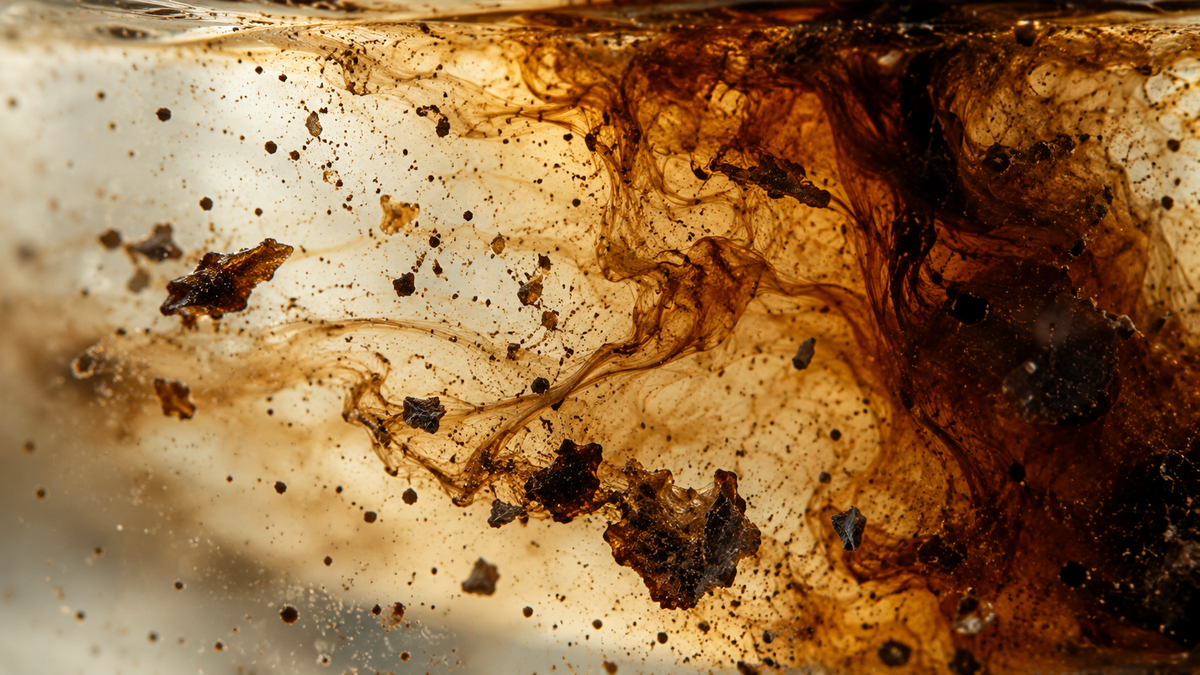
It may contain:
-
Grit
-
Soil
-
Stone particles
-
Plant debris
-
Microorganisms
-
Variable moisture
-
Environmental contaminants
Shilajit has therefore traditionally been purified, and modern products usually undergo some combination of extraction, settling, filtration and concentration.
We explore this distinction in Is Raw Shilajit Really Better?.
Appropriate purification doesn’t necessarily create a new ingredient. It may turn collected material into the conventional purified form historically used as a supplement.
The difficulty begins when processing produces something materially different from whole or conventional Shilajit.
Examples may include:
-
Isolated fulvic fractions
-
Highly purified dibenzopyrone preparations
-
Selectively fractionated extracts
-
Chemically modified humic substances
-
Nano-formulations
-
Production processes that substantially change composition
-
Delivery systems designed to alter absorption or metabolism
-
Products standardised far beyond conventional Shilajit composition
A company can’t necessarily start with a non-novel whole material, dismantle it into selected fractions and assume the original status still covers the resulting ingredient.
At some point, the finished material may no longer be conventional Shilajit.
It may be a new ingredient derived from Shilajit.
What about isolated or non-isolated fulvic acid?
This is a particularly important distinction because “fulvic acid” is used loosely throughout the supplement industry.
Shilajit contains a complex range of fulvic and humic substances. It isn’t simply a jar of one purified acid.
That is why proper fulvic analysis needs a defined method rather than a large percentage produced through vague or overly broad testing.
In October 2024, a separate EU Article 4 determination classified a non-isolated fulvic acid product intended for food supplements as a novel food.
The product was described as a concentrate of fulvic acids that remained associated with other humic substances and was extracted from organic plant material using water.
The authorities concluded that significant pre-1997 consumption hadn’t been demonstrated for that ingredient.
Because the decision was made after 1 January 2021:
-
It doesn’t automatically determine the position in England, Scotland and Wales
-
It may help inform the assessment of history of consumption
-
It is directly relevant within the EU framework generally followed in Northern Ireland, subject to any applicable movement arrangements
The decision doesn’t mean that the naturally occurring fulvic fraction within conventional whole Shilajit makes Shilajit novel.
It means that a separate fulvic ingredient must be assessed according to its own:
-
Source
-
Identity
-
Production process
-
Composition
-
Intended use
-
History of consumption
“Contains fulvic substances” and “is a fulvic acid ingredient” are different regulatory propositions.
Can a new production method make an established food novel?
Potentially, yes.
Novel-food rules don’t look only at the name of the starting material. The production method can also matter.
A new process may become relevant when it creates significant changes in:
-
Composition
-
Structure
-
Nutritional value
-
Metabolism
-
Levels of undesirable substances
A traditionally purified Shilajit resin and a heavily fractionated extract may both begin with mountain material, but they may not be chemically or regulatorily equivalent.
Responsible manufacturers should retain information covering:
-
Raw-material identity
-
Source
-
Extraction media
-
Filtration
-
Heating
-
Drying
-
Concentration
-
Added carriers or excipients
-
Chemical standardisation
-
Finished-product composition
Our guide to Shilajit resin, liquid and powder explains why the visible format alone tells you surprisingly little about the manufacturing history.
A resin can be heavily processed.
A powder can be produced by drying a conventional resin.
Appearance isn’t a production record.
Does non-novel mean FSA approved?
No.
This distinction needs to be made clearly.
A non-novel determination means the assessed product doesn’t require novel-food authorisation for the recognised use.
It doesn’t mean:
-
The FSA has approved every Shilajit product
-
Every source is safe
-
Every purification process is acceptable
-
Every dose is appropriate
-
Every laboratory result is satisfactory
-
Every health claim is lawful
-
The authorities recommend taking Shilajit
-
The product is exempt from ordinary food law
A non-novel product must still be safe.
Food businesses remain responsible for the products they place on the market, including:
-
Supplier approval
-
Traceability
-
Hygiene
-
Contaminant management
-
Stability
-
Labelling
-
Advertising
A novel-food determination can’t measure lead, detect mould or tell you whether a batch contains unacceptable PAHs, solvent residues or excess water.
That is why we place more practical weight on how Shilajit testing works and whether a company can provide meaningful, product-relevant results.
Testing still matters
Shilajit is an organic-mineral material collected from natural geological environments.
Its composition can vary according to:
-
Source region
-
Local geology
-
Water movement
-
Organic inputs
-
Collection
-
Purification
-
Concentration
-
Storage
A proportionate testing programme may examine:
-
Lead
-
Cadmium
-
Mercury
-
Arsenic
-
Other relevant elements
-
Microbiology
-
Water activity
-
Water or total solids
-
PAHs
-
Residual solvents
-
Mycotoxins
-
Pesticides
-
Humic and fulvic substances
-
Identity and adulteration
The words “food supplement” don’t make any of those questions optional.
For help understanding an individual certificate, read how to read a Shilajit laboratory report.
Novel-food status and health claims are separate issues
A food can be legally marketable while its advertising is unlawful.
Novel-food status addresses whether a product requires pre-market authorisation.
It doesn’t grant permission to make medicinal or unauthorised health claims.
A company can’t use Shilajit’s recognised supplement history as evidence that it has permission to claim that the product:
-
Treats fatigue
-
Cures infertility
-
Reverses ageing
-
Prevents disease
-
Treats diabetes
-
Restores testosterone
-
Repairs the brain
-
Detoxifies heavy metals
Claims can also affect whether a product is treated as a food or a medicine.
The MHRA considers the complete presentation, including:
-
Explicit claims
-
Implied claims
-
Ingredients
-
Intended purpose
-
Consumer understanding
-
Advertising
-
Testimonials
-
Images and context
Natural or traditionally used ingredients aren’t automatically excluded from medicines law.
Commercial nutrition and health claims must also comply with the applicable claims framework. In Great Britain, authorised claims are set out in the GB Nutrition and Health Claims Register.
Our article on Shilajit benefits and what the research actually suggests separates study findings from claims that can legitimately be applied to every finished product.
Does the whole UK follow exactly the same rules?
Not entirely.
England, Scotland and Wales
EU novel-food status decisions made before 1 January 2021 continue to apply in Great Britain unless a different domestic position is adopted.
This includes the August 2020 Mumijo determination.
Businesses remain responsible for checking the precise identity, production process and intended use of their products.
Where the status is genuinely uncertain, a formal Article 4 consultation can be submitted to the FSA.
Northern Ireland
Northern Ireland generally follows the EU novel-food authorisation framework.
Later EU decisions may therefore be relevant in Northern Ireland even when they don’t automatically determine the position in England, Scotland and Wales.
The FSA also notes that eligible pre-packed retail goods moving through the Northern Ireland Retail Movement Scheme may follow Great Britain public-health requirements.
A business selling throughout the UK should therefore check which route applies rather than assuming one regulatory assessment answers every question in every market.
This is especially important for:
-
New extracts
-
Isolated fractions
-
Innovative formulations
-
Products containing several borderline ingredients
-
New delivery systems
-
Ordinary foods rather than supplements
What should a responsible Shilajit business keep on file?
A responsible business should be able to explain why its product falls within the recognised supplement use.
Useful records include:
Product identity
-
Ingredient name and recognised synonyms
-
Raw-material description
-
Source region
-
Finished-product specification
-
Evidence that the material is conventional whole Shilajit
Manufacturing
-
Collection method
-
Purification process
-
Extraction media
-
Filtration
-
Heating and drying
-
Concentration
-
Carriers or processing aids
-
Any standardisation or fractionation
Product presentation
-
Food-supplement labelling
-
Defined daily serving
-
Directions for use
-
Warning not to exceed the recommended intake
-
Storage instructions
-
Clear description of intended use
Safety and quality
-
Supplier approval
-
Traceability
-
Batch-relevant testing
-
Heavy-metal results
-
Microbiology
-
Moisture and water activity where relevant
-
Environmental contaminant testing
-
Stability and shelf-life evidence
Regulatory rationale
-
A copy of the 2020 Mumijo determination
-
A record of the current catalogue entry
-
An explanation of why the product fits the recognised supplement use
-
Review of new processing steps or formats
-
Specialist advice where classification is uncertain
This may sound excessive compared with writing “premium Himalayan resin” on the front of a jar.
It is considerably more useful when somebody asks a serious question.
When should a company seek regulatory advice?
Specialist advice becomes increasingly sensible when:
-
Shilajit is being added to an ordinary food or drink
-
The product isn’t clearly sold in measured doses
-
A new extraction process is used
-
Fulvic or humic fractions are isolated
-
The material is chemically modified
-
Nano-formulation is involved
-
The product will be sold across different UK jurisdictions
-
The composition differs substantially from conventional Shilajit
-
The marketing approaches medicinal territory
-
The company can’t clearly explain why the supplement history applies
The FSA states that businesses are responsible for establishing whether novel-food rules apply. Formal legal verification of novel status is available through the Article 4 consultation process.
An unusual product deserves more than a confident opinion from somebody in a Facebook group.
The bottom line
Shilajit isn’t simply novel or non-novel in every possible context.
The clearest position is:
Conventional whole Shilajit is treated as non-novel when used as or in a food supplement. The 2020 determination classified the assessed material as novel when used in foods other than food supplements.
That provides a recognised route to the UK supplement market for conventional Shilajit resin, powders, capsules and other genuine supplement formats.
It doesn’t necessarily cover:
-
Ordinary foods
-
Ready-made drinks
-
Confectionery
-
Heavily fractionated extracts
-
Separate fulvic ingredients
-
Chemically modified preparations
-
Every future formulation somebody invents
The legal position depends on:
-
What the product is
-
How it was produced
-
How it is presented
-
How it is consumed
-
Where it is sold
-
What the company claims it does
The supplement status is useful.
It isn’t permission to stop asking questions.
For a wider look at composition, sourcing, safety, testing and research, explore the complete One Life Foods Shilajit Guide.
Official sources and further reading
-
European Commission: 2020 Mumijo, Shilajit and Asphaltum panjabinum novel-food determination
-
European Commission: consultation outcomes on novel-food status
-
European Commission: explanation of the Novel Food Status Catalogue
-
UK Government: food-supplement labelling and business guidance
-
European Commission: 2024 non-isolated fulvic acid determination
Editorial note
This article provides general regulatory information rather than individual legal advice.
Novel-food status can depend on the precise ingredient, production process, intended use, presentation and market. Unusual extracts, formats, delivery systems or marketing claims should be reviewed by a suitably qualified UK food-law specialist before launch.
Written By
Written by Chris Simon, Founder of One Life Foods.
Chris has worked in the supplement industry since 2009 and is known for seeking out exceptional ingredients, products, and formulations. Read more about Chris and the story behind One Life Foods.

Share:
From Rock to Resin: How Shilajit Is Extracted, Filtered and Processed Today
Does Shilajit Break a Fast? Calories, Autophagy, Ketosis and Intermittent Fasting Explained