


How to choose, pair and build your own mushroom routine
The short answer is that different mushroom products can form part of the same routine, but there’s no requirement to take all of them together or in equal amounts. Always follow the directions for each individual product and don’t exceed its stated recommended daily intake.
For a long time, our approach was different.
Our previous Four Mushroom Blend put Lion’s Mane, Reishi, Chaga and Cordyceps together in the same capsule and in fixed proportions.
Now that we offer the mushrooms individually, you have much more freedom.
You can choose one.
Pair two.
Give one more space than another.
Or change your approach over time.
We think that’s one of the most interesting things about moving away from a fixed blend.
If you want to understand why we made that change first, read Why We Moved From Our Four Mushroom Blend to Individual Mushrooms.
And if you’re completely new to the category, start with What Are Functional Mushrooms?.
Do you need to take more than one mushroom?
No.
Having four mushrooms available doesn’t mean you need four mushrooms in your routine.
There’s a tendency in the supplement world to assume that adding ingredients automatically makes something more comprehensive.
We’re increasingly drawn to the opposite approach.
Choose ingredients deliberately.
Know what you’re taking.
And don’t add something simply because you can.
Taking one individual mushroom is therefore a perfectly straightforward place to start.
Our Functional Mushrooms collection lets you explore Lion’s Mane, Reishi, Chaga and Cordyceps individually rather than automatically buying them as one formula.
Start with ONE
This is the simplest approach.
Choose one mushroom and take it according to the directions on its own bottle.
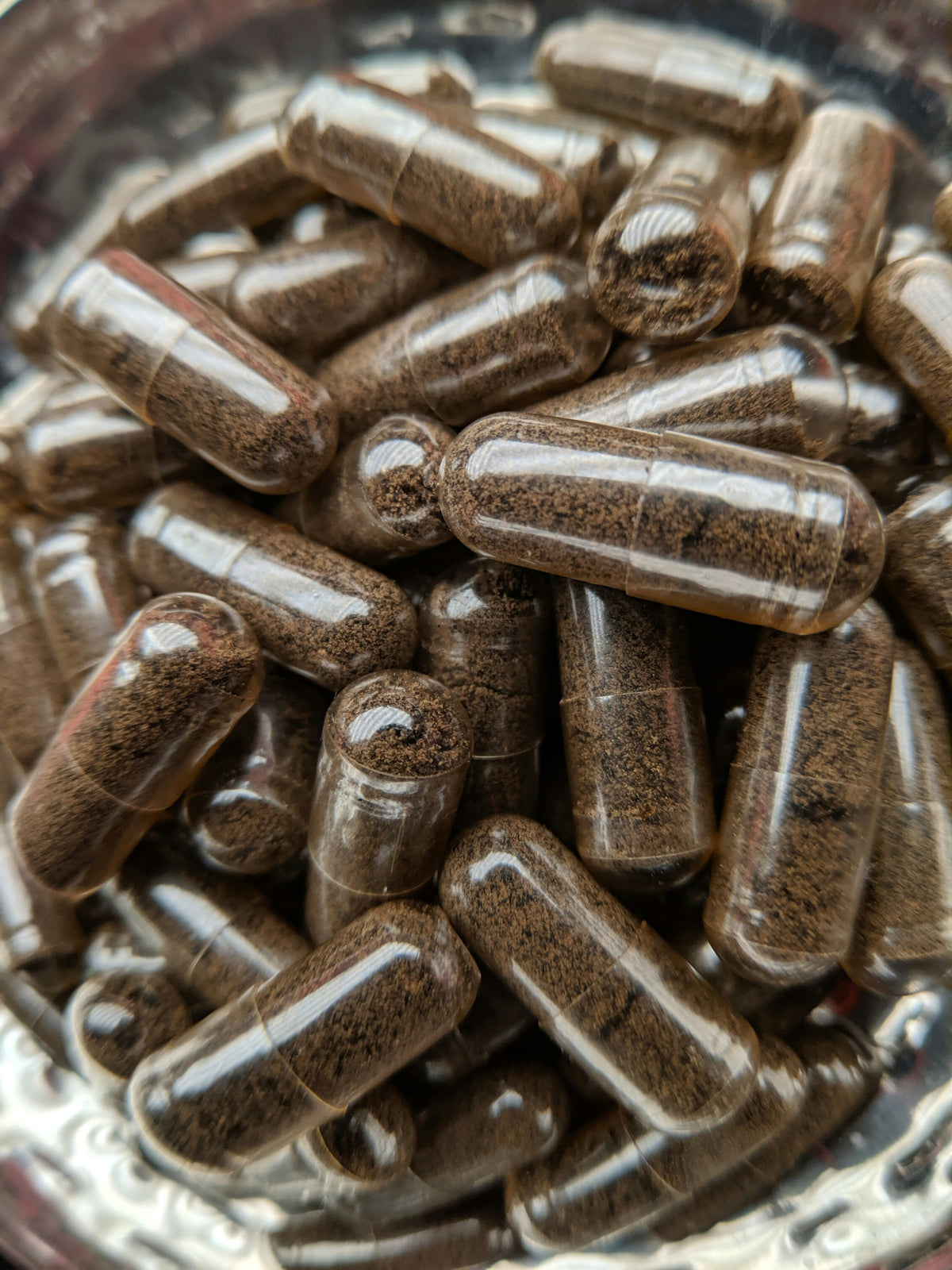
Our new individual mushroom capsule format provides 400 mg per capsule of the respective mushroom extract preparation.
Where the labelled recommended intake is 2–3 capsules:
2 capsules = 800 mg
3 capsules = 1,200 mg
of that individual mushroom extract preparation.
That’s substantially different from our previous Four Mushroom Blend, where a two-capsule daily serving contained 200 mg of each mushroom.
If you already know which mushroom interests you, keeping it individual is perhaps the cleanest way to approach the range.
For example, you can explore our Lion’s Mane Fruiting Body Extract Capsules as a standalone mushroom rather than as one quarter of a blend.
Can you combine two different mushroom extracts?
If the individual products are suitable for you and you remain within the directions provided for each, two separate mushroom products can be incorporated into the same broader routine.
What’s new is that they don’t have to appear in equal proportions.
That gives us several ways to think about a pairing.
PAIR: 2 + 2
The simplest pairing is an equal one.
If the directions for both products allow two capsules daily:
2 capsules of Mushroom One
plus
2 capsules of Mushroom Two
With 400 mg per capsule, that means:
800 mg of Mushroom One
plus
800 mg of Mushroom Two
The important thing here isn’t any particular pairing.
It’s the structure.
Two mushrooms.
Equal space.
So you might choose:
Lion’s Mane + Reishi
Lion’s Mane + Chaga
Lion’s Mane + Cordyceps
Reishi + Chaga
Reishi + Cordyceps
or
Chaga + Cordyceps
We deliberately don’t call any of these the “focus pair”, “energy pair”, “sleep pair” or “immunity pair”.
There are no authorised GB health claims for mushrooms themselves, and implied health claims can be treated in the same way as explicit ones. The more responsible approach is to explain the products and let people make an informed choice rather than attaching promises to particular combinations.
What is an anchor mushroom?
An anchor mushroom is simply the mushroom you’ve chosen to give the larger share of a two-mushroom routine.
It isn’t a scientific or medical term.
It’s our way of describing the proportions.
That gives us the next approach.
ANCHOR: 3 + 2
If each individual product’s directions permit the amounts concerned, you might choose:
3 capsules of one mushroom
plus
2 capsules of another
At 400 mg per capsule, that provides:
1,200 mg of your anchor mushroom
plus
800 mg of your second mushroom
For example:
3 Lion’s Mane + 2 Reishi
is a different structure from:
3 Reishi + 2 Lion’s Mane
The same two mushrooms are present.
But you’ve decided which one gets more space.
That’s something a fixed blend simply couldn’t offer.
Why would you change the proportions?
This is where we need to distinguish choice from health claims.
We’re not suggesting that a 3 + 2 Lion’s Mane/Reishi combination produces one physiological outcome while reversing it produces another.
We don’t have grounds to say that.
The point is much simpler.
When ingredients are sold individually, you control the composition of your routine.
You may have a particular mushroom you’re more interested in.
You may already use one and want to introduce another.
You may simply prefer one product to sit at the centre of what you’re taking.
Whatever your reason, you’re no longer locked into equal proportions.
FULL PAIR: 3 + 3
Where both individual product directions allow three capsules daily, taking three of each would place both mushrooms at the upper end of their respective stated intake.
At 400 mg per capsule:
3 + 3 = 1,200 mg + 1,200 mg
Again, this isn’t presented as being inherently “better” than 2 + 2.
More capsules don’t automatically make a better routine.
And the fact that two products each have their own permitted daily intake doesn’t mean everyone should automatically take the maximum amount of both.
It’s simply another possible structure where concurrent use is appropriate.
What about taking three mushrooms together?
You could keep extending the arithmetic.
But we don’t think that’s necessarily the most useful way to think about the range.
If our philosophy were simply:
More mushrooms = better
we’d probably have kept making ever larger blends.
Instead, we’ve moved towards individual products precisely because we want the mushrooms to be approached more deliberately.
If you want three different mushroom products in your routine, follow the directions for each and consider whether there’s actually a reason you want all three.
But there’s no rule saying three is better than two.
Or two is better than one.
And what about all four?
Again, availability isn’t the same thing as necessity.
Lion’s Mane, Reishi, Chaga and Cordyceps are all available individually because they’re distinct fungal materials with different histories, compositions and methods of production.
That doesn’t mean everyone needs all four simultaneously.
We didn’t move away from the Four Mushroom Blend so that everyone could immediately rebuild it with a handful of capsules.
Quite the opposite.
The whole point is that you can be selective.
Can you take the capsules at different times?
Unless an individual product label tells you otherwise, the most important thing is following its stated daily directions.
Some people prefer to take all the capsules in their routine together because it’s simple.
Others prefer to divide supplements across their day.
There’s no need to invent a complicated timetable merely because you’re using mushrooms.
The individual product directions should take priority over any generic routine you find online.
Do Lion’s Mane, Reishi, Chaga and Cordyceps have to be taken with food?
Again, follow the individual product directions.
Where a mushroom product can be taken with or without food, you can fit it into whichever part of your routine you’re most likely to remember consistently.
There’s no virtue in creating a complicated ritual if that ritual makes the product harder to use.
Do you need to “cycle” functional mushrooms?
You’ll find a lot of online advice suggesting that mushroom supplements must be taken for a set number of days, stopped, restarted or rotated according to particular schedules.
There isn’t one universal cycling rule that applies to Lion’s Mane, Reishi, Chaga and Cordyceps as a category.
They’re different products and different fungal materials.
Our approach is much less prescriptive:
follow the directions of the individual product rather than an internet formula designed to cover every mushroom.
Can you rotate different mushrooms?
Yes, in the ordinary sense of choosing to use different products at different times.
Your mushroom routine doesn’t need to become permanent.
You might explore Lion’s Mane individually for a period.
Later, you might become more interested in Reishi or Chaga.
Or you might choose a pairing.
That’s part of the appeal of keeping the products separate.
You aren't buying one formula whose composition can never change.
Chaga gives you another choice of format
Chaga is particularly interesting because we offer it in more than one form.
Our Wild Harvested Chaga is dried Chaga conk material designed for traditional hot-water preparation.
Our Chaga Extract Capsules use an extracted preparation in measured capsule form.
They shouldn’t be treated as directly interchangeable gram for gram.
One is dried starting material.
The other is an extract.
If you’re interested in understanding why that matters, see Powdered Herbs vs Herbal Extracts.
So which mushrooms should you combine?
We deliberately don’t give a definitive answer.
There’s no One Life “perfect stack”.
And we don't think there should be.
What we can tell you is:
- what mushroom species or fungal material is being used
- which part is used
- how it’s produced
- how it’s extracted
- how much is present
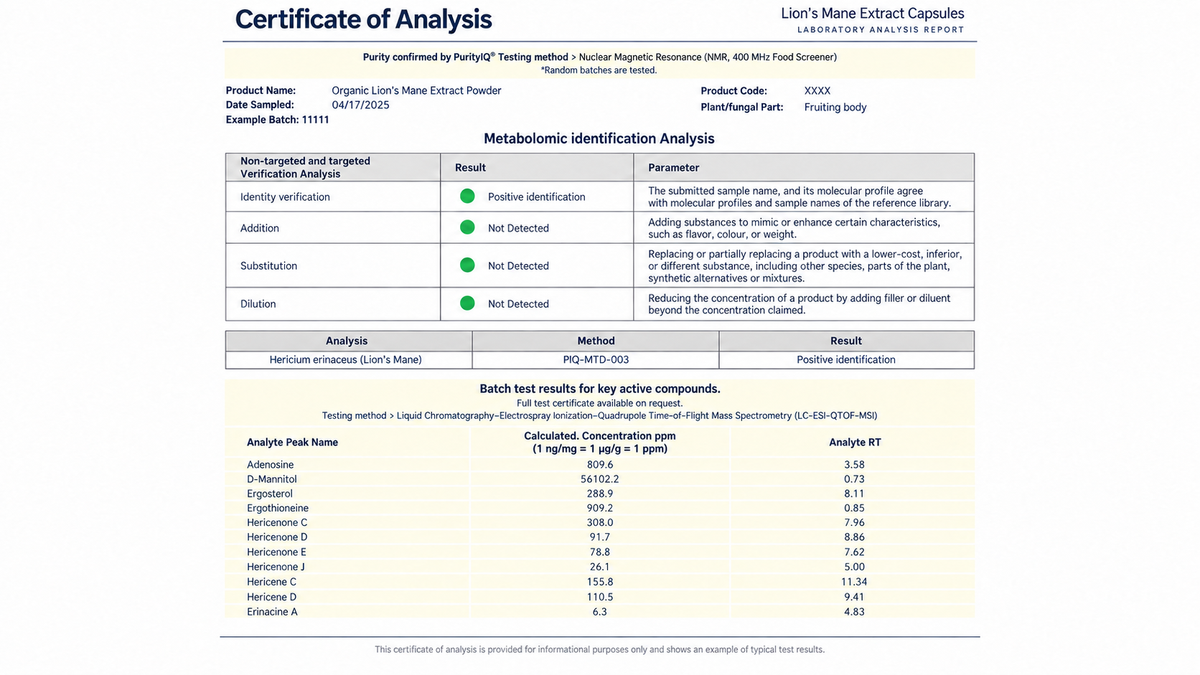
- what analytical testing tells us about the material
From there, you can choose whether one or more of the mushrooms has a place in your routine.
That’s a more responsible approach than giving combinations names that imply particular health outcomes.
The simple framework
If the directions on your chosen products permit these quantities, our mushroom framework is easy to remember:
ONE
One mushroom.
Follow its individual directions.
PAIR
Two mushrooms in equal proportions.
For products labelled at 2–3 capsules daily, that could be 2 + 2.
ANCHOR
Give one of two mushrooms a larger share.
For products labelled at 2–3 capsules daily, that could be 3 + 2.
FULL PAIR
Both products at the upper end of their respective directions.
Where appropriate and within both labels, that could be 3 + 3.
The framework is about choice and proportion, not a promise that any one arrangement produces a particular effect.
The bottom line
The biggest advantage of individual mushroom extracts isn’t that they let you take more mushrooms.
It’s that they let you choose.
Choose one.
Pair two.
Change the proportions.
Rotate what you use.
Or keep the whole thing very simple.
That’s the philosophy behind our new Functional Mushrooms collection.
Not the biggest stack.
Not the longest list.
Just more control over what’s actually in your routine.
Continue Exploring
What Are Functional Mushrooms?
Start with fruiting bodies, mycelium, extracts, beta-glucans and how mushroom quality is assessed.
Why We Moved From Our Four Mushroom Blend to Individual Mushrooms
The thinking behind the move from one fixed blend to four individual extracts.
The Complete Guide to Lion’s Mane
Take a closer look at Hericium erinaceus, fruiting body, mycelium, extraction and compound verification.
Written By
Written by Chris Simon, Founder of One Life Foods.
Chris has worked in the supplement industry since 2009 and is known for seeking out exceptional ingredients, products, and formulations. Read more about Chris and the story behind One Life Foods.

Share:
Reishi Mushroom: Fruiting Body, Extracts, Ganoderic Acids & What Quality Really Means
Are Mushroom Supplements Safe? Side Effects, Interactions & Who Should Be Cautious