


In the natural health world, "raw" has become almost synonymous with quality.
Raw honey. Raw cacao. Raw milk.
The assumption is understandable. The less something has been touched by human hands, the closer it must be to nature. And the closer it is to nature, the better it must be.
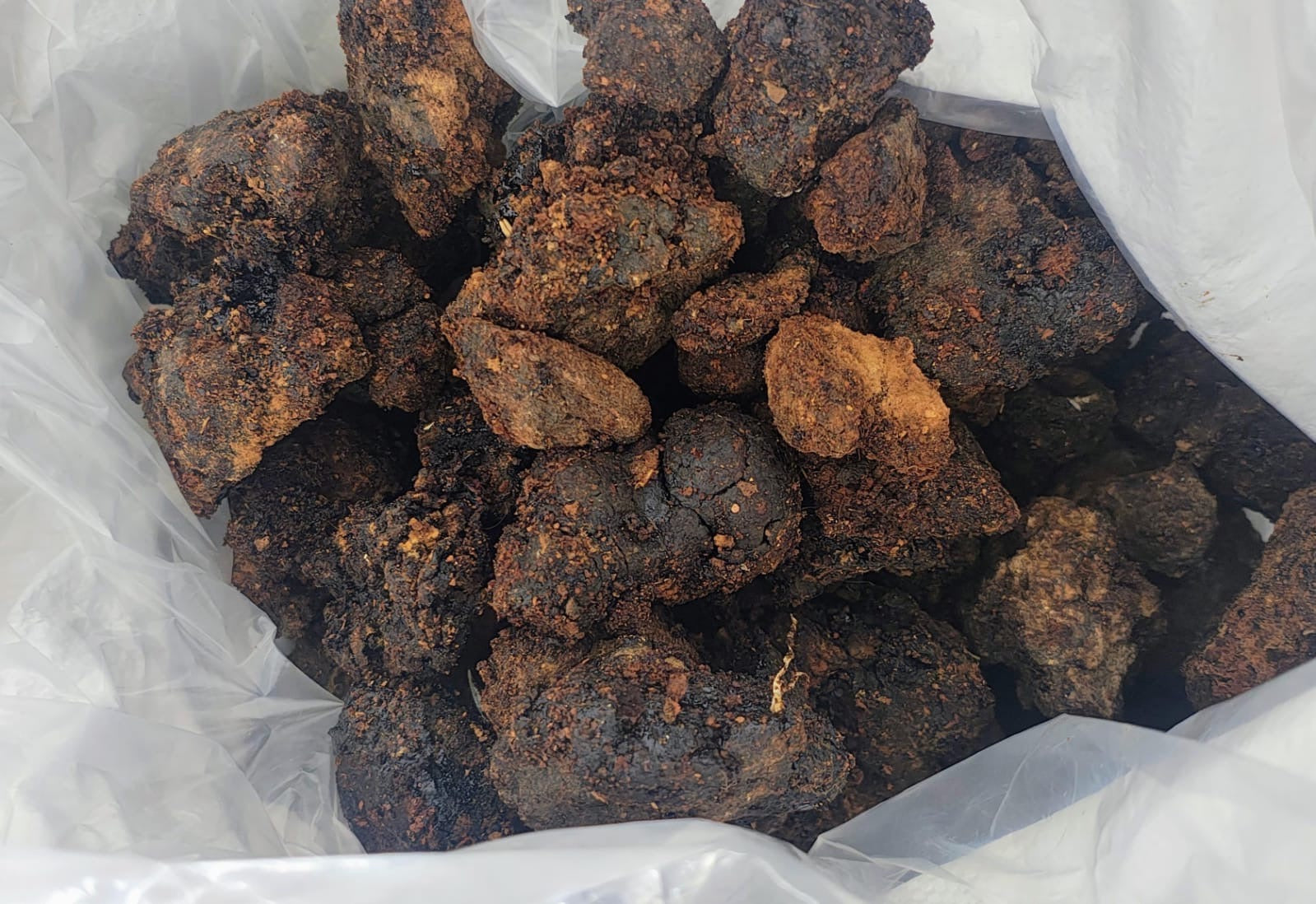
So it is perhaps no surprise that some consumers actively seek out raw Shilajit. We've even heard of people in the UK purchasing Shilajit-bearing material online and attempting to purify it in their own kitchens.
The intention is admirable.
The reality is more complicated.
When it comes to Shilajit, the relationship between authenticity and preparation has always been nuanced. Ancient practitioners understood this. Modern science simply allows us to approach the same challenge with greater precision.
The question is not whether Shilajit should be raw or purified.
The question is whether it has been prepared appropriately for human use.
What Is Raw Shilajit?
This is where things become surprisingly murky.
There is no universally accepted definition of "raw" Shilajit.
Depending on who you ask, it might mean:
-
freshly collected mountain exudate
-
Shilajit-bearing rock containing visible resin
-
minimally processed resin
-
unpurified material sold directly to consumers
One person's raw Shilajit is another person's partially processed resin.
That ambiguity matters because consumers often assume raw means superior. It is a similar problem to assuming all Shilajit is fundamentally the same. In reality, composition varies considerably depending on origin, preparation and processing.
In reality, raw simply describes a point along a spectrum of preparation.
The Irony of Traditional Shilajit
There is a common assumption that ancient practitioners consumed Shilajit exactly as it emerged from the mountains.
It makes for a compelling story.
It just isn't entirely true.
Traditional Ayurvedic texts describe various methods of preparing Shilajit before use. These included dissolving it in water, allowing insoluble material to settle, decanting the liquid portion, filtering, concentrating and repeating the process where necessary.
In other words, Shilajit was never simply scraped from a rock and swallowed.
Preparation has always been part of the tradition. Traditional preparation also reflects the fact that Shilajit has always existed in multiple forms, rather than as a single uniform substance.
Traditional methods deserve respect. They do not deserve immunity from scrutiny.
If the people who developed these methods had access to modern analytical laboratories, microbial testing and controlled processing environments, would they have ignored them?
Probably not.
The objective was never untouched resin.
The objective was appropriate preparation.
The Purification Paradox
We often equate purity with being untouched.
But Shilajit presents an interesting paradox.
Purification is not about making Shilajit less natural.
It is about removing what was never intended to be consumed while preserving what gives Shilajit its unique characteristics.
A mountain resin collected from rock faces may contain:
-
soil and grit
-
fragments of stone
-
plant debris
-
variable moisture levels
-
naturally occurring environmental contaminants
The goal of purification is not sterilisation.
It is refinement.
How Is Shilajit Traditionally Purified?
Historically, purification methods varied between regions and traditions, but the principles were remarkably consistent.
The process often involved:
-
dissolving raw material in water
-
allowing insoluble matter to settle
-
decanting the liquid fraction
-
filtering suspended particles
-
concentrating the remaining material
-
repeating the process where appropriate
These methods were practical and effective given the tools available at the time.
What they lacked was verification.
Experience guided the process.
There was no way to quantify what remained.
What Modern Purification Adds
Modern technology does not invalidate traditional knowledge.
It builds upon it.
Today's manufacturers can control factors that were previously impossible to standardise, including:
-
filtration specifications
-
water quality
-
drying conditions
-
temperature exposure
-
moisture content
-
hygienic handling
-
batch consistency
Perhaps most importantly, modern laboratories allow us to test what previous generations simply could not see. Understanding exactly what those laboratory reports do and do not tell you is becoming increasingly important for consumers trying to navigate the modern Shilajit market.
Tests may include:
-
heavy metal screening
-
microbial analysis
-
contaminant testing
- compositional verification
These categories of analysis form the backbone of modern quality assessment.
Tradition gave us the blueprint.
Modern testing gives us confidence.
The "Filtered Seven Times" Problem
One of the more curious marketing trends in the Shilajit industry is the race to see who can claim the highest number of filtration cycles.
Filtered three times.
Filtered seven times.
Filtered ten times.
At first glance, more sounds better.
But chemistry is rarely that simple.
Filtering Shilajit repeatedly is not automatically a sign of superior quality.
The number itself tells you very little. Much like fixed mineral counts or headline percentages, a figure without context can sound scientific while revealing very little.
What actually matters is:
-
what is being removed
-
what is being retained
-
the filtration method used
-
the characteristics of the starting material
-
the quality of the finished product
A cleaner starting material may require fewer interventions.
A more contaminated starting material may require additional refinement.
Filtering too little may leave unwanted material behind.
Filtering too aggressively risks stripping away fractions that contribute to the resin's natural complexity.
The question should never be:
"How many times was it filtered?"
The better question is:
"What was the filtration designed to achieve, and how was the final product verified?"
Because repetition is not the same as refinement.
Is There an Optimal Level of Purification?
There is no universal magic number.
The ideal process depends on the material being worked with.
A well-prepared resin should achieve a sensible endpoint:
-
visible debris removed
-
appropriate moisture control
-
beneficial humic and fulvic fractions preserved
-
acceptable microbiological standards achieved
-
contaminants appropriately screened
-
consistency maintained between batches
The objective is not maximum intervention.
It is appropriate intervention.
Drying Methods: Is Sun Drying Better?
Sun drying sounds wonderfully romantic.
It evokes mountain villages, ancient wisdom and patient craftsmanship.
Historically, it also made perfect sense.
It was the technology available.
Modern consumers, however, expect something else alongside tradition.
Consistency.
Open-air sun drying relies upon variables that cannot be controlled:
-
changing temperatures
-
fluctuating humidity
-
environmental exposure
-
airborne contaminants
-
inconsistent drying times
Controlled drying environments allow for better management of:
-
temperature
-
humidity
-
hygiene
-
final moisture content
-
shelf stability
The sun does not read certificates of analysis.
That does not mean traditional drying was wrong.
It means modern producers should use the best tools available to them.
Authenticity is not about refusing progress.
It is about preserving what matters while improving what can be improved.
Can You Purify Shilajit at Home?
Technically, yes.
People have done so for centuries.
Should you?
That depends on what you mean by purification.
Removing visible grit through settling and filtration is relatively straightforward.
Identifying what cannot be seen is considerably more challenging.
Most consumers do not have access to:
-
heavy metal analysis
-
microbial testing
-
contaminant screening
-
moisture analysis
-
batch verification
The challenge is not removing the obvious.
It is accounting for the invisible. Safety concerns rarely arise from the visible debris people expect to find, but from the contaminants consumers cannot detect themselves.
Does Purification Destroy Beneficial Compounds?
This concern is understandable.
Over-processing can alter the character of many natural products.
The goal of sensible purification, however, is not to strip Shilajit down to a sterile, standardised powder devoid of complexity.
It is to preserve the naturally occurring fulvic and humic matrix while removing material that serves no nutritional purpose. Understanding what that matrix actually consists of helps explain why preserving complexity matters more than chasing simplistic numbers.
The best Shilajit is not raw.
Nor is it processed beyond recognition.
It sits somewhere in between.
So, Is Raw Shilajit Better?
Not necessarily.
Raw Shilajit may appeal to those seeking the least intervention possible.
Purified Shilajit offers practicality, consistency and confidence.
Neither approach is automatically superior.
The more useful question is not which is more natural.
It is which is most appropriate for human use.
The Bottom Line
Ancient practitioners worked with the best tools they had.
Modern manufacturers should do the same.
Respecting tradition does not mean pretending we have learned nothing since.
Shilajit does not become inferior because it has been thoughtfully purified and carefully dried.
Nor does it become superior simply because it remained untouched.
Authenticity is not about rejecting progress.
It is about understanding what deserves preserving, what deserves improving, and having the humility to recognise the difference.
Sometimes the best way to honour tradition is not to freeze it in time.
It is to carry its principles forward using the knowledge we have today.
Explore the Full Shilajit Guide
Written By
Written by Chris Simon, Founder of One Life Foods.
Chris has worked in the supplement industry since 2009 and is known for seeking out exceptional ingredients, products, and formulations. Read more about Chris and the story behind One Life Foods.

Share:
Kashmiri Shilajit: Tradition, Purification and the Myth of Raw
Pre-Workout vs Hydration Intra: The Difference Between Energy and Endurance