


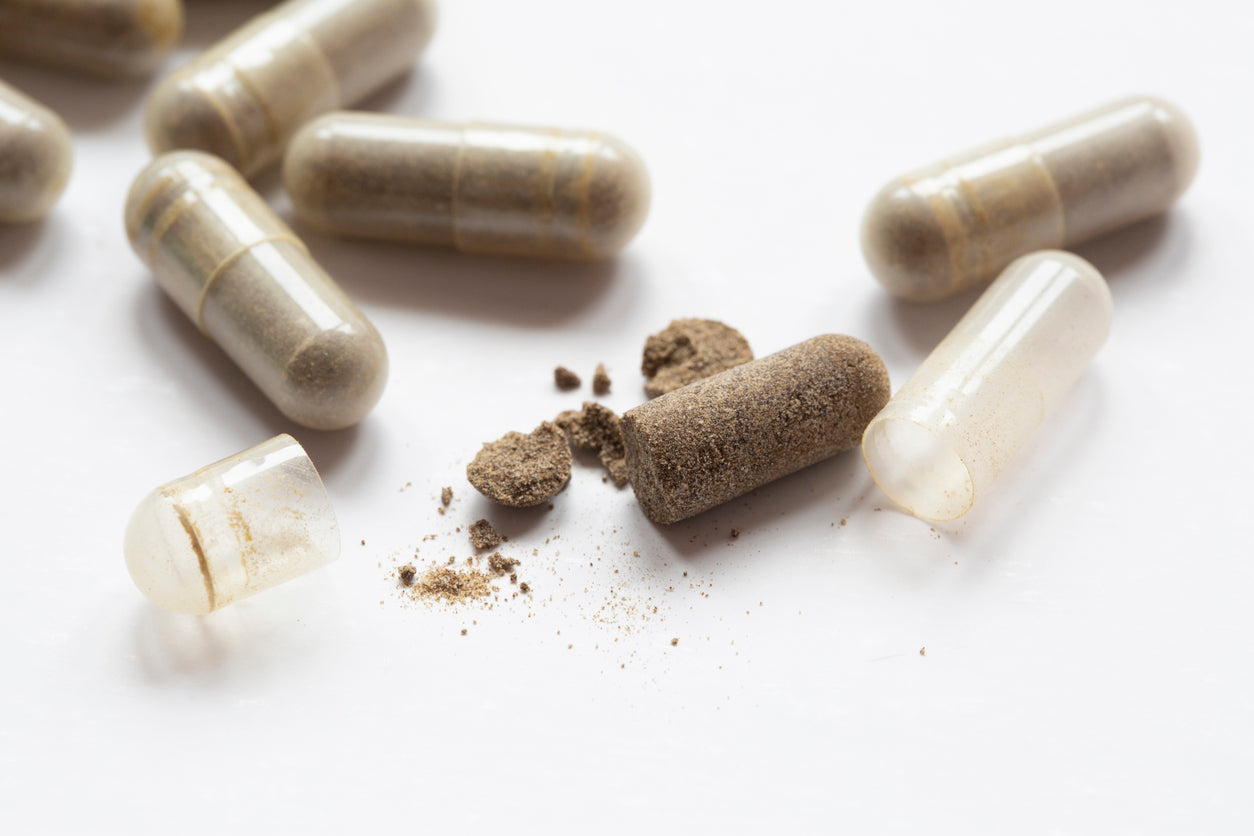
Introduction: Clean Labels Need Clean Thinking
The supplement industry has been around in some form for decades.
In that time, consumers have been sold everything from sensible nutritional support to miracle powders with the scientific credibility of a horoscope in a lab coat.
More recently, there has been a welcome shift toward transparency.
Clean labels.
Filler-free formulas.
No unnecessary additives.
Made in the UK.
Third-party tested.
Pure ingredients.
All good ideas.
In principle.
The problem is that these phrases are often used as marketing shortcuts. They sound reassuring, but they do not always explain what is actually happening inside the capsule, tablet, powder or raw material supply chain.
That matters because the conversation around fillers is more nuanced than most brands admit.
Not all fillers are bad.
Not all filler-free products are better.
Not all “Made in the UK” products are made entirely from British ingredients.
And not all ingredients with the same name are actually the same ingredient in practical terms.
This is where the real discussion begins.
Because the bigger issue is not always whether a finished product contains a filler.
Sometimes the real issue is whether the raw ingredient was diluted, misrepresented or cut before the brand ever received it.
That is a very different problem.
And a much more serious one.
For a deeper look at supplier quality, see trustworthy supplement suppliers.
Quick Answer: What Is the Difference Between Fillers and Cutting Agents?
Fillers are inactive ingredients used during manufacturing to help with capsule fill, tablet formation, powder flow, dose uniformity, stability or production consistency.
Cutting agents are substances used to dilute or bulk out a raw material, often before it reaches the brand or manufacturer.
The difference is intention and transparency.
A legitimate filler or excipient is declared, purposeful and used to make a product stable, consistent or manufacturable.
A cutting agent may be used to reduce cost, inflate weight, disguise weak raw material or make an ingredient appear more concentrated than it really is.
In simple terms:
-
Fillers can be legitimate manufacturing tools
-
Excipients can support stability, flow and dose consistency
-
Cutting agents can dilute an ingredient and reduce potency
-
“Filler-free” does not automatically mean better
-
“Clean label” does not automatically mean transparent
-
Raw material testing matters more than slogans
The real question is not simply “does this product contain fillers?”
The better question is:
What is in the finished product, what is in the raw material, and can the brand prove it?
What Are Fillers in Supplements?
In supplements, fillers are inactive ingredients used to help manufacture a consistent product.
They may be used in capsules, tablets, powders, sachets or blends.
Common examples include:
-
Microcrystalline cellulose
-
Rice flour
-
Maltodextrin
-
Calcium carbonate
-
Dicalcium phosphate
-
Silicon dioxide
-
Magnesium stearate
-
Stearic acid
-
Cellulose
-
Gum acacia
-
Starches
Some of these are better described as excipients rather than fillers.
That distinction matters.
“Filler” has become a dirty word, but in technical terms many so-called fillers serve specific roles.
They may help:
-
Improve powder flow
-
Prevent clumping
-
Support even distribution of low-dose actives
-
Improve capsule filling accuracy
-
Help tablets bind properly
-
Protect sensitive ingredients
-
Improve stability
-
Reduce moisture issues
-
Support manufacturing consistency
If an ingredient only needs a few milligrams per serving, it can be difficult to encapsulate accurately without something else in the mix.
A tiny dose has to be distributed evenly across thousands of capsules or tablets. That is not always easy.
Manufacturing is not just “put the good stuff in a capsule and hope.”
There are physics involved.
Annoyingly.
Fillers, Excipients and Flow Agents: What Do They Actually Do?
Different inactive ingredients have different jobs.
Lumping them all together as “bad fillers” is not accurate.
Fillers
Fillers are used to add volume when the active ingredient dose is small.
For example, if a formula contains 5 mg of an active ingredient, you cannot simply fill an entire capsule with that 5 mg and expect accurate dosing without proper blending.
A filler can help distribute that active evenly.
That supports dose consistency.
Which is rather important if you prefer every capsule to contain roughly what the label says it does.
Binders
Binders help tablets hold together.
Without binders, some tablets may crumble, crack or fail during packaging, transport or use.
A supplement that falls apart before it reaches the customer is not cleaner.
It is just badly made.
Flow Agents
Flow agents help powders move smoothly through manufacturing equipment.
Some powders are sticky, fluffy, clumpy, oily or difficult to handle. Flow agents help ensure machinery fills capsules or tablets consistently.
This can improve dose uniformity.
A formula that flows badly can create capsules with inconsistent fill weights.
That is not a purity win.
That is a quality-control problem wearing a clean-label badge.
Anti-Caking Agents
Anti-caking agents help prevent moisture-related clumping.
This matters for powders, minerals, hygroscopic ingredients and products exposed to variable storage conditions.
A small amount of an anti-caking agent may improve stability and user experience.
Again, context matters.
Lubricants
Lubricants such as magnesium stearate are often used to stop ingredients sticking to manufacturing equipment.
They can help tablets and capsules move through machinery properly.
Magnesium stearate is often demonised online, usually by people who have never stood near a tablet press in their life.
Can it be overused?
Yes.
Is it automatically harmful or proof of a poor product?
No.
That is the sort of simplified thinking that makes supplement marketing very loud and formulation science quietly exhausted.
Are Fillers Bad?
Not automatically.
Some fillers and excipients are unnecessary.
Some are overused.
Some are included because a formula has been built cheaply or lazily.
But many are used for legitimate technical reasons.
The issue is not whether a product contains an excipient.
The issue is whether that excipient is:
-
Necessary
-
Declared
-
Safe for its intended use
-
Used at a sensible level
-
Appropriate for the formula
-
Not replacing meaningful active ingredients
-
Not being used to hide weak dosing
-
Not being marketed dishonestly
A supplement with carefully chosen excipients can be better than a “filler-free” product that has poor flow, inconsistent dosing, unstable actives or raw material quality issues.
Clean label is useful when it reflects good formulation.
It becomes less useful when it turns into ingredient puritanism.
The body does not reward slogans.
It responds to dose, form, quality, absorption and consistency.
For more on why format and dosing matter, see powders, capsules and supplement precision.
Why “Filler-Free” Can Be Misleading
“Filler-free” sounds good.
It suggests purity.
No unnecessary extras.
Just the active ingredients.
And sometimes, that is exactly what it means.
A well-made filler-free product can be excellent.
But “filler-free” is not automatically the same as high quality.
A product can be filler-free and still have problems:
-
Weak active ingredient dose
-
Poor extract quality
-
No standardisation
-
Unclear raw material source
-
Poor bioavailability
-
No meaningful testing
-
Incorrect plant part
-
Low active compound content
-
Poor stability
-
Inconsistent capsule fill
-
Raw material already diluted upstream
That last one is critical.
A brand can truthfully say it adds no fillers during encapsulation, while still using a raw material that was already diluted before it arrived.
This is the part consumers rarely see.
A finished product may be “filler-free” at the brand level, but not truly pure at the raw material level.
That is not always intentional.
Sometimes the brand simply does not know.
Which, in this industry, is not especially comforting.
Why Isn’t This Capsule Full?
This question comes up often.
A customer opens a capsule bottle, notices a capsule does not look full to the brim, and understandably wonders if something is missing.
Sometimes the answer is simple:
No, the capsule is not underdosed.
The ingredient is just light, fluffy or low-density.
This is especially common with certain mushroom powders, botanical extracts and fibres.
Lion’s Mane is a good example.
A Lion’s Mane extract can be very light and fluffy. Even when the correct dose is present, the powder may not visually fill the capsule in the way a denser mineral or crystalline compound would.
Capsule fill appearance can be affected by:
-
Powder density
-
Particle size
-
Moisture content
-
Static charge
-
Settling during shipping
-
Capsule size
-
Manufacturing tolerances
-
Whether fillers or flow agents are used
-
Whether the material compresses easily
A capsule that looks half full is not automatically underdosed.
A capsule that looks full is not automatically better.
A brand could fill the remaining space with an unnecessary excipient just to make it look more satisfying.
That might please the eye.
It would not necessarily improve the formula.
This is where education matters.
You are not paying for visual fullness.
You are paying for the correct dose of the correct material.
For a deeper look at this ingredient specifically, see Lion’s Mane for cognitive support.
Capsule Size, Powder Density and Settling
Capsule fill is not always intuitive.
Different powders behave differently.
A dense powder, such as some minerals, may take up very little space despite delivering a meaningful dose.
A fluffy botanical powder may take up more space while weighing less.
A sticky extract may not flow properly without support.
A hygroscopic ingredient may absorb moisture and clump.
A powder may settle during transport, making it look like the capsule has empty space.
Manufacturers also use standard capsule sizes for practical reasons. Capsule sizes help keep production consistent, support machinery setup and maintain product uniformity.
This means the capsule size is not always perfectly matched to the visual volume of the ingredient.
If a brand avoids unnecessary fillers, some capsules may not look tightly packed.
That can be a sign of restraint, not weakness.
The key is whether the fill weight and active dose are correct.
Not whether the capsule looks emotionally reassuring.
Fillers vs Cutting Agents: The Bigger Problem
Now we get to the important distinction.
A declared excipient in a finished product is not the same as a cutting agent in raw material.
A filler may be used openly by a manufacturer to improve production.
A cutting agent may be used upstream to dilute the ingredient itself.
That can happen before the brand ever receives it.
For example, a supplier may sell a botanical extract that has been diluted with maltodextrin, starch or another carrier.
Sometimes carriers are legitimate and declared.
For example, spray-dried extracts often require a carrier to turn a liquid extract into a stable powder.
That is not automatically dishonest if it is declared properly and factored into the specification.
The problem is when dilution is hidden, exaggerated or misrepresented.
If a brand believes it is buying 500 mg of a potent extract, but half of that material is an undeclared carrier, the final product is not what the brand thinks it is.
And certainly not what the customer thinks it is.
That is not a manufacturing quirk.
That is a quality issue.
How Raw Materials Can Be Diluted Before They Reach the Brand
Raw material dilution can happen in several ways.
Some are legitimate when disclosed.
Others are not.
Common examples include:
-
Extracts diluted with maltodextrin
-
Botanical powders bulked with starch
-
Mushroom products containing grain substrate
-
Extract ratios exaggerated or poorly defined
-
Active compounds standardised using added markers
-
Weak extracts blended with cheaper raw powder
-
High-cost actives cut with inert carriers
-
Spray-dried extracts containing undisclosed carriers
-
Low-potency material sold as higher potency material
This is why specifications matter.
A supplier should clearly state:
-
The plant species
-
The plant part used
-
The extraction ratio
-
The carrier, if any
-
The active compound standardisation
-
The assay method
-
The batch number
-
The country of origin
-
The contaminant testing
-
The microbiological status
-
The residual solvent status where relevant
Without that, a brand may not know what it is really buying.
And if the brand does not know, the customer definitely does not.
The 500 mg Problem: When Label Weight Does Not Tell the Full Story
Let’s say a product label says:
500 mg Lion’s Mane extract.
That sounds clear.
But what does it actually mean?
It could mean:
-
500 mg pure fruiting body extract
-
500 mg mycelium extract
-
500 mg mycelium grown on grain
-
500 mg raw mushroom powder
-
500 mg extract with a carrier
-
500 mg material containing 250 mg extract and 250 mg maltodextrin
-
500 mg of a blend with unknown beta-glucan content
-
500 mg of something that looks mushroom-adjacent and comes with a cheerful COA
The label weight alone does not tell the full story.
The same applies to turmeric, ashwagandha, ginseng, rhodiola, green tea extract, Shilajit, milk thistle and many other ingredients.
What matters is not only the milligram amount.
It is the composition of that milligram amount.
This is where assay reports become essential.
What Assay Reports Reveal
An assay report measures the amount of a specific active compound or marker in a raw material.
For example:
-
Ashwagandha can be assayed for withanolides
-
Turmeric extract can be assayed for curcuminoids
-
Green tea extract can be assayed for EGCG
-
Rhodiola can be assayed for rosavins and salidroside
-
Ginseng can be assayed for ginsenosides
-
Mushrooms can be assayed for beta-glucans
-
Fish oil can be assayed for EPA and DHA
-
Shilajit can be assessed for fulvic and humic compounds
-
Minerals can be checked for elemental content
Assay reports help show whether the raw material actually matches the specification.
If a supplier claims a material contains 30% beta-glucans, the assay should support that.
If an ashwagandha extract claims 10% withanolides, the assay should support that.
If a curcumin extract claims 95% curcuminoids, the assay should support that.
This matters because two ingredients can have the same name but very different active compound levels.
One may be clinically relevant.
Another may be botanical confetti.
Same name.
Different reality.
COAs, Specs and the Limits of Paperwork
A certificate of analysis, or COA, is a document summarising test results for a specific batch.
A useful COA may include:
-
Batch number
-
Material name
-
Specification limits
-
Test results
-
Identity testing
-
Assay results
-
Microbiology
-
Heavy metals
-
Pesticides where relevant
-
Residual solvents where relevant
-
Allergens where relevant
-
Date of manufacture
-
Retest or expiry date
-
Test methods
-
Quality approval
But paperwork has limits.
A COA is only as useful as the quality of the testing behind it.
Some COAs are detailed, batch-specific and meaningful.
Others are vague, incomplete or suspiciously perfect.
The phrase “passes specification” is not enough if the specification is weak.
A product can pass a poor specification and still be unimpressive.
That is like passing a driving test in a car park with no other cars.
Technically pleasing.
Not the same as roadworthy.
For a deeper explanation, see trustworthy supplement suppliers.
Why “Made in the UK” Does Not Always Mean What People Think
“Made in the UK” can be a good thing.
Supporting local manufacturing matters.
UK-based production can offer strong quality systems, shorter supply chains, better communication and higher accountability.
But it is important to understand what the phrase means.
A product can be manufactured, blended, encapsulated, bottled or packed in the UK while the raw materials come from elsewhere.
That is normal.
Many supplement ingredients simply do not originate in the UK.
Examples include:
-
Turmeric from India
-
Ashwagandha from India
-
Panax ginseng from Asia or North America
-
Green tea from China or Japan
-
Lion’s Mane from specialist mushroom growers
-
Shilajit from mountainous regions
-
Omega-3 from marine sources
-
Botanicals from multiple global regions
So “Made in the UK” does not necessarily mean every ingredient is British from seed to capsule.
That is not a scandal.
It is global sourcing.
The important questions are:
-
Where is the raw material from?
-
Who supplied it?
-
Was it tested?
-
Is it traceable?
-
Is it the correct species?
-
Is the active content verified?
-
Was it manufactured under proper standards?
-
Is the finished product accurately labelled?
Local manufacturing is valuable.
But it does not replace raw material scrutiny.
A UK capsule filled with poor-quality imported material is still a poor-quality supplement.
Patriotic packaging cannot rescue weak specs.
Why Trusted Supplier Relationships Matter
Continual batch testing of every single ingredient by every brand is ideal in theory.
In practice, it is difficult, expensive and often unrealistic at scale for smaller and mid-sized companies.
That does not mean quality control should be weak.
It means supplier relationships become critical.
A trusted supplier should provide:
-
Consistent materials
-
Clear specifications
-
Batch-specific documentation
-
Reliable assay data
-
Traceability
-
Contaminant testing
-
Honest communication
-
Technical support
-
Stability information where needed
-
Accountability when something changes
Longstanding relationships matter because trust is built over time.
Not through one nice PDF.
Not through one sample that behaved well.
Through repeated batches, difficult questions, documentation checks, technical conversations, problem-solving and consistency.
That is why experience matters in this industry.
A good brand needs to know not only what to buy, but who to buy it from.
Because the wrong supplier can make even a good formula fail.
Testing Matters, But So Does Knowing What to Test
Testing is essential.
But testing needs to be intelligent.
Different ingredients carry different risks.
A fish oil needs oxidation testing.
A botanical extract may need identity testing, assay testing, pesticides, heavy metals and residual solvents.
A mushroom extract may need beta-glucans, starch content, species identity and heavy metals.
A mineral may need elemental content and contaminant screening.
Shilajit needs purification checks, heavy metals, microbial testing and fulvic or humic profiling.
A sports nutrition product may need banned substance screening if used by tested athletes.
There is no single universal test that proves a supplement is good.
Quality control is ingredient-specific.
This is why “third-party tested” is only useful if the testing is relevant.
Tested for what?
By whom?
On which batch?
Using which method?
Against which specification?
Those are the questions that matter.
Why Some Fillers Are Actually Useful
It is easy to market against fillers.
It is harder to explain why some excipients are technically useful.
But serious formulation requires honesty.
Some excipients help ensure:
-
Accurate dosing
-
Capsule uniformity
-
Better flow
-
Tablet stability
-
Ingredient protection
-
Reduced clumping
-
Improved shelf life
-
Better manufacturability
-
More consistent customer experience
If removing an excipient makes the product less stable, less consistent or harder to dose accurately, then “filler-free” may not be the win it appears to be.
The goal should not be zero excipients at all costs.
The goal should be no unnecessary excipients and full transparency around what is used and why.
That is the grown-up position.
Less marketable than “fillers are evil.”
More accurate.
When Fillers Become a Problem
Fillers become a problem when they are used to disguise weakness.
That includes:
-
Bulking out a formula instead of using meaningful active doses
-
Replacing expensive actives with cheap volume
-
Hiding poor raw material quality
-
Creating the illusion of a bigger serving
-
Using vague proprietary blends to avoid dose transparency
-
Adding unnecessary ingredients for manufacturing convenience alone
-
Failing to declare carriers in raw materials
-
Using excipients that do not fit the formula or customer need
A product containing excipients can still be excellent.
A product without excipients can still be poor.
The difference is intention, transparency and execution.
Supplement quality is not determined by one label claim.
It is determined by the whole chain.
Raw material.
Testing.
Dose.
Form.
Manufacturing.
Stability.
Transparency.
That is less catchy than “no fillers.”
But it is much more useful.
What Consumers Should Look For
Consumers do not need to become formulation scientists.
But they can ask better questions.
Look for brands that explain:
-
Ingredient form
-
Active compound levels
-
Standardisation
-
Dose rationale
-
Raw material sourcing
-
Testing standards
-
Manufacturing quality
-
Capsule or tablet format
-
Whether excipients are used and why
-
Whether the formula has a clear purpose
Be cautious with brands that rely only on:
-
Filler-free slogans
-
Vague purity claims
-
No dose transparency
-
No supplier information
-
No explanation of extract quality
-
No active compound standardisation
-
Overblown “clean” marketing
-
Influencer credibility instead of technical detail
Clean marketing is not the same as clean formulation.
A serious brand should be able to explain what is in the product, why it is there and how the quality is controlled.
If the answer is mostly vibes, leaves and a discount code, proceed carefully.
How This Connects to Supplement Stacking
Fillers and cutting agents matter because they affect how well a supplement stack actually works.
A stack is only as good as the ingredients inside it.
If one product contains a weak extract, another has poor bioavailability, and another hides half the formula behind vague labelling, the stack may look impressive but perform badly.
This is why how to stack supplements properly starts with ingredient quality.
Synergy depends on real doses.
Cofactors depend on usable forms.
Adaptogens depend on standardised extracts.
Mushrooms depend on beta-glucans and proper sourcing.
Omega-3 depends on EPA, DHA and freshness.
Shilajit depends on purification and testing.
The body cannot use marketing claims.
It uses molecules.
Final Thoughts: The Problem Is Not Fillers. It Is Fog.
Not all fillers are bad.
Not all filler-free products are pure.
Not all “Made in the UK” labels mean the entire product is British from start to finish.
And not all ingredients with the same name are equal.
That is the real issue.
The supplement industry is full of words that sound simple but hide complexity: clean, pure, natural, filler-free, premium, clinical, tested.
Some are meaningful.
Some are doing a lot of theatre.
The real standard is not whether a brand uses the right buzzwords.
It is whether the product is built properly.
That means:
-
Quality raw materials
-
Sensible excipients where needed
-
No unnecessary additives
-
Verified active compounds
-
Proper assay reports
-
Relevant testing
-
Clear labelling
-
Trusted suppliers
-
Responsible manufacturing
-
Honest communication
A filler is not automatically the villain.
A cutting agent might be.
And a vague label almost certainly deserves questions.
The goal is not purity theatre.
The goal is precision.
Because in supplements, what is not said on the label can matter just as much as what is.
References:
Gafner S, et al. Botanical ingredient forensics: detection of attempts to deceive commonly used analytical methods for authenticating herbal dietary and food ingredients and supplements. Journal of Natural Products. 2023.
Ichim MC. Chemical authentication of botanical ingredients: a review of commercial herbal product testing. Frontiers in Pharmacology. 2021.
USP. Dietary Supplements and Herbal Medicines: Quality Standards and Verification.
AOAC International. Guidelines for Single-Laboratory Validation of Chemical Methods for Dietary Supplements and Botanicals.
U.S. Food and Drug Administration. 21 CFR Part 111: Current Good Manufacturing Practice in Manufacturing, Packaging, Labeling, or Holding Operations for Dietary Supplements.
EFSA Panel on Food Additives and Nutrient Sources Added to Food. Re-evaluation of silicon dioxide, E551, as a food additive. EFSA Journal. 2018.
Food Standards Agency. Food Additives Guidance.
Cohen PA, Avula B, Katragunta K, et al. Presence and quantity of botanical ingredients with purported performance-enhancing properties in sports supplements. JAMA Network Open. 2023;6(7):e2323879.
Written By
Written by Chris Simon, Founder of One Life Foods.
Chris has worked in the supplement industry since 2009 and is known for seeking out exceptional ingredients, products, and formulations. Read more about Chris and the story behind One Life Foods.
Disclaimer
This article is for informational purposes only and is intended for general education around supplement formulation, excipients, sourcing and quality control. It is not medical advice and is not intended to diagnose, treat, cure or prevent any disease. Food supplements should not be used as a substitute for a varied diet and healthy lifestyle.


Share:
Why Lab Tests from Shilajit Suppliers Aren’t Always Reliable
Methylation, MTHFR and Methylated B Vitamins: What Actually Matters?