


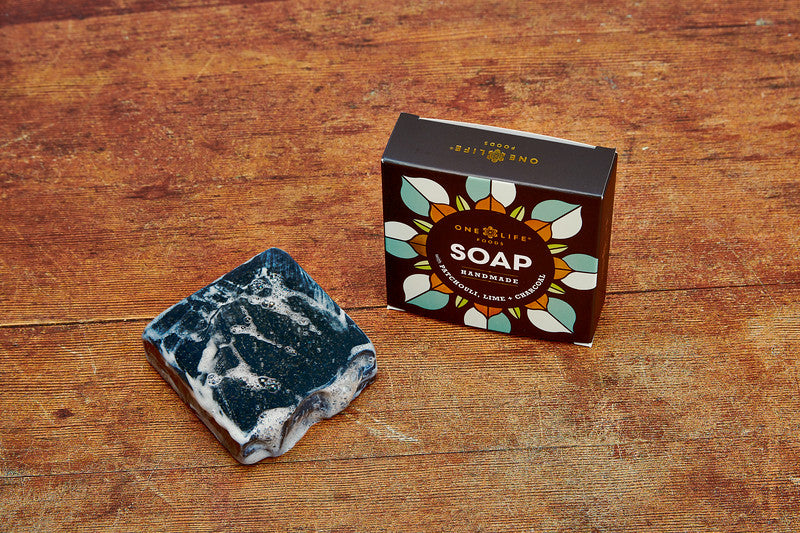
Cold process soaps are certainly growing in popularity, in our latest blog we discuss the benefits of this type of soap for your skin. First, we need to look at how cold process soaps are made. In cold process soaps (the process is also known as cold saponification) the ingredients are not heated, which allows them to conserve their beneficial and natural properties. Saponification is a chemical reaction provoked by combining a fat, such as oils or butters with a strong base. To create a solid soap, the strong base will be sodium hydroxide lye.
The end product of this reaction makes two elements: glycerine and soap. The cold processed soap is ready when all the lye has been chemically transformed and there is none left. To convert the lye into soap, excess oils or butters are used to ensure that all the lye is transformed. What is left is a fatty acid known as surgras. In French, surgras means the excess fat. Surgras has many benefits for the skin as its nourishing, softening and helps protect your skin.
Cold process soaps are exactly that; they are made without using any heat. This process is very different to traditional soap making where the soap is ‘cooked’ for around 10 days at a high temperature (usually around 100°C), its then washed and the glycerine is removed. In contrast, cold process soaps are saponified at room temperature, they are not warmed or rinsed.
Making cold process soap is quite lengthy. The mixture is poured into a mold for the soap to be cured. This drying process takes a minimum of 4 weeks. During this time the saponification is completed and the soap is dried.
There are many benefits to cold process soaps for both you and for the environment. Because the ingredients in cold process soaps are not heated the natural properties and benefits to your skin are preserved. Washing with this type of soap is also less aggressive due to the presence of surgras. It also means that your skin can retain its natural hydrolipidic film after washing which provides extra hydration and protection for your skin. Cold process soapmaking also has a reduced impact on the environment due to the removal of the heating period which means it’s production uses minimal energy.
Our natural, cold process soap uses only the finest ingredients patchouli, lime and charcoal. These ingredients were carefully selected for their benefits to your skin.
Patchouli helps the skin to heal and detox, has anti-ageing properties, helps prevent formation of wrinkles, promotes a smooth and glowing complexion, helps treat skin conditions such as dermatitis, acne or dry, cracked skin and also promotes a feeling of relaxation.
Lime has an amazingly sweet and musky scent, its rich in antioxidants and vitamin C, helps to manage oily skin, helps to prevent formation of wrinkles, brightens, rejuvenates and protects the skin.
Charcoal assists exfoliation without stripping the skin of natural oils, deeply cleanses the pores, removes blackheads, helps detoxify and purify the skin, tightens the skin and has soothing properties.
Our cold process, patchouli-lime-charcoal soap will be available soon on our website. For a limited time, we are offering you the opportunity to try it for free. Simply spend over £50 with One Life Foods and we’ll send you one with your order for free*.
*T&Cs apply.

Share:
Does Shilajit completely dissolve?
Everything you need to know about raw honey.