


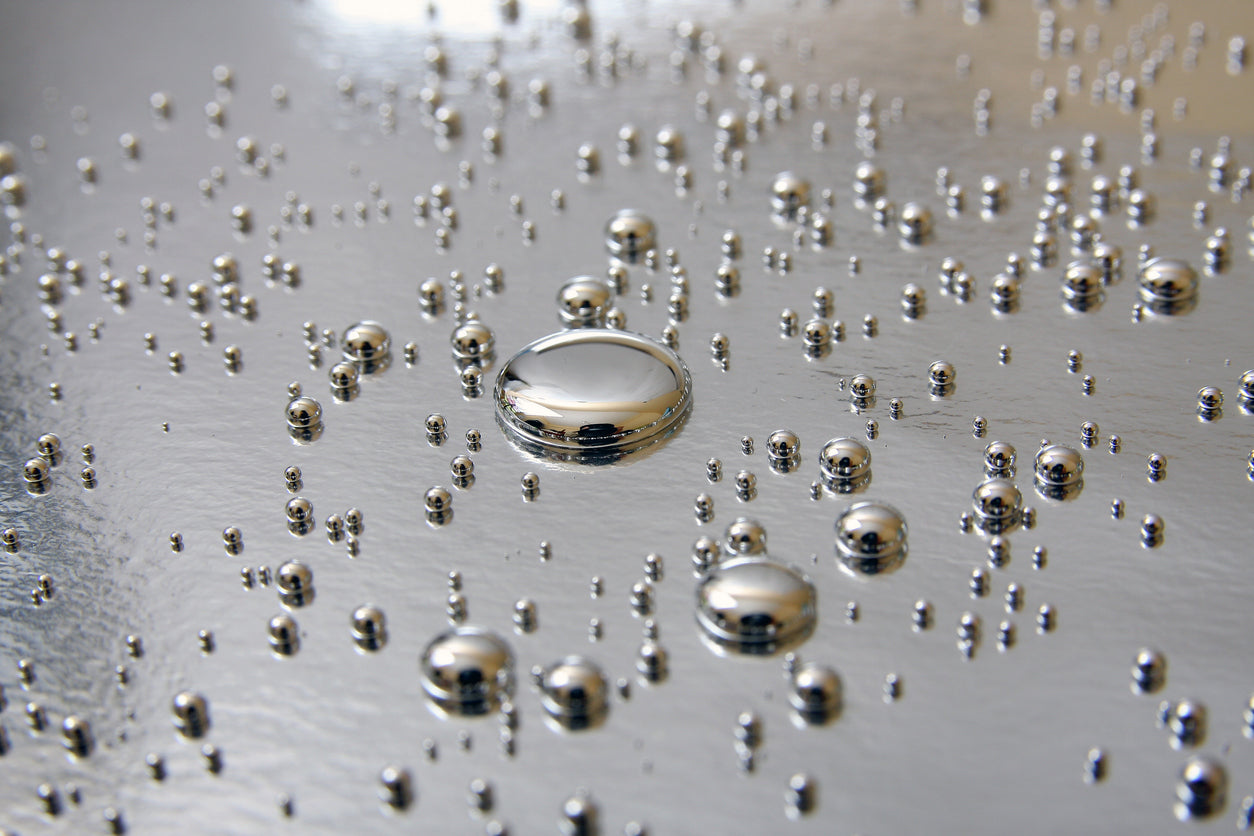
Quick answer: can Shilajit contain heavy metals?
Yes, shilajit can contain lead, arsenic, cadmium, mercury and other potentially harmful elements.
No, the detection of one of these elements doesn't automatically mean a product is dangerous.
The actual risk depends on:
-
Which element was detected
-
Its chemical form
-
Its concentration
-
The size and frequency of the serving
-
How the raw material was collected, purified and processed
-
Other sources of exposure in the diet
-
Whether the laboratory result genuinely represents the batch being sold
A number expressed in milligrams per kilogram can sound alarming until it is converted into the number of micrograms present in an actual serving.
Equally, the fact that shilajit is taken in small amounts does not excuse poor sourcing, incomplete testing or a suspiciously vague Certificate of Analysis.
The sensible position sits somewhere between periodic table panic and pretending that everything natural is automatically clean.
Why are people concerned about heavy metals in shilajit?
Shilajit is a complex organic-mineral substance found within certain mountainous rock systems, including the Himalayas, Altai, Karakoram and Hindu Kush.
It contains a variable mixture of humic substances, fulvic compounds, trace elements and smaller organic molecules. Its composition is influenced by the surrounding geology, biological source material, water movement, environmental conditions and the way it is collected and processed.
This is part of what makes shilajit interesting.
It's also what makes testing necessary.
Nature is not a clean room. Anything collected from rock, soil or mineral-rich environments can contain undesirable elements. These may be naturally present in the deposit, introduced through environmental contamination or added during harvesting, processing, storage or manufacturing.
Shilajit has also made a dramatic entrance onto the modern wellness stage, where it's credited with everything from energy and cognition to testosterone and longevity.
Not bad for mountain goo.
But once a natural geological material is concentrated and sold for daily consumption, romantic stories about Himalayan caves are not enough. We need to know what is actually in the jar.
What does “heavy metals” actually mean?
“Heavy metals” is the phrase most people recognise and search for, but scientifically it's a rather untidy category.
There is no universally accepted definition based on density, atomic weight or toxicity. The term is often used to group together elements that behave very differently, and it's sometimes applied to substances that aren't technically metals at all. Arsenic, for example, is usually classified as a metalloid.
For practical purposes, it is clearer to separate them into three groups.
Toxic elements
These include:
-
Lead
-
Cadmium
-
Mercury
-
Inorganic arsenic
They have no known beneficial nutritional role and can cause harm when exposure is sufficiently high or prolonged.
Essential trace elements
These include:
-
Iron
-
Copper
-
Zinc
-
Manganese
-
Selenium
The body needs some of these in small amounts, but excessive exposure can still be harmful.
Other elements that may require attention
These can include:
-
Nickel
-
Aluminium
-
Chromium
-
Thallium
-
Antimony
-
Tin
-
Vanadium
Their relevance depends on concentration, chemical form, source and likely exposure.
This is why the familiar claim that shilajit contains a fixed number of beneficial minerals needs more scrutiny. We examine that separately in our article on whether shilajit really contains 85 minerals.
Finding more elements is not automatically a sign of higher quality. Modern instruments can detect substances at extremely low concentrations. The useful questions are which elements are present, how much is present and whether those amounts are safe or nutritionally meaningful.
Which elements cause the greatest concern?
Lead
Lead is a cumulative toxicant that can affect the nervous system, kidneys, cardiovascular system, reproductive system and blood formation.
There is no known level of lead exposure that can be declared completely safe, particularly for children and during pregnancy.
This doesn't mean that every detectable trace creates an identifiable injury. It means that no threshold has been established below which risk is known to disappear entirely.
The correct approach is therefore to keep lead exposure as low as reasonably achievable, rather than treating a legal maximum as a target.
Cadmium
Cadmium accumulates in the body over time, particularly in the kidneys. Long-term exposure is associated with kidney damage and effects on bone health.
The European Food Safety Authority, or EFSA, has established a tolerable weekly intake of:
2.5 micrograms per kilogram of body weight per week
For a 70 kg adult:
2.5 × 70 = 175 micrograms per week
This refers to total dietary exposure from all sources. It is not a separate allowance reserved for supplements.
Mercury
Mercury exists in several chemical forms, and those forms don't behave identically inside the body.
Methylmercury is the form most strongly associated with fish and seafood. EFSA has established a tolerable weekly intake of:
1.3 micrograms per kilogram of body weight per week
For a 70 kg adult, that equals:
91 micrograms per week
However, a standard shilajit laboratory report will normally measure total mercury rather than methylmercury specifically.
It would therefore be misleading to take a total mercury result from shilajit and compare it directly with a methylmercury reference value without explaining that distinction.
Arsenic
Chemical form matters enormously with arsenic.
Inorganic arsenic is considerably more toxicologically significant than many organic arsenic compounds. It is a genotoxic carcinogen and has been associated with several chronic health effects.
EFSA hasn't established a tolerable daily or weekly intake for inorganic arsenic.
Its current assessment uses a reference point for calculating a margin of exposure. That reference point is not a personal daily allowance, and it shouldn't be converted into an “arsenic budget”.
When total arsenic is elevated, additional testing may be needed to determine how much is present in the inorganic form. This process is known as arsenic speciation.
Nickel
Nickel occurs naturally in many foods and geological materials. It may also be relevant to people with nickel sensitivity, as oral exposure can trigger reactions in some sensitised individuals.
EFSA’s tolerable daily intake for nickel is:
13 micrograms per kilogram of body weight per day
For a 70 kg adult:
13 × 70 = 910 micrograms per day
This is a daily value, not a weekly one.
Thallium: an emerging area of shilajit testing
Thallium is a toxic element, but it is not routinely included in standard food-supplement contaminant panels. Current UK and EU rules do not set a specific maximum thallium level for food supplements, and shilajit-specific evidence has historically been extremely limited.
A 2025 study measured thallium in 13 crude shilajit samples and six commercial supplements. Results ranged from below the method’s detection limit to 0.226 micrograms per gram in crude shilajit and up to 0.5 micrograms per gram in the supplements. The highest measured tablet contained 0.095 micrograms of thallium.
This was a small study, not a representative survey of the wider shilajit market, and it did not demonstrate that the measured exposures caused harm. It does, however, show that thallium can occur in shilajit and that it may be worth considering as part of a broader, risk-based testing programme.
Thallium is not included in our current routine elemental panel. We are reviewing the emerging evidence and whether it should be added to future expanded testing.
Detection is not the same as danger
Modern laboratory equipment can detect extremely small amounts of an element.
This is useful, but it creates a common misunderstanding.
A laboratory result answers:
How much of this element was measured in the sample?
It does not answer, on its own:
Will this product harm me?
To assess risk, you need to consider:
-
Concentration
-
Serving size
-
Frequency of use
-
Duration of use
-
Chemical form
-
Background dietary exposure
-
The person taking the product
A laboratory report showing that lead is “detected” without telling you how much was detected isn't very useful.
Neither is a report covered in green ticks that simply says “pass”.
Colour coding is not toxicology.
How do you calculate heavy metals per serving?
Laboratory reports usually express elemental results in mg/kg, meaning milligrams of the element per kilogram of product.
Fortunately, the conversion is straightforward:
1 mg/kg equals 1 microgram per gram.
The calculation is:
Micrograms per serving = result in mg/kg × serving size in grams
Example: nickel
Suppose a shilajit report shows:
-
Nickel: 3 mg/kg
-
Serving size: 500 mg, or 0.5 g
The calculation is:
3 × 0.5 = 1.5 micrograms of nickel per serving
For a 70 kg adult, EFSA’s tolerable daily intake is 910 micrograms per day.
The 1.5 micrograms supplied by this example serving would therefore represent a very small contribution to that amount.
This doesn't prove that every product containing nickel is safe. It tells us that this specific concentration, at this specific serving size, results in a low exposure.
Example: lead
Suppose the report shows:
-
Lead: 0.3 mg/kg
-
Serving size: 500 mg, or 0.5 g
The calculation is:
0.3 × 0.5 = 0.15 micrograms of lead per serving
Because lead has no established safe exposure threshold, this should not be described as completely harmless.
A scientifically accurate interpretation would be:
At this concentration and serving size, the product would contribute 0.15 micrograms of lead per day. This represents a small incremental exposure, but lead should still be kept as low as reasonably achievable.
That is less dramatic than “toxic metals found in supplement”.
It's also more honest than “there is nothing to worry about”.
Why serving size matters
Shilajit is normally consumed in much smaller quantities than ordinary foods.
A typical serving may contain around 250 to 500 mg of resin. That is 0.25 to 0.5 g.
This is why a concentration that looks substantial when written as mg/kg may translate into a very small number of micrograms per serving.
Our separate guide explains how typical shilajit dosage and timing work, although there's no single universal evidence-based dose that applies to every product and extract.
Serving size isn't a minor detail. It's one half of the exposure calculation.
However, a small serving does not automatically make a product safe. It cannot compensate for:
-
Extremely high contamination
-
Daily use over long periods
-
Consumption above the stated dose
-
Poorly controlled raw material
-
An inaccurate or fraudulent report
-
Exposure in vulnerable groups
-
Significant exposure from other sources
Concentration and dose must always be considered together.
What do UK and EU regulations say?
Legal contaminant limits and health-based guidance values are not the same thing.
A legal maximum normally specifies how much of a contaminant may be present in a product, expressed as mg/kg.
A health-based guidance value estimates how much a person may consume over a particular period, taking their body weight and total dietary exposure into account.
European Union and Northern Ireland
In the EU and Northern Ireland, Commission Regulation (EU) 2023/915 sets general maximum levels for certain contaminants in food supplements.
At the time of writing, the general limits include:
-
Lead: 3.0 mg/kg
-
Cadmium: 1.0 mg/kg for most food supplements
-
Mercury: 0.10 mg/kg
Different limits or exceptions may apply to certain specifically defined supplement categories.
Great Britain
In England, Scotland and Wales, relevant contaminant limits are contained in assimilated food law, including the assimilated version of Regulation (EC) No 1881/2006, as amended.
The applicable rule depends on:
-
The territory in which the product is sold
-
The legal classification of the product
-
Its ingredients
-
The current version of the legislation
Food businesses should verify the current requirements rather than copying a table from another brand’s website and hoping nobody asks awkward questions.
Legal compliance is essential, but it's still only the minimum requirement. A compliant result isn't necessarily an ideal result, particularly for substances such as lead and inorganic arsenic, where exposure should be minimised.
What should a proper shilajit laboratory report include?
A meaningful Certificate of Analysis, or COA, should provide enough information to identify the product, understand the test and calculate exposure.
For a detailed explanation of methods, units and laboratory footnotes, see our guide to reading a shilajit laboratory report.
At minimum, look for the following.
1. A clear link to the product tested
A laboratory report should clearly identify the material that was analysed and allow it to be linked to the product being sold.
Some companies use formal production batch or lot numbers. Our published laboratory certificates carry report and sample references, alongside testing dates.
The important question isn't which identifier a company uses. It's whether the tested sample can be connected reliably to the stock being sold.
A report with no clear relationship to the product supplied may still provide useful background information, but it cannot establish the composition of every jar currently in stock.
2. Actual numerical results
“Pass” is less informative than a number.
A useful report should show results such as:
-
Lead: 0.24 mg/kg
-
Cadmium: below 0.01 mg/kg
-
Mercury: below 0.005 mg/kg
Numerical results allow the concentration to be converted into exposure per serving.
3. Clear units
The report should state whether results are expressed as:
-
mg/kg
-
µg/kg
-
mg per serving
-
µg per serving
A milligram is 1,000 micrograms.
Confusing the two creates a 1,000-fold error, which is not the sort of excitement anyone needs from a supplement label.
4. Detection and quantification limits
“Not detected” doesn't mean absolute zero.
It usually means the element was below the method’s limit of detection, or LOD.
“Below the limit of quantification” means that the laboratory could not measure the amount with the required confidence below that threshold.
A proper report should make these limits clear.
The reporting limit also needs to be appropriate for the question being asked.
For example, if a laboratory reports an element as below 0.2 mg/kg, that does not establish that its actual concentration is below 0.1 mg/kg. The analytical method may simply be insufficiently sensitive to resolve that distinction.
This becomes particularly important when comparing results with a legal maximum or another defined specification.
A result below the laboratory's reporting threshold is useful information. But if that threshold is higher than the limit being assessed, the result alone may not be enough to demonstrate compliance.
5. An appropriate analytical method
Inductively coupled plasma mass spectrometry, normally shortened to ICP-MS, is widely used for elemental analysis because it can measure multiple elements at very low concentrations.
Other validated methods may also be suitable for particular elements and concentration ranges.
The instrument name is only part of the story. Sample digestion, preparation, calibration, reference materials and quality controls all affect the reliability of the result.
An extremely expensive instrument cannot accurately measure material that was never properly extracted from the sample.
6. A suitably accredited laboratory
ISO/IEC 17025 accreditation provides evidence that a laboratory has been assessed for technical competence, impartiality and consistent operation.
In the UK, accreditation is generally provided by UKAS.
However, accreditation is not a universal gold halo placed over everything a laboratory does. The relevant test and method should fall within the laboratory’s accredited scope.
7. Finished-product testing
Testing the raw material is useful, but it doesn't necessarily represent the finished product after purification, blending, packing and storage.
Ideally, the product should be tested in the form supplied to the customer.
8. A sensible elemental panel
Lead, cadmium, mercury and arsenic are logical core analytes.
A broader, risk-based panel for shilajit may also include:
-
Nickel
-
Aluminium
-
Chromium
-
Thallium
-
Antimony
-
Tin
-
Vanadium
-
Copper
-
Iron
-
Manganese
-
Selenium
-
Zinc
Testing 20 elements is not automatically better science than testing four.
The panel should reflect the material, geology, manufacturing process and identified risks.
Is “third-party tested” enough?
Third-party testing is valuable, but the phrase is used rather freely.
It normally means that an external laboratory performed an analysis.
It does not necessarily mean:
-
The laboratory selected the sample
-
The sample came from current retail stock
-
The finished product was tested
-
Every batch is tested
-
The complete report was published
-
The method falls within the laboratory’s accredited scope
-
No inconvenient results were omitted
-
The sample was representative of the whole batch
Our guide to how shilajit testing actually works explains why the method, sample and specification matter just as much as the company logo at the top of the PDF.
Supplier reports also require particular care. A supplier has a commercial interest in selling the raw material, and a supplier-provided report does not automatically constitute independent verification by the finished-product brand. We examine that conflict in why shilajit supplier laboratory reports are not always reliable.
One isolated COA is better than nothing.
It's not the same as a functioning quality system.
Heavy metals are not the only contaminants that matter
A product can pass its lead, cadmium, mercury and arsenic panel and still have other problems.
Depending on its origin and processing, shilajit may also need to be assessed for:
-
Polycyclic aromatic hydrocarbons
-
Residual solvents
-
Mycotoxins
-
Pathogenic microorganisms
-
General microbial load
-
Moisture or water activity
-
Pesticide residues
-
Adulteration
Our article on PAHs, solvents and microbial testing in shilajit covers the contaminants that a simple four-metal panel will not reveal.
A heavy metal result tells you about heavy metals.
It doesn't certify the entire product as pure, potent, authentic and spiritually approved by the mountain.
Shilajit versus everyday food exposure
Lead, cadmium, arsenic, mercury and nickel are not unique to shilajit.
They occur in ordinary foods because they are present in soil, water, air and the wider environment.
Depending on the element, relevant dietary sources may include:
-
Rice
-
Cereals
-
Vegetables
-
Cocoa
-
Nuts
-
Shellfish
-
Certain fish
-
Tea
This context matters because toxicological reference values normally relate to total exposure from all sources.
Food comparisons can also help explain scale. A 500 mg serving of shilajit containing 1.5 micrograms of nickel may contribute much less nickel than a normal portion of certain nuts, oats or chocolate.
But that comparison must not be stretched beyond what it proves.
It does not mean:
-
The product is automatically safe
-
Contamination no longer matters
-
Food is secretly more dangerous than supplements
-
All forms of the element are equivalent
-
Background exposure can be ignored
A fair conclusion is:
At the measured concentration and recommended serving size, this batch would make a small contribution to estimated overall exposure.
A less fair conclusion is:
Your porridge is more toxic, so stop worrying.
Perspective is useful. Whataboutery is not.
Can purification reduce heavy metals in shilajit?
Potentially, yes.
Material collected directly from rock may contain:
-
Soil
-
Grit
-
Insoluble debris
-
Microorganisms
-
Environmental contaminants
-
Unwanted concentrations of certain elements
This is why the word “raw” should not automatically be treated as a mark of superior quality. Our article on the shilajit purification paradox explains why unprocessed material can carry more risk, not more virtue.
Purification may involve processes such as:
-
Water extraction
-
Settling
-
Filtration
-
Centrifugation
-
Controlled heating
-
Adsorption
-
Removal of insoluble material
-
Careful reduction of water content
These processes may reduce some contaminants, but effectiveness depends on the element and its chemical form.
For example:
-
Centrifugation may remove particle-bound contamination but leave dissolved ions behind
-
Filtration may remove grit without removing soluble elements
-
Activated carbon may adsorb some substances under certain conditions but isn't a universal metal-removal device
-
Aggressive chemical treatment may alter the composition of the product itself
Purification should therefore be validated rather than assumed.
The best evidence is comparative testing before and after processing, followed by analysis of the finished batch.
“Purified” is a manufacturing claim.
A suitable finished-product report is evidence.
Does fulvic acid detoxify heavy metals?
Shilajit contains humic substances, including compounds commonly described as fulvic acids.
These substances can interact with metal ions under certain chemical and environmental conditions.
That doesn't prove that consuming shilajit removes toxic metals from the human body.
Binding a metal could theoretically:
-
Reduce its absorption
-
Increase its solubility
-
Change its distribution
-
Have little practical effect
-
Produce different outcomes for different elements
There isn't sufficient human evidence to conclude that shilajit safely chelates lead, cadmium, mercury or arsenic, or meaningfully increases their elimination.
Fulvic acid content should therefore not be used to dismiss an unfavourable contaminant result.
It's also worth remembering that “fulvic acid” isn't one single molecule, and reported percentages depend heavily on the analytical method used. Our guide to fulvic acid testing in shilajit explains why two laboratories can produce very different figures for apparently similar materials.
Contamination and detoxification are separate questions.
An interesting biochemical mechanism is not a human clinical outcome.
What does a reassuring shilajit result look like?
A reassuring result isn't simply one with several green boxes.
It's one where:
-
The report matches the current batch
-
The finished product was tested
-
Results are reported numerically
-
Units are clear
-
Detection limits are appropriate
-
The method is sufficiently sensitive
-
The laboratory is suitably accredited
-
The product complies with the applicable legal limits
-
Exposure has been calculated using the stated serving
-
Lead and inorganic arsenic are kept as low as reasonably achievable
-
The result forms part of a consistent testing programme
Transparency matters too.
Consumers shouldn't need a degree in forensic accounting to work out which product a report belongs to.
You can see the methods, laboratories and results we use on our own shilajit testing and analysis page.
Testing is only one part of assessing a product. Our guide to choosing high-quality Shilajit explains how it fits alongside purification, composition, format and sensible product claims.
Who should be especially cautious?
People who are pregnant, breastfeeding, taking medication or managing an existing medical condition should speak to an appropriate healthcare professional before taking shilajit.
Extra caution is also sensible for:
-
Children
-
People with known heavy metal exposure
-
People with kidney disease
-
People with iron-related disorders
-
Those with nickel sensitivity
-
Anyone taking several supplements with overlapping mineral content
For a broader discussion of side effects, contraindications and practical safety, read is shilajit safe to take?.
So, should you worry about heavy metals in shilajit?
Yes, but the concern needs to be expressed accurately.
Shilajit comes from mineral-rich geological environments. Trace elements are therefore not surprising, and concentrations can vary between sources and batches.
Untested, unpurified or poorly manufactured products may contain undesirable elements at unacceptable concentrations.
At the same time, a detectable laboratory result does not automatically represent a meaningful health risk. Concentration must be converted into exposure per serving and considered alongside chemical form, frequency of use, background exposure and applicable law.
The honest conclusion is:
-
Shilajit can contain toxic elements
-
Raw material should not be assumed safe
-
Purification should be controlled and validated
-
Finished batches should be independently tested
-
COAs should show actual numbers, not only pass or fail
-
Serving size matters
-
Chemical form matters
-
Background exposure matters
-
Low exposure from one batch does not prove that all shilajit is safe
-
Detectable does not mean dangerous
-
Natural does not mean harmless
-
Fulvic acid does not excuse contamination
Shilajit isn't automatically poison.
It's not automatically a miracle either.
It's a complex natural material that deserves the same things every supplement deserves: competent manufacturing, proper analysis, transparent results and considerably less nonsense.
For the wider picture on sourcing, chemistry, testing, safety and buying decisions, explore our complete evidence-based shilajit guide.
Scientific and regulatory sources
Written By
Written by Chris Simon, Founder of One Life Foods.
Chris has worked in the supplement industry since 2009 and is known for seeking out exceptional ingredients, products, and formulations. Read more about Chris and the story behind One Life Foods.

Share:
The Secret Stars of Shilajit: Why Dibenzo-α-Pyrones Deserve a Standing Ovation
Are You Overloading Your Supplements? When to Load — and When It’s Just Hype