


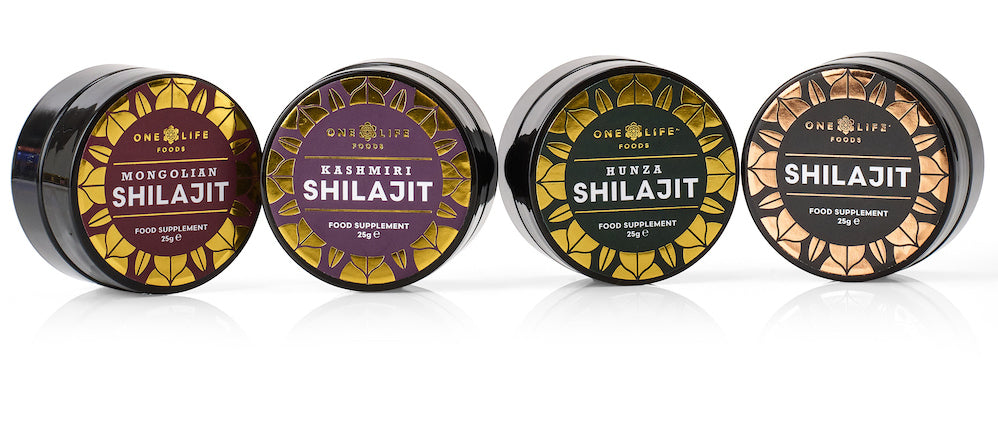
Fulvic acid has spent years behaving as though it owns Shilajit.
It gets the headline percentage, most of the marketing and almost every explanation of how Shilajit supposedly works.
But hidden within the resin is a much less discussed family of compounds with a stronger claim to scientific intrigue: dibenzo-α-pyrones, or DBPs.
DBPs have been linked with antioxidant chemistry, coenzyme Q10 and mitochondrial redox systems. One of the best-known DBPs discussed in Shilajit research, 3,8-dihydroxydibenzo-α-pyrone, is the same compound now widely studied as Urolithin A.
That doesn’t prove DBPs explain every effect associated with Shilajit.
It does make them considerably more than background chemistry.
They may be Shilajit’s secret stars.
And unlike most supplement mythology, there’s enough real science here to justify the standing ovation.
Quick answer: Why are DBPs important in Shilajit?
Dibenzo-α-pyrones are a family of small aromatic compounds that may contribute to Shilajit’s antioxidant, mitochondrial and coenzyme Q-related activity.
Two important examples discussed in Shilajit research are:
-
3,8-dihydroxydibenzo-α-pyrone, also known as Urolithin A
-
3-hydroxydibenzo-α-pyrone, also known as Urolithin B
These aren’t merely similar structures. In each case, the older Shilajit name and the modern urolithin name refer to the same respective molecule. Urolithin A is listed under CAS 1143-70-0, while Urolithin B is listed under CAS 1139-83-9.
Early laboratory and animal research suggests that selected DBPs can participate in redox reactions, interact with coenzyme Q and reach mitochondrial tissue.
Modern human research using isolated Urolithin A has also reported effects on mitochondrial biomarkers, muscle endurance and some measures of physical function.
We can’t assume that an ordinary serving of Shilajit provides the quantities used in isolated Urolithin A trials. Most finished resins haven’t been properly tested for individual DBPs.
But DBPs remain one of the most credible explanations for why Shilajit may be biologically interesting at relatively small doses.
Our hypothesis is that their importance may come not only from the compounds themselves, but also from how they behave alongside humic substances, minerals and the wider Shilajit matrix.
What are dibenzo-α-pyrones?
“Dibenzo-α-pyrone” describes a shared chemical framework rather than one individual active ingredient.
The structure contains a fused aromatic lactone system. Different DBPs carry different numbers and arrangements of hydroxyl, methoxy or other chemical groups around that central framework.
Small structural changes can affect a compound’s:
-
Solubility
-
Stability
-
Redox behaviour
-
Absorption
-
Metabolism
-
Protein interactions
-
Biological activity
In that sense, “DBPs” is rather like saying “flavonoids”.
It describes a family of related compounds, not one substance that can be poured into a test tube and reported as a universal “total DBP percentage”.
Natural DBPs have been identified in fungi, plants, microbial metabolites and other biological materials. The family is chemically diverse, and different members shouldn’t be assumed to behave identically.
This matters for both science and marketing.
A laboratory can’t simply test for “all DBPs” unless somebody first defines:
-
Which compounds are included
-
How they’re extracted
-
Which reference standards are used
-
How bound or conjugated forms are treated
-
How chemically similar compounds are separated
-
How the final number is calculated
Without that definition, “total DBPs” risks becoming the next impressive supplement number with very little analytical meaning behind it.
We’ve already seen how well that approach has served consumers with fulvic acid.
Are Urolithin A and B really Shilajit DBPs?
This is where the naming becomes unnecessarily confusing.
Older Shilajit literature commonly refers to:
| Name used in Shilajit research | Modern common name | CAS number |
|---|---|---|
| 3,8-dihydroxydibenzo-α-pyrone | Urolithin A | 1143-70-0 |
| 3-hydroxydibenzo-α-pyrone | Urolithin B | 1139-83-9 |
A reader might reasonably assume these are merely related compounds.
They aren’t.
When the structure and CAS number match, the Shilajit research name and the urolithin name describe the same chemical compound. PubChem lists Urolithin A under CAS 1143-70-0 and Urolithin B under CAS 1139-83-9.
That creates a genuinely interesting bridge between two areas of research.
Older Shilajit papers discuss 3,8-dihydroxydibenzo-α-pyrone in relation to redox chemistry, mitochondria and coenzyme Q10.
Modern studies discuss Urolithin A in relation to mitophagy, mitochondrial biomarkers and muscle function.
Same molecule.
Different research eras.
That connection deserves attention.
It doesn’t mean that every result from an isolated Urolithin A supplement can be transferred directly to a spoonful of Shilajit. The dose, formulation, surrounding matrix and evidence are completely different.
But it does mean that one of Shilajit’s proposed active compounds has turned up at the centre of a serious modern research field.
That is not chemical trivia.
Why are they called urolithins?
Urolithins are best known as microbial metabolites.
Certain gut bacteria can transform ellagitannins and ellagic acid from foods such as pomegranates, berries and walnuts into Urolithin A, Urolithin B and related compounds.
Not everybody produces the same urolithins, or the same quantities, because gut microbial composition varies between people.
But a molecule’s name doesn’t dictate that it can only arise through one biological route.
Urolithin A remains Urolithin A whether it has been:
-
Produced by gut microbes
-
Synthesised as a reference standard
-
Isolated from another biological material
-
Detected in Shilajit
The structure defines the compound.
This is straightforward chemistry, although supplement marketing has rarely allowed straightforward chemistry to remain undisturbed for long.
Does Shilajit actually contain Urolithin A or B?
There is evidence that selected Shilajit materials can contain them.
The older DBP literature reports isolating 3-hydroxy-DBP and 3,8-dihydroxy-DBP from Shilajit. A 2009 study stated that both compounds were isolated from Shilajit, purified to at least 99% and checked using synthetic markers before being investigated further.
A 2021 study of Mongolian Shilajit identified Urolithin B using nuclear magnetic resonance and high-resolution mass spectrometry. Interestingly, the compound wasn’t detected by the routine HPLC-UV method used to quantify the study’s main markers, showing why detector choice can matter.
More recently, a Journal of Chromatography A study developed complementary HPLC, HPTLC and LC-MS approaches for Shilajit markers including Urolithin A. The study reported Urolithin A concentrations of approximately 0.03% to 0.42% across the Shilajit materials it examined.
That modern work is important.
It moves the subject beyond simply repeating that DBPs “should” be present.
It shows that individual compounds can be detected and quantified in actual raw material, extracts and resin.
But those figures are still specific to the products and methods studied.
They don’t establish that:
-
Every genuine Shilajit contains detectable Urolithin A
-
Every origin has the same DBP profile
-
Urolithin A is always the dominant DBP
-
Higher Urolithin A automatically means better Shilajit
-
One test captures every bound or related form
The evidence is becoming stronger.
It simply isn’t uniform yet.
How might DBPs form in Shilajit?
The precise formation of Shilajit remains incompletely understood.
It appears to involve the long-term transformation of biological material within particular geological environments. Microorganisms, oxidation, minerals, moisture, temperature and time may all influence the final composition.
A 2008 study investigated whether a fungus isolated from native Shilajit could transform one DBP into another.
Researchers used Aspergillus niger to convert synthetic 3-hydroxy-DBP into 3,8-dihydroxy-DBP and related amino-acid conjugates under controlled fermentation conditions.
Approximately 60% of the starting compound was converted into 3,8-dihydroxy-DBP and its conjugated derivatives. The products were investigated using HPLC, high-performance flash chromatography and GC-MS.
That provides a plausible route through which microorganisms could modify DBPs in Shilajit-associated environments.
It doesn’t prove that every DBP in every deposit forms through the same process.
It also doesn’t prove the familiar story in which ancient herbs are neatly transformed into a standardised DBP complex over thousands of years while the mountains apparently maintain the batch records.
A more defensible interpretation is:
Microbial and geochemical processes may contribute to the formation and transformation of DBPs within Shilajit, but the exact pathways probably vary between deposits and haven’t yet been comprehensively mapped.
For the wider formation question, read what Shilajit is, how it forms and what it contains.
Why DBPs may matter more than their percentage
Shilajit is sometimes marketed as though its value comes from supplying a huge quantity of minerals.
That explanation doesn’t survive basic arithmetic particularly well.
A daily serving of Shilajit usually weighs only a few hundred milligrams. It clearly isn’t functioning as a bulk source of magnesium, zinc, iron and every other element brands enjoy listing beside a mountain photograph.
Its potential significance is more likely to involve:
-
Smaller organic compounds
-
Humic chemistry
-
Mineral associations
-
Redox-active molecules
-
Local interactions within the digestive tract
-
The combined behaviour of the wider matrix
DBPs fit this model particularly well.
Small aromatic compounds don’t need to make up half the jar to be biologically interesting.
Their significance may depend on:
-
Chemical activity
-
Target interactions
-
Absorption
-
Metabolism
-
Tissue exposure
-
Their relationship with other compounds
That gives DBPs a credible claim to being Shilajit’s secret stars.
They may be present in modest quantities while contributing more than their weight suggests.
That doesn’t mean every trace amount is automatically meaningful.
Dose still matters.
But percentage alone is a poor measure of biological importance.
For more on why a relatively small serving of a complex material may still matter, read why small doses of Shilajit matter.
Are DBPs mitochondria-targeted antioxidants?
This description comes from a 2009 paper titled Shilajit Dibenzo-α-Pyrones: Mitochondria Targeted Antioxidants.
The researchers investigated isolated 3-hydroxy-DBP and 3,8-dihydroxy-DBP using conventional antioxidant assays, chemical experiments and animal studies.
After the DBPs were administered intraperitoneally to mice, the researchers reported detecting the compounds and related redox products within liver mitochondrial fractions. They also found higher mitochondrial concentrations of some DBP forms after administration.
That is genuinely interesting evidence.
It supports the idea that selected DBPs can reach mitochondria under experimental conditions and participate in oxidation-reduction chemistry.
What the chemistry suggests
Hydroxylated DBPs can move between different redox states.
That gives them the potential to:
-
Donate or accept electrons
-
Form semiquinone intermediates
-
Interact with reactive species
-
Influence the oxidation state of nearby molecules
-
Participate in wider antioxidant systems
In laboratory assays, the two DBPs showed antioxidant activity across several methods, although their relative performance varied depending on the type of radical or reaction being tested.
That variability is important.
There isn’t one universal “antioxidant strength”.
The surrounding chemical conditions matter.
Why this could matter biologically
Mitochondria produce ATP through tightly controlled electron transfer.
Coenzyme Q plays a central role in carrying electrons through the respiratory chain, moving between oxidised and reduced states.
A small redox-active compound capable of influencing coenzyme Q or related reactions could plausibly affect mitochondrial chemistry.
This gives DBPs a credible biochemical role.
Not a guaranteed one.
A credible one.
What the study didn’t prove
The 2009 work didn’t show that:
-
Oral Shilajit resin delivers DBPs into human mitochondria
-
Every resin contains an active DBP dose
-
DBPs from Shilajit directly increase human ATP
-
DBPs prevent fatigue in people
-
Every DBP is mitochondria-targeted
-
A few hundred milligrams of resin reproduces the animal experiment
The route of administration also matters.
The mitochondrial localisation experiment used intraperitoneal injections in mice, which bypass digestion and differs substantially from swallowing Shilajit.
So the phrase “mitochondria-targeted antioxidant” has real experimental origins.
It simply needs to be used with the experiment attached.
The CoQ10 connection
The relationship between DBPs and coenzyme Q10 may be the most intriguing part of the older Shilajit research.
Coenzyme Q10 moves between oxidised CoQ10 and reduced CoQH₂, also known as ubiquinol.
This cycle is important for mitochondrial electron transfer and antioxidant defence.
The 2009 study examined whether 3,8-dihydroxy-DBP could help preserve reduced CoQH₂ under different laboratory conditions.
At alkaline, neutral and acidic pH, more CoQH₂ remained when the DBP was present than when it was absent. The size of the difference varied by pH and time, but the overall pattern supported a stabilising redox interaction.
The researchers also administered CoQ10 orally to rats, either alone or alongside the isolated DBP.
Total coenzyme Q concentrations were then measured in plasma, heart, liver and kidney.
The largest difference appeared in the liver:
| Treatment | Total liver CoQ9 and CoQ10 |
|---|---|
| CoQ10 alone | 19.41 nmol/g |
| CoQ10 plus DBP | 25.03 nmol/g |
That is an increase of approximately 29%.
The heart and kidney differences were smaller, while plasma concentrations were almost unchanged.
This is the source of the widely repeated claim that Shilajit increases CoQ10 by 29%.
The underlying finding is worth discussing.
The usual marketing version is not.
It wasn’t:
-
A human trial
-
A study of ordinary Shilajit resin
-
A 29% increase in every tissue
-
A direct measurement of ATP
-
Proof of greater endurance or recovery
-
Evidence that every Shilajit product enhances CoQ10
It was an animal experiment using one isolated DBP alongside CoQ10.
But once the costume has been removed, the result is still scientifically interesting:
One Shilajit-associated DBP influenced CoQH₂ stability in laboratory experiments and increased total liver coenzyme Q when administered with CoQ10 in rats.
That gives the DBP-CoQ10 hypothesis real substance.
It isn’t merely a biochemical bromance invented during a product launch.
Does modern Urolithin A research strengthen the case?
Yes, although it strengthens the biological plausibility rather than proving the effect of Shilajit itself.
Urolithin A has become a serious research subject in its own right.
Human studies using isolated Urolithin A have reported that it is orally bioavailable and can affect molecular signatures associated with mitochondrial and cellular health.
Randomised trials have also reported improvements in some measures of muscle endurance, strength or physical performance in middle-aged and older adults.
Not every endpoint has improved, and the findings shouldn’t be exaggerated.
In one middle-aged-adult trial, for example, several measures improved, but the study’s primary endpoint of peak power output did not.
Even so, the modern evidence makes Urolithin A considerably more than an obscure name in an old Shilajit paper.
It is now a compound with:
-
Human pharmacokinetic data
-
Human safety data
-
Mitochondrial biomarker research
-
Randomised clinical trials
-
Growing interest in muscle ageing and physical function
That gives the Shilajit connection genuine modern relevance.
The dose question
This is where we need to keep the comparison honest.
Human Urolithin A trials have generally used isolated doses of 500 to 1,000 mg per day.
A complete serving of Shilajit resin may weigh only 250 to 500 mg.
Even if a resin contained 0.42% Urolithin A, the upper end reported in the recent analytical study, a 500 mg serving would provide approximately 2.1 mg.
That is nowhere near a 500 mg isolated Urolithin A dose.
This doesn’t make the DBP irrelevant.
It changes the question.
We shouldn’t ask:
Does Shilajit provide a clinical Urolithin A supplement dose?
It probably doesn’t.
We should ask:
Could lower quantities of Urolithin A, Urolithin B and related DBPs contribute meaningfully within a different, complex biological matrix?
That hasn’t been answered.
It is also a far more interesting Shilajit question.
What about Urolithin B?
Urolithin B is the same compound as 3-hydroxydibenzo-α-pyrone, another prominent DBP in the older Shilajit literature.
It shares the same basic family structure as Urolithin A but contains one hydroxyl group rather than two.
That apparently small difference may affect:
-
Solubility
-
Redox behaviour
-
Absorption
-
Metabolism
-
Tissue distribution
-
Protein interactions
-
Detector response during laboratory analysis
Urolithin B therefore needs to be treated as its own compound.
A laboratory can’t calibrate an assay with Urolithin A and assume that Urolithin B will behave identically.
Human research on isolated Urolithin B is much less developed than the modern Urolithin A literature.
That doesn’t make Urolithin B unimportant.
A 2021 study identified it in Mongolian Shilajit extract and found that it showed antioxidant activity in a DPPH assay. The same study also demonstrated that Urolithin B could be missed by one HPLC-UV setup even after being identified through more sensitive structural methods.
Testing Urolithin B could be particularly useful because:
-
It may be present when Urolithin A is low
-
It may occur at higher concentrations in some origins
-
Ratios between DBPs may differ by source
-
It broadens the measured DBP profile
-
It may reveal processing or extraction differences
A higher Urolithin B result wouldn’t automatically make one resin better.
But it would give us another piece of the compositional puzzle.
Are Urolithin A and B the only important DBPs?
Probably not.
The wider literature has discussed:
-
Other hydroxylated DBPs
-
Amino-acid-conjugated DBPs
-
Acylated derivatives
-
Oxygenated derivatives
-
Oligomeric forms
-
Larger DBP-associated structures
Some of these compounds are better characterised than others.
They also won’t necessarily be captured by a test designed only for free Urolithin A or free Urolithin B.
A targeted Urolithin A analysis won’t automatically measure:
-
Urolithin B
-
Urolithin C
-
Methylated urolithins
-
Amino-acid conjugates
-
Acylated DBPs
-
DBPs attached to larger structures
-
Unidentified related compounds
That is why testing Urolithin A and B would provide useful markers rather than a complete census.
Two named performers don’t tell us who else is backstage.
The proposed DBP matrix effect
DBPs don’t exist alone inside Shilajit.
They may be present alongside:
-
Hydrophobic fulvic acids
-
Humic acids
-
Mineral elements
-
Smaller organic acids
-
Phenolic compounds
-
Other aromatic molecules
-
Conjugated organic structures
This raises a genuinely interesting possibility.
Perhaps the significance of DBPs depends partly on the matrix surrounding them.
We see four plausible levels to this proposed effect.
1. Chemical association
DBPs may associate with humic substances, minerals or other organic molecules.
Those associations could affect:
-
Solubility
-
Stability
-
Extraction
-
Oxidation
-
Storage behaviour
2. Protection and release
The surrounding matrix might protect smaller compounds during storage or digestion and release them as pH or chemical conditions change.
This is plausible, but it hasn’t been mapped properly in human digestion.
3. Different components may act in different places
Larger humic associations may remain mainly within the digestive tract.
Smaller DBPs may have a greater chance of being absorbed, metabolised or converted into conjugated forms.
The matrix effect may therefore involve complementary local and systemic activity rather than every Shilajit component travelling into cells as one intact package.
For a more detailed explanation, read what the body actually absorbs from Shilajit.
4. Functional synergy
DBPs, humic substances and mineral ions may influence one another’s chemical or biological behaviour.
This is the most attractive part of the hypothesis.
It is also the hardest to prove.
A proper test would ideally compare:
-
Full-spectrum Shilajit
-
The same Shilajit with selected DBPs removed
-
The isolated DBPs
-
A reconstructed DBP-humic-mineral mixture
-
Matched doses under controlled conditions
That study hasn’t been done.
But the underlying idea isn’t unreasonable.
Complex mixtures can behave differently from isolated compounds because their components affect one another’s stability, solubility, binding and exposure.
For our fuller position on this, read why humic acid matters in full-spectrum Shilajit and why full-spectrum and isolated compounds aren’t necessarily equivalent.
Our hypothesis: Why DBPs may be Shilajit’s secret stars
Our hypothesis has four parts.
DBPs may contribute more than their weight suggests
A compound doesn’t need to dominate the percentage table to matter biologically.
If selected DBPs are present, bioavailable and chemically active, they may contribute disproportionately to Shilajit’s effects.
This is particularly plausible for compounds involved in redox chemistry or cellular signalling.
Different origins may contain different DBP profiles
Shilajit varies according to source material, geology, environmental conditions, microbial transformation and purification.
We already see substantial differences in humic and mineral profiles between origins.
It is reasonable to suspect that Urolithin A, Urolithin B and other DBPs may also vary.
One origin may be richer in Urolithin A.
Another may contain more Urolithin B or different conjugated structures.
That needs to be measured rather than guessed from a romantic origin story.
DBPs may contribute to mitochondrial and CoQ chemistry
The early laboratory and animal evidence provides a plausible connection between selected DBPs, mitochondria, redox reactions and coenzyme Q.
Modern Urolithin A research strengthens the biological plausibility of one particular compound.
The missing step is showing what finished Shilajit supplies and what those quantities do in humans.
The wider matrix may change how DBPs behave
DBPs in resin aren’t delivered as isolated pharmaceutical compounds.
They’re surrounded by humic substances, minerals and other organic material.
That matrix could influence:
-
Stability
-
Release
-
Solubility
-
Microbial interaction
-
Absorption
-
Metabolism
-
Redox behaviour
The secret may therefore not be DBPs alone.
It may be DBPs in context.
That is our working hypothesis.
It isn’t a settled mechanism wearing a lab coat.
But it is a hypothesis with real chemistry behind it and a clear route towards testing.
Why DBP testing is difficult
DBPs are a family, not one convenient lump.
A laboratory normally quantifies a specific compound by comparing the sample’s response with a verified reference standard.
To quantify Urolithin A properly, the laboratory needs:
-
A suitable Urolithin A standard
-
An appropriate extraction procedure
-
Chromatographic separation
-
A compound-specific calibration curve
-
Defined detection and quantification limits
-
Controls for matrix interference
-
Evidence that nearby compounds aren’t being misidentified
The same applies independently to Urolithin B.
A laboratory can’t calibrate Urolithin A and assume every related DBP responds identically.
Different compounds may:
-
Extract differently
-
Absorb UV light differently
-
Ionise differently in mass spectrometry
-
Produce different fragments
-
Move through a chromatographic column differently
-
Give different detector responses
This helps explain why DBPs have remained overlooked.
Fulvic acid can be reduced to one large percentage, even when the method behind it is questionable.
DBPs demand considerably more analytical discipline.
They refuse to queue obediently beneath one marketing number.
Targeted analysis versus full-scan screening
These approaches can complement one another, but they don’t provide the same information.
Targeted quantification
The laboratory measures a specific compound against its own reference standard.
The result can be reported numerically, usually in:
-
mg/kg
-
ppm
-
mg/g
This is the stronger approach when the question is:
How much Urolithin A or Urolithin B is present?
Qualitative full-scan screening
The laboratory scans for a wider range of molecular signals.
It may detect peaks that appear consistent with additional DBP-type compounds.
This is useful for exploration, but a promising peak isn’t automatically a confirmed chemical identity.
Reliable identification may still require:
-
Accurate molecular mass
-
Fragmentation data
-
Matching retention time
-
A certified standard
-
Separate calibration
-
Validation within the Shilajit matrix
A full scan can tell us where to investigate next.
It can’t turn every unknown peak into a named DBP simply because the chromatogram looks busy.
What we’ve confirmed with our analytical chemist
We approached our analytical chemist to establish what could realistically be measured in our finished Shilajit resins.
The first proposed reference standard was:
3,8-dihydroxydibenzo-α-pyrone, CAS 1143-70-0
The laboratory confirmed that this CAS number is identical to Urolithin A and that the compound can be analysed individually.
We then asked whether Urolithin B, CAS 1139-83-9, could be included in the same investigation.
The laboratory confirmed that it can separately analyse:
-
Urolithin A, CAS 1143-70-0
-
Urolithin B, CAS 1139-83-9
Each compound would be reported quantitatively in mg/kg.
That is exactly what a meaningful result should look like.
Not:
High in mitochondrial DBPs
Not:
Total bioactive complex: 87%
And certainly not:
Clinically proven cellular energy molecules
The report should tell us how much of each specifically calibrated compound was measured in the finished sample.
Very dull.
Very useful.
Our chemist also cautioned that the published evidence for these compounds in Shilajit is limited and not always consistent.
That is precisely why the testing matters.
The sensible order is:
-
Test the finished material
-
Establish whether the compounds are present
-
Quantify them where possible
-
Compare origins and batches
-
Consider wider screening or additional standards
-
Form conclusions from the results
The more traditional supplement-industry approach is to begin at number six and hope nobody asks about the first five.
Will Urolithin A and B testing reveal every DBP?
No.
It will quantify two individual compounds within a wider chemical family.
It won’t automatically measure:
-
Urolithin C
-
Other hydroxylated DBPs
-
Methylated derivatives
-
Amino-acid conjugates
-
Acylated compounds
-
Oligomeric forms
-
Unknown related structures
-
Bound compounds that aren’t released during extraction
A more complete investigation could eventually combine:
-
Targeted Urolithin A analysis
-
Targeted Urolithin B analysis
-
Additional reference standards where available
-
Untargeted LC-MS screening
-
Fragmentation analysis
-
Comparison of free and associated fractions
-
Testing across origins and batches
That would start to build a genuine DBP profile.
It still wouldn’t justify throwing every result into one convenient “total DBP” bucket.
How should a DBP result be interpreted?
A meaningful report should state:
-
The individual compound
-
The analytical method
-
The result in mg/kg or ppm
-
The limit of detection
-
The limit of quantification
-
Whether the compound was quantified, detected below the quantification limit or not detected
The concentration should then be converted into the amount supplied per serving.
For example:
-
100 mg/kg equals 0.1 mg per gram
-
A 500 mg serving would therefore supply 0.05 mg
This matters because laboratory figures can look impressively large until somebody calculates the amount actually swallowed.
A detected concentration would confirm that the compound was present in the tested sample.
It wouldn’t, by itself, prove:
-
Meaningful absorption
-
Mitochondrial delivery
-
Increased ATP
-
Clinical effectiveness
-
Superiority over another resin
-
Authentic geographical origin
-
A complete DBP profile
The result tells us what was measured.
The biological meaning requires a separate argument.
What would a non-detect result mean?
“Not detected” doesn’t necessarily mean completely absent.
It normally means the target compound wasn’t detected above the method’s stated limit under the conditions used.
Possible explanations include:
-
The compound isn’t present
-
It’s present below the detection limit
-
It’s mainly present in a bound or conjugated form
-
The extraction method didn’t recover it efficiently
-
The resin contains different DBPs
-
Matrix interference affected the analysis
-
Processing or storage altered the compound
The Mongolian Shilajit study provides a useful real-world example.
Urolithin B was identified through NMR and high-resolution mass spectrometry, but it wasn’t detected through the study’s routine HPLC-UV method.
One detector’s silence isn’t always proof of chemical absence.
A Urolithin A non-detect therefore wouldn’t prove that every DBP is missing.
Likewise, a Urolithin A result wouldn’t prove that the product is full-spectrum, authentic or clinically effective.
It is one useful result.
Not a molecular passport.
Can DBPs help authenticate genuine Shilajit?
They may be useful supporting markers.
They aren’t conclusive proof on their own.
Urolithins and other DBPs occur outside Shilajit. Urolithin A and B can arise through microbial metabolism, while related DBPs have been identified in fungi and other natural sources.
A manufacturer could also add an isolated marker to an otherwise poor product.
Detecting Urolithin A proves that Urolithin A was detected in the tested sample.
It doesn’t independently prove:
-
Exact geographical origin
-
Traditional formation
-
Full-spectrum composition
-
Appropriate purification
-
Safety
-
Freedom from adulteration
-
Meaningful potency
DBP analysis should therefore sit alongside:
-
Humic and hydrophobic fulvic testing
-
Mineral and elemental profiling
-
Heavy-metal analysis
-
Microbiology
-
Other contaminant testing
-
Processing records
-
Traceable sourcing
-
Batch matching
Shilajit authenticity is a body of evidence.
One chromatographic peak shouldn’t be asked to carry the entire mountain.
Read how to read a Shilajit laboratory report and how we test our Shilajit for the wider testing framework.
Are we claiming our Shilajit is rich in DBPs?
Not yet.
The original version of this article described our resin as rich in DBPs while admitting that we couldn’t prove it on paper.
That isn’t the standard we want to use.
We believe DBPs may be important constituents of genuine Shilajit, and the literature gives us a strong enough basis to investigate Urolithin A, Urolithin B and related compounds.
But belief isn’t a laboratory result.
Until analysis is complete, we won’t claim a measured DBP concentration for our resins.
What we can say is:
-
We’re actively investigating DBP testing
-
We’ve confirmed that Urolithin A and B can be measured separately
-
The results can be reported quantitatively in mg/kg
-
We recognise that two compounds don’t represent every DBP
-
We may expand the work if meaningful compounds are detected
-
We’ll interpret the results in relation to the actual serving dose
That takes longer than putting “DBP-rich” on a jar.
It is also how analytical claims are supposed to work.
Could DBPs become the next misleading headline percentage?
Very easily.
The Shilajit industry has already reduced a complex material to one fulvic-acid number, often without explaining what the laboratory actually measured.
There is no reason to repeat the mistake with DBPs.
A future label could claim:
-
10% total DBPs
-
Ultra-high mitochondrial actives
-
Standardised urolithin complex
-
Maximum cellular-energy compounds
Without explaining:
-
Which DBPs were measured
-
Whether individual reference standards were used
-
Whether conjugates were included
-
Whether the analysis was targeted or qualitative
-
Whether the result was calculated on a dry basis
-
How much is supplied per serving
A number is only useful when its analytical definition is clear.
For the existing version of this problem, read why extreme fulvic-acid claims require closer examination and which fulvic-acid test can actually be trusted.
The bottom line: DBPs deserve the spotlight
DBPs may be some of the most important compounds nobody talks about when discussing Shilajit.
They connect older Shilajit chemistry with modern urolithin research.
They offer a plausible relationship with mitochondrial redox systems and coenzyme Q.
And they provide a credible reason why relatively small amounts of resin might matter beyond their basic mineral content.
We don’t yet know exactly how much Urolithin A, Urolithin B or other DBPs are present across different finished resins.
That isn’t a reason to reduce their importance.
It is the next question.
Modern analytical research has started quantifying Urolithin A in actual Shilajit materials.
Urolithin B has been identified in Mongolian Shilajit.
And we’ve confirmed that both compounds can be measured separately in our finished resins and reported in mg/kg.
That gives us a practical starting point for comparing origins, examining batches and building a clearer picture of the DBP profile inside genuine Shilajit.
We may discover that certain resins are naturally richer in particular DBPs.
We may find that purification changes what is retained.
We may learn that the wider humic matrix influences how DBPs are stored, released or metabolised.
We may even find that some of the quantities are smaller than the mythology suggests.
That’s what proper investigation is for.
Fulvic acid still matters.
Humic acid helps preserve the full-spectrum matrix.
But DBPs may be the compounds quietly linking Shilajit with mitochondrial chemistry, coenzyme Q and modern urolithin science.
Secret stars?
We think they’ve earned the title.
Now we need the data to see exactly how brightly they shine.
Explore our complete Shilajit Guide for deeper investigations into composition, absorption, purification, testing and the increasingly creative claims made by people who’d rather you didn’t ask for the chromatogram.
Editorial disclosure
This article was written by One Life Foods, a company that sells Shilajit products.
We have a commercial interest in understanding which compounds are present in our resins. We’re currently exploring Urolithin A and Urolithin B testing, but we don’t yet claim a measured DBP concentration for our products.
References
-
Islam A, Ghosh R, Banerjee D, et al. Biotransformation of 3-hydroxydibenzo-α-pyrone into 3,8-dihydroxydibenzo-α-pyrone and aminoacyl conjugates by Aspergillus niger isolated from native Shilajit. Electronic Journal of Biotechnology. 2008.
-
Bhattacharyya S, Pal D, Banerjee D, et al. Shilajit dibenzo-α-pyrones: mitochondria targeted antioxidants. Pharmacologyonline. 2009;2:690-698.
-
Mao Z, Sun W, Fu L, et al. Natural dibenzo-α-pyrones and their bioactivities. Molecules. 2014;19:5088-5108.
-
Lee SJ, et al. Mongolian Shilajit. Natural Product Communications. 2021.
-
Andreux PA, Blanco-Bose W, Ryu D, et al. The mitophagy activator Urolithin A is safe and induces a molecular signature of improved mitochondrial and cellular health in humans. Nature Metabolism. 2019;1:595-603.
-
Liu S, D’Amico D, Shankland E, et al. Effect of Urolithin A supplementation on muscle endurance and mitochondrial health in older adults. JAMA Network Open. 2022;5:e2144279.
-
Singh A, D’Amico D, Andreux PA, et al. Urolithin A improves muscle strength, exercise performance and biomarkers of mitochondrial health in a randomised trial in middle-aged adults. Cell Reports Medicine. 2022;3:100633.
-
Kohli HK, Somasekhar V, Reddy MD, Prakash NS. Shilajit analytical study to understand the phytocomplex present in Shilajit raw material, extract and resin using hyphenated techniques. Journal of Chromatography A. 2026;1766:466570.
-
PubChem. Urolithin A and Urolithin B compound records.
Written By
Written by Chris Simon, Founder of One Life Foods.
Chris has worked in the supplement industry since 2009 and is known for seeking out exceptional ingredients, products, and formulations. Read more about Chris and the story behind One Life Foods.

Share:
Adapt, Don’t Plateau: When and Why to Cycle Your Supplements
Heavy Metals in Shilajit: Context, Concern, and Clarity