



Biology is not static.
Not yours.
Not anyone’s.
Yet many people treat their supplement routine like it has been carved into stone by a very committed wellness monk.
Same dose.
Same timing.
Same stack.
Same expectations.
Forever.
It does not work that way.
Because your body, ever the shrewd operator, adapts.
Supplements, like training programmes and nutrition plans, are not always meant to be static. They need rhythm, review, adjustment and, occasionally, a full stop.
Welcome to smart supplement cycling: a strategy that respects your biology’s dynamism instead of trying to bulldoze through it.
If you want lasting results, it is time to adapt, not plateau.
This is where how to stack supplements properly becomes more than just choosing ingredients. It becomes learning when to use them, when to pause them and when to change the plan.
Quick Answer: What Is Supplement Cycling?
Supplement cycling means taking certain supplements for a planned period, then taking a break or rotating them before restarting.
The goal is not to make supplementation complicated.
The goal is to keep your body responsive, avoid unnecessary long-term use, reduce tolerance where relevant and make sure your stack still matches your current needs.
Some supplements may benefit from cycling, especially stimulants, nootropics, adaptogens and hormone-support formulas.
Other supplements, such as magnesium, vitamin D3, omega-3, creatine and essential minerals, usually do not need cycling when used appropriately.
In simple terms:
-
Cycle supplements that strongly affect stimulation, stress response, hormones or perceived effects
-
Keep foundational nutrients consistent when they are genuinely needed
-
Review your stack when results fade, side effects appear or your lifestyle changes
-
Use breaks strategically, not randomly
Cycling is not quitting.
It is intelligent timing.
How Your Body Outsmarts Your Supplements
Your body is engineered for efficiency.
Give it a consistent input, such as caffeine, ashwagandha, a nootropic or a stimulant-heavy pre-workout, and it may eventually adjust.
That does not mean the supplement stopped being “real.”
It means the body is doing what the body does best: maintaining balance.
This is called adaptation.
It may involve several mechanisms.
Receptor Downregulation
Receptors are like biological receivers.
They respond to signals from hormones, neurotransmitters and other compounds.
If a signal is repeated often enough, the body may reduce receptor sensitivity or receptor number.
Think of it as unsubscribing from the signal.
Your body has had enough of the updates.
This can help explain why some ingredients feel powerful at first, then less noticeable over time.
Enzyme Upregulation
Your body can also increase the activity of enzymes that break down or process certain compounds.
In simple terms, it gets better at clearing the input.
That morning caffeine hit that once turned you into a functioning adult?
Over time, your body may become more efficient at handling it.
Rude, but impressive.
Neurotransmitter Shifts
Supplements that influence mood, focus, stimulation or stress response may interact with neurotransmitter systems.
With repeated use, the body may alter production, release, sensitivity or feedback loops involving neurotransmitters such as dopamine, noradrenaline, serotonin or GABA.
This is one reason some nootropic or stimulant effects can fade.
The focus stack that once had you writing novels at 3am may eventually barely help you clear your inbox.
Adaptation is not failure.
It is biology doing its job, brilliantly, inconveniently and relentlessly.
For a deeper explanation of why supplement effects change over time, see supplements take time to work.
How Cycling May Support a More Considered Routine
Strategic cycling acknowledges your body’s adaptive intelligence instead of pretending it does not exist.
The benefits may include:
-
Helping reduce tolerance
-
Keeping strong ingredients more noticeable
-
Reducing reliance on stimulants
-
Preventing unnecessary long-term use
-
Supporting better awareness of what is actually working
-
Matching your stack to training, stress and lifestyle phases
-
Giving your body periodic breaks from stronger inputs
-
Avoiding the “more and more for less and less” trap
Cycling can provide useful review periods and may help manage tolerance where tolerance is known to occur.
Think of it like training.
You do not chase a personal best every single day unless your long-term plan is injury, misery and a relationship with ice packs.
You build.
You recover.
You reload.
Supplements can follow the same logic.
Which Supplements May Benefit From Cycling?
Not every supplement needs cycling.
But some categories are stronger candidates than others.
Adaptogens
Adaptogens such as ashwagandha, rhodiola, ginseng and similar herbs are often used for stress resilience, energy, mood balance or recovery support.
They may work through stress-response systems, neurotransmitter pathways, cortisol rhythm, fatigue perception or resilience mechanisms.
Some people use adaptogens continuously and do well.
Others find that effects become less noticeable over time.
That does not mean adaptogens are bad.
It means the body may have adapted, or the original need may have changed.
A sensible approach may be:
-
Use during higher-stress periods
-
Pause during calmer periods
-
Cycle after 8 to 12 weeks
-
Reassess whether you still need them
-
Avoid stacking multiple adaptogens indefinitely without purpose
Adaptogens are useful tools.
They are not personality replacements.
For more context, see how supplement synergy works.
Nootropics
Nootropics are often used for focus, cognitive performance, alertness or mental clarity.
This category may include:
-
Caffeine
-
L-theanine
-
Alpha-GPC
-
Citicoline
-
Tyrosine
-
Rhodiola
-
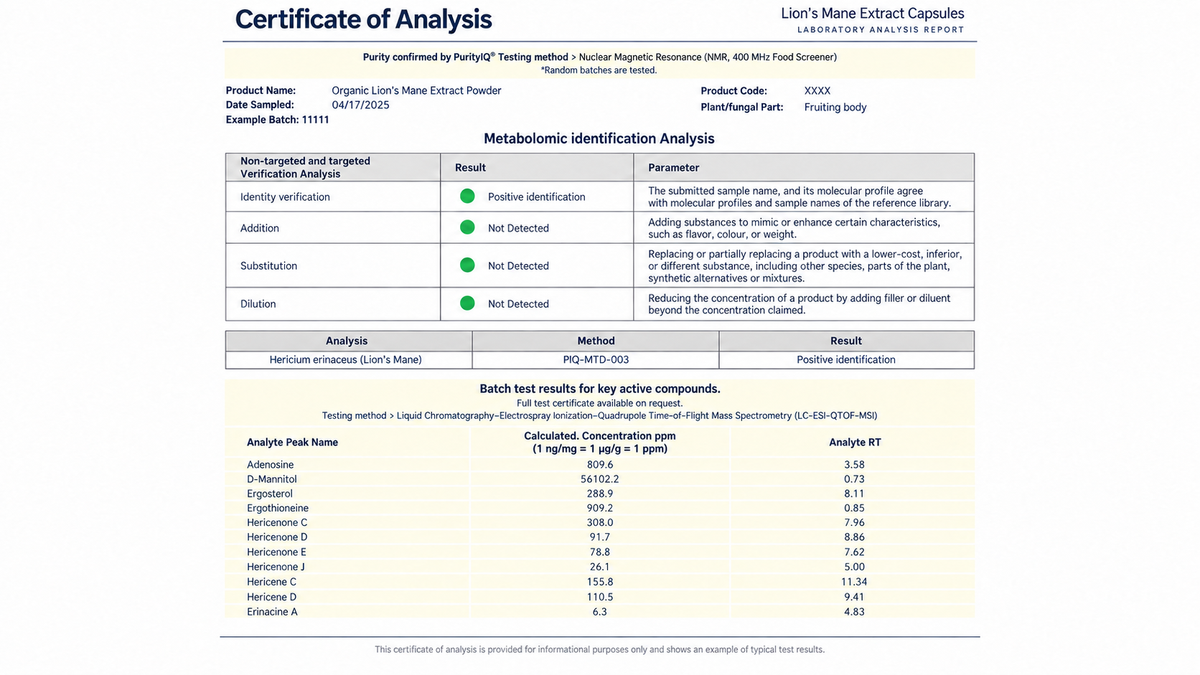
Lion’s Mane
-
Bacopa
-
Certain mushroom extracts
-
Other cognitive-support ingredients
Not all nootropics need cycling in the same way.
Caffeine tolerance can develop quickly.
Lion’s Mane is usually more of a slow-burn support ingredient and may not need the same kind of break.
Tyrosine or choline-based formulas may be best used strategically rather than mindlessly.
The key question is:
Is this supporting a genuine need, or am I using it to push through poor recovery?
If the answer is the second one, your stack may be doing less “optimisation” and more “biochemical debt collection.”
For more on cognitive support, see Lion’s Mane for cognitive support.
Stimulants
Stimulants are the clearest cycling candidates.
This includes:
-
Caffeine
-
Guarana
-
Yerba mate
-
High-stimulant pre-workouts
-
Strong energy formulas
Tolerance can build quickly.
The same dose may feel less effective over time, leading people to increase the dose.
That is where problems can start.
More caffeine is not always the answer.
Sometimes the answer is sleep.
Deeply inconvenient.
Cycling stimulants, reducing intake or having lower-stimulant days can help maintain sensitivity and prevent your entire personality being sponsored by caffeine.
Hormone-Support Formulas
Hormone-support supplements should be used with thought.
This may include formulas containing ingredients marketed around testosterone, libido, stress hormones or adrenal support.
Some herbal testosterone-support products, DHEA-style products or stronger hormonal support ingredients may not be suitable for continuous, indefinite use.
This does not mean all hormone-support supplements are dangerous.
It means hormones operate through feedback systems, and those systems deserve respect.
A sensible approach is to:
-
Use clear goals
-
Avoid indefinite use without review
-
Track symptoms and performance
-
Consider blood markers where relevant
-
Take breaks after structured cycles
-
Speak to a qualified professional where appropriate
For more on individual response, see biochemical individuality.
Fat-Loss and Thermogenic Formulas
Thermogenic or fat-loss formulas often include stimulants, green tea extract, caffeine sources, pepper extracts, appetite-support ingredients or metabolic-support compounds.
These are not products to take forever without thought.
They are usually better suited to structured phases.
For example:
-
A defined fat-loss phase
-
A short-term performance or energy phase
-
A period where appetite control support is useful
-
A targeted pre-workout or training block
Once the phase is over, the formula should be reviewed.
If your fat-loss stack has become a permanent lifestyle accessory, something has probably gone wrong.
The goal is not permanent stimulation.
The goal is a better system.
A Smarter Look at Shilajit Cycling
At One Life Foods, we recommend taking Shilajit daily for 4–8 weeks, followed by a four-week break.
This is the usage protocol stated on our product packaging and directions.
There is currently no strong clinical evidence showing that Shilajit must be cycled, that continuous use causes a defined pharmacological tolerance or that planned breaks increase its effectiveness.
Our recommendation is a cautious, practical approach.
Because Shilajit’s perceived effects may be gradual or subtle, continuous use can make it difficult to assess whether it is still contributing anything meaningful to your routine. A planned break gives you an opportunity to compare how you feel with and without it and decide whether another cycle is worthwhile.
Shilajit is a complex natural resin containing fulvic compounds, humic substances, minerals and other fractions. However, its complexity should not be interpreted as proof that the body develops tolerance to it or that cycling creates a biological reset.
A break is therefore about reassessment, not fear.
For more on quality and sourcing, see trustworthy supplement suppliers.
Suggested Shilajit Cycle
Our recommended approach is:
-
Take Shilajit daily for 6–8 weeks.
-
Follow the serving instructions provided with the product.
-
Take a four-week break after completing the cycle.
-
Reassess whether the product remains suitable and useful.
-
Begin another cycle if appropriate.
This recommendation is not based on evidence that cycling makes Shilajit more effective or prevents tolerance.
The break provides an opportunity to:
-
Reassess whether you notice a meaningful difference.
-
Avoid taking a supplement indefinitely without review.
-
Compare how you feel with and without it.
-
Decide whether it still represents good value for you.
If you restart and notice a meaningful difference, that may help inform your decision to continue. If you notice no difference, that is also useful information.
Supplements That Usually Do Not Need Cycling
Foundational nutrients are different.
They are not usually about stimulation.
They are about nutritional support.
These often do not need cycling when used appropriately and when there is a genuine need.
Examples may include:
-
Magnesium
-
Vitamin D3
-
Omega-3 EPA and DHA
-
Creatine
-
Essential minerals such as zinc and selenium
-
Basic multivitamin support
-
Electrolytes where needed
-
Protein powders where dietary intake requires support
The key phrase is “where needed.”
You do not cycle vitamin D because your body got bored of it.
You adjust it based on season, sunlight exposure, intake, blood levels and need.
You do not cycle magnesium because the internet likes protocols.
You use it appropriately based on diet, training, sleep, stress, symptoms and tolerance.
Foundational nutrients should be reviewed, not randomly stopped.
This is where personalise your supplements and nutrition becomes important. The aim is not to take everything forever. The aim is to know what belongs in your routine and why.
Creatine: The Happy Exception
Creatine monohydrate is one of the most studied sports nutrition supplements.
It plays by different rules.
People used to cycle creatine more often, sometimes using loading phases and off-phases.
Current evidence suggests that for most healthy adults, consistent daily use is effective and well tolerated.
A typical daily dose is around 3 to 5 g.
Creatine works by increasing muscle creatine and phosphocreatine stores, supporting rapid ATP regeneration during high-intensity efforts.
Once muscle creatine stores are saturated, consistency maintains them.
If you stop, levels decline gradually over several weeks.
There is no dramatic cliff edge.
Creatine does not usually require cycling.
Some people still cycle it for personal preference, cost, routine or psychology.
But physiologically, it is one of the few supplements where consistency often wins.
For wider context, see researched natural supplements.
Vitamin D3: Adjust, Do Not Randomly Cycle
Vitamin D3 is another example where “cycling” is not the right framing.
Vitamin D should be adjusted based on need.
In the UK, vitamin D status can vary dramatically between summer and winter due to changes in sunlight exposure.
Some people may need more structured support in autumn and winter.
Others may need less in summer.
Some may need ongoing supplementation based on blood levels, diet, skin exposure, lifestyle, genetics or medical context.
The sensible approach is:
-
Test where possible
-
Adjust seasonally
-
Avoid megadosing without guidance
-
Consider cofactors such as magnesium
-
Review blood levels if supplementing long term
That is not cycling in the stimulant sense.
It is responsive dosing.
Less dramatic.
Much more useful.
Omega-3: Consistency Usually Matters More
Omega-3 fatty acids, especially EPA and DHA, are structural fats that become incorporated into cell membranes over time.
This is not an instant on-off effect.
It is a slow incorporation process.
That means consistency usually matters more than cycling.
However, dose and context still matter.
High-dose omega-3 supplementation may not suit everyone and should be considered carefully, especially for people taking medication or preparing for surgery.
Quality also matters.
Freshness, oxidation control, EPA and DHA dose, form and sourcing all influence whether an omega-3 product is worth taking.
For more on this, see why fish oil form matters.
Magnesium: Usually a Foundation, Not a Cycle
Magnesium supports muscle function, nervous system function, electrolyte balance and hundreds of enzymatic reactions.
It is often used consistently, especially by people with high training loads, high stress, low dietary intake or sleep-support goals.
It does not usually need cycling in the same way as stimulants or adaptogens.
But it should still be reviewed.
If your diet improves, stress changes or symptoms resolve, your needs may shift.
Dose and form matter too.
Magnesium glycinate, citrate, malate, taurate and oxide behave differently.
So the question is not “should I cycle magnesium?”
It is:
Do I need it?
Is this the right form?
Is the dose appropriate?
Is it helping?
Biology loves better questions.
Cycling, Simplified
You do not need a lab notebook.
You need structure and self-awareness.
A general cycling framework might look like this:
-
Use stronger targeted supplements for 8 to 12 weeks
-
Take 2 to 4 weeks off
-
Reassess symptoms, performance and need
-
Restart, rotate or stop depending on the outcome
This is not a law.
It is a starting framework.
Different supplements need different approaches.
Different people respond differently.
Different life phases create different needs.
Your stack should respond to reality, not routine inertia.
Lifestyle-Based Cycling
Lifestyle-based cycling means adjusting your stack based on what life is currently demanding from you.
Examples:
-
Use adaptogens during high-stress work periods
-
Reduce stimulants during recovery phases
-
Increase electrolytes during heat, sauna use or endurance training
-
Use sleep support during disrupted sleep periods
-
Pause stronger nootropics during holidays or deload weeks
-
Reduce performance extras when training volume drops
This is personalisation in motion.
Your routine should not look identical during exam stress, marathon training, holiday downtime and a calm maintenance phase.
Unless your life is suspiciously unchanged, in which case congratulations, or possibly check your pulse.
Seasonal Cycling
Seasons change your needs.
In winter, you may focus more on:
-
Vitamin D3
-
Immune-support nutrients
-
Sleep routine
-
Omega-3 intake
-
General foundational support
In summer, you may focus more on:
-
Hydration
-
Electrolytes
-
Antioxidant-rich foods
-
Sun exposure balance
-
Travel support
-
Training recovery
Seasonal cycling is not about chasing trends.
It is about matching your routine to your environment.
The body lives in context.
So should your supplement plan.
For hydration strategy, see hydration and electrolyte balance.
Symptom-Led Cycling
Sometimes your body tells you when the current plan is not working.
Signs it may be time for a break or review include:
-
Same dose feels less effective
-
You feel wired
-
You feel flat
-
Sleep worsens
-
Digestion becomes unsettled
-
Irritability increases
-
Focus feels forced
-
You need more caffeine to feel normal
-
A supplement that once helped now does very little
-
Your goal has changed but your stack has not
These are not always red flags.
Sometimes they are road signs.
They are telling you to change gear.
Signs It Is Time to Take a Break
Pay attention to feedback.
Your biology is fairly chatty when you stop ignoring it.
It may be time to pause or review a supplement if:
-
Effects are clearly diminished
-
You keep increasing the dose to chase the original feeling
-
You feel dependent on it to function
-
Side effects appear
-
The original reason for taking it no longer applies
-
You are taking it out of habit
-
Your sleep, mood or digestion worsens
-
You cannot tell whether it still helps
-
You are stacking multiple products with overlapping effects
The goal is not to be suspicious of every supplement.
The goal is to avoid autopilot.
Autopilot is where good routines go to become expensive habits.
Signs You Probably Do Not Need a Break
You may not need to cycle a supplement if:
-
It addresses a confirmed nutritional gap
-
It supports a foundational need
-
It is being taken at an appropriate dose
-
It is well tolerated
-
It continues to serve a clear purpose
-
It is monitored where relevant
-
It is part of a medically advised routine
-
Stopping would make no practical sense
Examples may include vitamin D in winter, magnesium where intake is low, omega-3 where dietary oily fish intake is low, or creatine for consistent performance support.
Cycling should not become a ritual for the sake of it.
Do not turn every supplement into a dramatic on-off relationship.
Some just need consistency.
How to Restart After a Break
A break is useful only if you learn from it.
When restarting, ask:
-
Did I feel different off it?
-
Did symptoms return?
-
Did energy, sleep, mood or performance change?
-
Did I miss the supplement or just the habit?
-
Does the same dose feel effective again?
-
Do I still need this?
-
Is there a better option now?
If you restart and feel a clear benefit, the supplement may still be useful.
If nothing changes, it may not be essential.
If you feel worse when restarting, the dose, timing or ingredient may not suit your current biology.
That is valuable information.
The Mistake: Cycling Everything at Once
Do not stop five supplements at the same time unless there is a clear reason.
If you stop everything and feel worse, you will not know what mattered.
If you stop everything and feel better, you will not know what caused the problem.
Adjust one or two things at a time.
Track the response.
Then decide.
This is the same principle used in smart personalisation.
Change enough to learn.
Not so much that you create fog.
Final Thoughts: Adapt, Don’t Plateau
Supplements are tools.
Not crutches.
Not permanent personality upgrades.
Not little capsules of wishful thinking.
Used wisely, they can support energy, recovery, resilience, performance and wellbeing.
Used mindlessly, they can become expensive background noise.
Strategic cycling can keep your routine under review. For supplements where tolerance can occur, it may also help manage habitual or escalating use.
It helps you reassess what is working, avoid unreviewed long-term use and match your stack to your current life phase.
Think of it like training periodisation.
You do not chase a personal best every day.
You build.
You rest.
You reload.
Then you decide what still belongs in the plan.
True optimisation is not about doing more.
It is about doing better, at the right time, for the right reasons.
Want to Build the Bigger Strategy?
Catch up with the related articles:
Then explore how to stack supplements properly to build a smarter supplement routine around timing, synergy, form, dose, quality and purpose.
Written By
Written by Chris Simon, Founder of One Life Foods.
Chris has worked in the supplement industry since 2009 and is known for seeking out exceptional ingredients, products, and formulations. Read more about Chris and the story behind One Life Foods.
Disclaimer
This article is for informational purposes only and is not intended to diagnose, treat, cure or prevent any disease. Food supplements should not be used as a substitute for a varied diet and healthy lifestyle. Always consult a qualified healthcare professional before starting, stopping or cycling supplements, particularly if you are pregnant, breastfeeding, taking medication or have an existing medical condition.

Share:
Blueprints for Better Health: How to Personalise Your Supplements and Nutrition
The Secret Stars of Shilajit: Why Dibenzo-α-Pyrones Deserve a Standing Ovation