


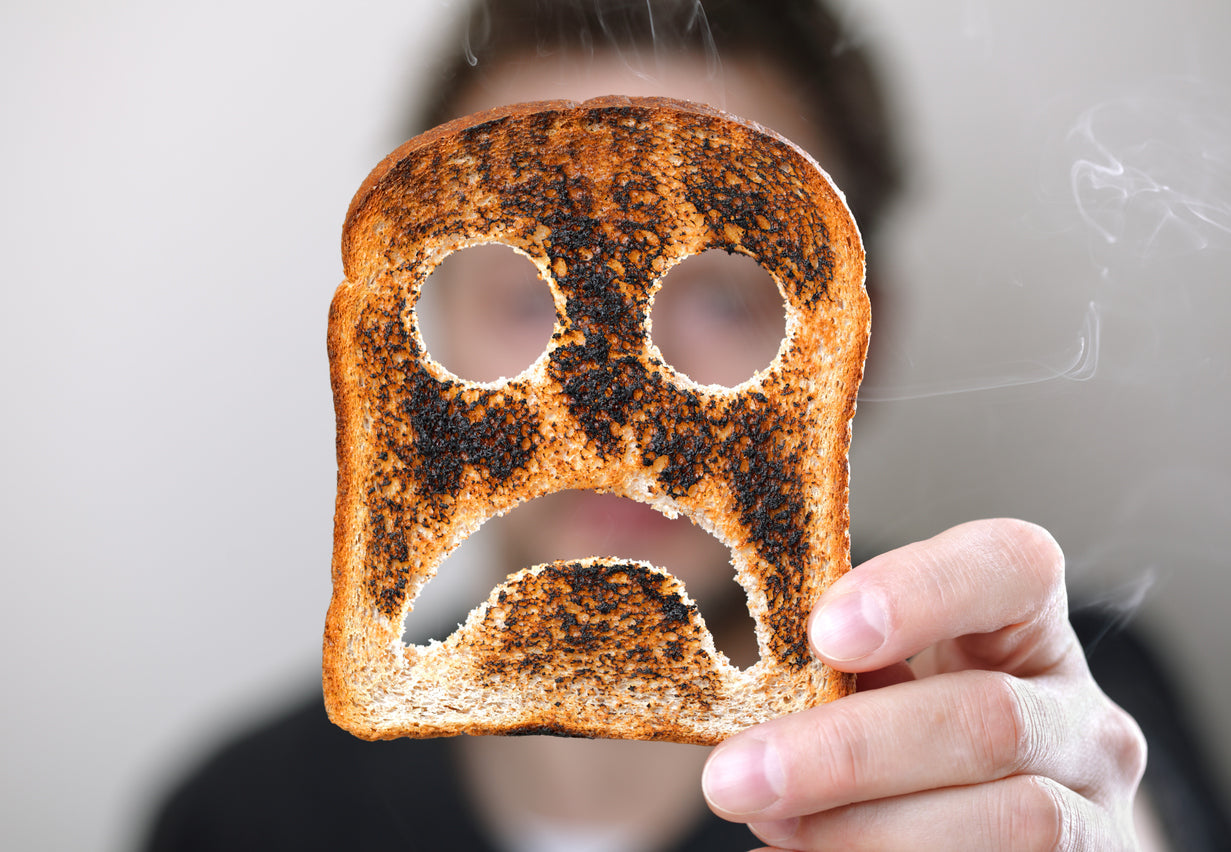
The wellness world’s obsession with Shilajit continues to reach new and bewildering heights.
We’ve now entered the phase where marketing slogans sound like pub banter:
“Fixes your marriage!”
“Turns you into a beast!”
“Turns your gut into a spiritual event!”
Lovely.
And as if the wild claims weren’t enough, there’s also a growing library of so-called authenticity tests. These are often taken more seriously than proper lab analysis, mostly because they’re cheap, dramatic, and involve fire, which, let’s face it, appeals to our inner caveman.
The flame test is just one example of why informal Shilajit authenticity tests should never be treated as a replacement for proper analysis.
Today’s main character?
The illustrious Flame Test.
Much loved by new brands and supplement bros alike, this one involves taking a blob of Shilajit, holding a lighter to it, and declaring purity based on what happens next.
What a time to be alive.
The short answer is this: the Shilajit flame test can sometimes reveal obvious adulteration, but it cannot prove purity, potency, fulvic acid content, heavy metal safety, microbial safety or overall quality.
At best, it is a crude visual check.
At worst, it is supplement theatre with a lighter.
Does the Shilajit Flame Test Tell You Anything?
Let’s be charitable for a moment.
The flame test can show you a few things.
If your “Shilajit” immediately catches fire like a petrol-soaked sock and smells like a burnt Croc, you probably didn’t buy it from a reputable source.
Likewise, if it fizzes, pops and leaks neon goo, it might be time to stop sourcing supplements from Telegram groups and eBay.
But what exactly is happening when you set fire to Shilajit?
Some Actual Science, Not Just Bro-Logic and Burn Marks
Shilajit is a complex, naturally occurring substance made up of ancient, decomposed organic matter, mainly plants, that has been compressed and mineralised over thousands of years in mountainous rock strata.
If you are new to the subject, it is worth understanding what Shilajit actually is before trying to judge it with a lighter.
Its structure includes a cocktail of bioactive compounds, including fulvic and humic acids, minerals, trace elements and resinous components.
When exposed to flame, the organic fraction combusts. In other words, it reacts with heat and oxygen, producing glow, smoke and sometimes ash.
The exact behaviour will vary depending on:
-
moisture content
-
resin and lipid profile
-
origin
-
preparation process, including how it has been filtered, concentrated and stabilised
That last one matters more than most people realise.
Shilajit that has been properly purified and stabilised may behave differently under heat than a raw, untreated lump that has barely seen a filter.
This is also why the debate around raw versus purified Shilajit matters more than most flame-test videos suggest.
Does Real Shilajit Burn?
Here’s a myth worth addressing:
“If it catches fire, it’s fake.”
Wrong.
The origin of this idea likely comes from the belief that real Shilajit is so mineral-dense and pure that it cannot burn.
And it is true that it does not ignite like petrol.
Nor should it.
But that does not mean it will not react at all.
What you will often see in real Shilajit is a low, glowing ember. A soft orange or red incandescence rather than a dramatic flame.
This is due to slow oxidation of the organic matter, especially carbon-rich humic substances.
It glows because it is burning.
Just very slowly and without theatrics.
Think more glowing charcoal, less flaming cocktail.
So if your Shilajit glows, chars or bubbles slightly, congratulations. That can be completely normal.
It is not an indication of impurity.
It is an indication that you have a substance composed of organic and mineral compounds, as expected.
On the other hand, if it does not react at all, does not even soften and does not emit a glow, you might be dealing with an overly processed, heavily diluted or adulterated sample.
Adulterants: The Pyromaniac’s Dilemma
Here’s where it gets tricky.
Even fake Shilajit can pass the flame test.
All it takes is the right combination of sticky resin, carbonised plant matter and a bit of dark pigment.
You have yourself a burner.
Common adulterants include:
-
charcoal or ash powder, which burns well and does absolutely nothing useful
-
sugar syrups or molasses, which bubble nicely and spike your blood sugar
-
bitumen or pitch, which looks convincing, smells terrible and should not be eaten
-
soil and clay, with just enough carbon to mimic the effect
All of these can give you a “pass” on the flame test.
None of them make the product genuine.
What the Shilajit Flame Test Might Tell You
The flame test may help flag obvious problems, such as:
-
a sample containing synthetic rubbish, such as plastic, rubber or glue
-
behaviour that is clearly unnatural, such as bubbling green goo
-
harsh chemical smoke
-
extreme flammability
-
a smell that suggests something has gone badly wrong
That is useful in the same way a smoke alarm is useful.
It tells you something is wrong.
It does not tell you everything is right.
What the Shilajit Flame Test Cannot Tell You
The flame test cannot tell you:
-
whether it contains fulvic acid or bioavailable minerals
-
whether it has been contaminated with heavy metals such as lead, mercury or arsenic
-
whether microbial contamination is present, including mould, yeast or coliforms
-
whether the product is actually Shilajit or simply a dark, sticky imposter
-
whether the resin has been purified properly
-
whether the product is safe for daily use
-
whether the composition is consistent between batches
Fulvic acid claims need proper methods behind them, which is why understanding how fulvic acid in Shilajit is tested matters more than watching something glow.
The same applies to contaminants.
These are the kinds of risks that require PAHs, solvents and microbial testing in Shilajit, not a lighter and misplaced confidence.
A flame cannot measure heavy metals.
It cannot identify microbial contamination.
It cannot verify fulvic acid.
It cannot tell you whether the product has been properly purified, dried, stabilised or tested.
It is fire.
Not forensic chemistry.
The Real Shilajit Tests: Less Fire, More Facts
If you are serious about purity and potency, and you should be, considering what you are putting into your body, rely on the things that matter.
That includes:
-
a full Certificate of Analysis from a credible laboratory
-
testing for heavy metals
-
microbial safety testing
-
contaminant screening
-
verified fulvic and humic acid levels
-
transparency about sourcing
-
transparency about preparation and purification
These are the standards of modern supplementation.
Not a clip of someone torching a pebble on TikTok.
Understanding how Shilajit testing actually works is far more useful than any visual or heat-based test.
Why Lab Testing Matters More Than Home Tests
Home tests are attractive because they feel empowering.
You can do them yourself.
You can see a result immediately.
You can hold your spoon like a scientist and feel briefly in control of the supplement industry.
The problem is that most home tests are not specific enough.
They may show behaviour.
They do not explain composition.
They may reveal something obvious.
They do not verify quality.
Proper testing looks at what you cannot see, smell, burn or dissolve in a glass of water.
That is where real quality control begins.
A meaningful Shilajit assessment should look at:
-
what is present
-
what is absent
-
what has been removed
-
what has been retained
-
whether the product is microbiologically safe
-
whether contaminants have been screened
-
whether fulvic and humic values are measured using appropriate methods
-
whether the finished product is consistent
That is not as exciting as setting things on fire.
It is considerably more useful.
Conclusion: Fire Does Not Equal Facts
So yes, the flame test is a great way to feel clever while proving very little.
It is theatrical.
It is cheap.
It scratches a primal itch.
But it is not science.
It never was.
If you are holding a lighter to your resin to decide whether it is “real”, you are basically doing supplement Tinder.
Swipe right if it glows.
Swipe left if it melts weird.
Entertaining?
Sure.
Informed?
Not quite.
We are not saying the flame test is entirely useless. It has its place as a quick-and-dirty screening tool.
But as a definitive marker of purity, it is about as dependable as a dating profile that says “sapiosexual” but lists crypto as a personality trait.
When it comes to quality Shilajit, do not just trust the burn.
Trust the facts.
Knowing what to look for when buying Shilajit makes it much easier to separate genuine quality from marketing BS.
And if your supplier’s quality control begins and ends with setting things on fire, maybe take your business somewhere that knows what a lab is.
Explore the Full Shilajit Guide
Written By
Written by Chris Simon, Founder of One Life Foods.
Chris has worked in the supplement industry since 2009 and is known for seeking out exceptional ingredients, products, and formulations. Read more about Chris and the story behind One Life Foods.

Share:
Methylation, MTHFR and Methylated B Vitamins: What Actually Matters?
“Cite the Study!”: The Cult of Clinical Evidence and Why You’re Probably Reading It Wrong