


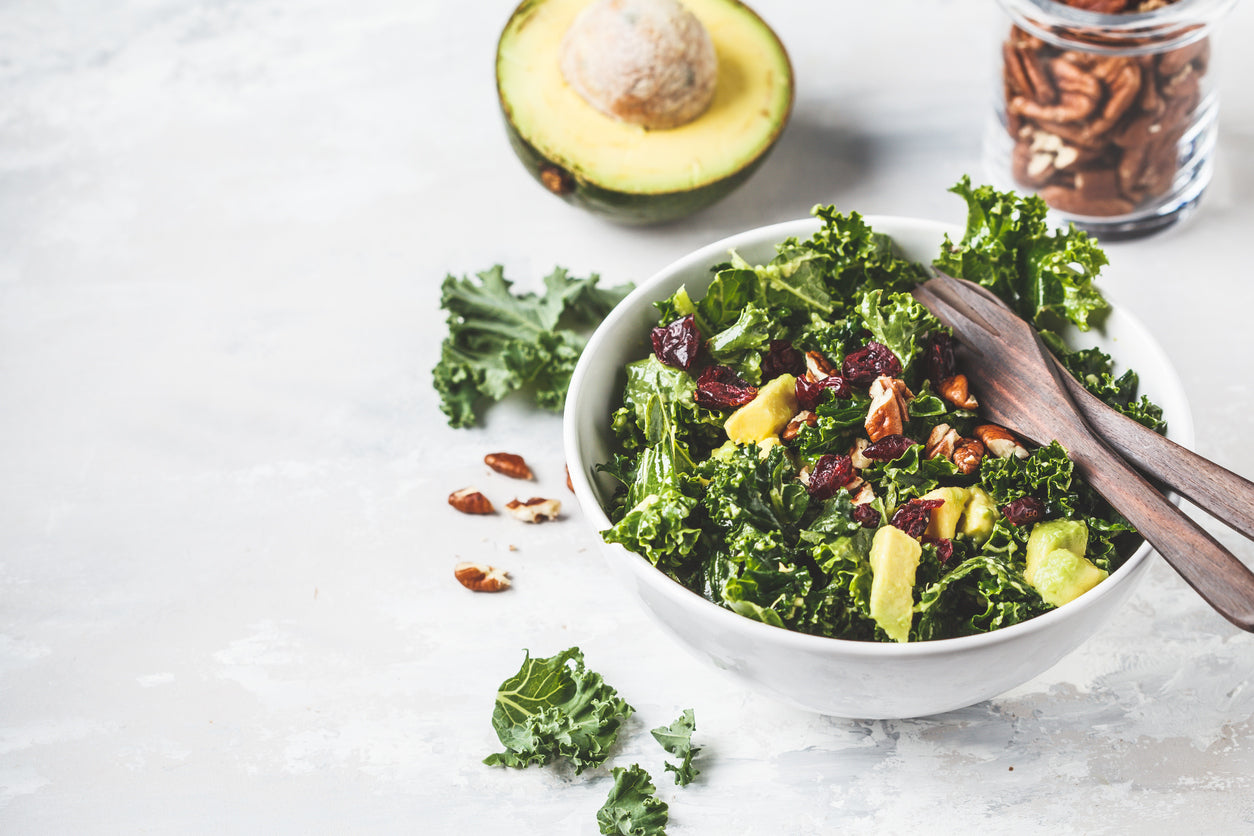
Challenging the Nutritional Gospel
“Whole foods are always healthier.”
That is the gospel according to wellness blogs, fitness influencers and every juice bar chalkboard with suspiciously confident handwriting.
Whole grains, raw kale, nuts straight from the earth and fibre-packed everything bask in a kind of nutritional halo.
The logic seems sound.
Less processed means more natural.
More natural means more nourishing.
Therefore, whole food equals better food.
Simple.
Convenient.
Not always true.
What if, for some people, especially those with sensitive digestion, gut irritation, bloating, IBS-type symptoms or inflammatory gut concerns, the most “wholesome” choice can actually feel like the most irritating?
This article is not here to villainise kale.
Nor are we launching a smear campaign against brown rice.
Kale has been through enough.
This is about nuance.
We are going to explore why some whole foods can be harder to digest, how plants naturally protect themselves, why fibre is not always gentle, and when cooking, soaking, sprouting or simplifying food might be the kindest thing you can do for your gut.
Because gut health and nutrient absorption are not just about what you eat, they are also about what your body can tolerate, digest and actually use.
They are also about what your body can actually tolerate, digest and use.
Let’s dig in.
Gently.
Quick Answer: Are Whole Foods Always Better for Digestion?
No, not always.
Whole foods can be highly nutritious, but they are not automatically easier to digest.
Some whole foods contain more fibre, tougher plant structures and natural compounds such as phytates, lectins, tannins, glucosinolates and fermentable carbohydrates. These can be useful or harmless for many people, but they may trigger bloating, discomfort, gas, urgency or heaviness in those with sensitive digestion.
This does not mean whole foods are bad.
It means preparation matters.
Cooking, soaking, sprouting, fermenting, peeling or choosing gentler alternatives can make certain foods easier to tolerate while still supporting a nutrient-rich diet.
In simple terms:
Whole is not always gentle.
Refined is not always evil.
Your gut gets a vote.
Why “Whole” Is Not Always Gentle on Your Gut
The term “whole” usually refers to food in its intact, less processed form.
That might mean whole grains, raw vegetables, nuts, seeds, legumes or skins left on fruit and vegetables.
This can be beneficial because whole foods often contain more fibre, micronutrients, polyphenols and plant compounds.
But there is a trade-off.
The same parts of the food that make it more “whole” can also make it harder to digest.
Bran.
Skins.
Husks.
Seed coatings.
Tough fibres.
Fermentable carbohydrates.
Natural defence compounds.
For a resilient gut, these may be handled perfectly well.
For a sensitive gut, they can feel less like nourishment and more like internal admin your digestive system did not agree to.
This is where biochemical individuality matters.
Two people can eat the same bowl of lentils and have entirely different experiences.
One feels satisfied and virtuous.
The other starts calculating the distance to the nearest bathroom.
Same food.
Different gut.
Common Culprits: Whole Foods That Can Be Harder to Digest
Whole foods are not the enemy.
But some are more likely to cause problems in sensitive digestive systems.
Whole Grains
Examples include:
-
Wholemeal bread
-
Brown rice
-
Bran cereals
-
Wholegrain pasta
-
Rye
-
Oats with intact bran
-
Seeded breads
Whole grains are often richer in fibre and minerals than refined grains.
That can be useful.
However, they also contain more bran and fibre, which may be harder to tolerate for some people.
The bran layer can be physically irritating in sensitive guts, especially when digestion is already unsettled.
Whole grains may also contain phytic acid, a natural compound that can bind minerals such as iron, zinc and calcium, reducing absorption to some degree.
This does not make whole grains bad.
It means some people may do better with gentler forms, especially during periods of gut sensitivity.
White rice, sourdough, well-cooked oats or lower-fibre grains may be easier to tolerate for some.
Nutrition is not a morality contest.
Sometimes white rice is not “bad.”
Sometimes it is just dinner that does not argue back.
Raw Nuts and Seeds
Nuts and seeds are nutrient-dense.
They can provide fats, minerals, fibre and plant compounds.
But they can also be difficult for sensitive guts.
Raw nuts and seeds may contain:
-
Phytic acid
-
Tannins
-
Enzyme inhibitors
-
Tough outer fibres
-
Dense fat and fibre combinations
For some people, that combination can feel heavy, irritating or difficult to break down.
This is particularly relevant when nuts and seeds are eaten in large amounts or not chewed properly.
Which, judging by modern life, is often.
Soaking, sprouting, roasting, grinding or using nut butters may make them easier to tolerate.
Again, this is not about declaring almonds guilty.
It is about asking whether your gut actually enjoys them in that form.
Cruciferous Vegetables
Examples include:
-
Kale
-
Broccoli
-
Cabbage
-
Cauliflower
-
Brussels sprouts
-
Rocket
-
Bok choy
Cruciferous vegetables are packed with interesting compounds, including glucosinolates, sulphur-containing compounds, fibre and polyphenols.
They are often genuinely valuable foods.
But raw cruciferous vegetables can be hard work for some digestive systems.
They may contribute to bloating, gas or discomfort, particularly in larger amounts.
Raw kale salad every day may look virtuous on Instagram.
Your gut may submit a formal complaint.
Cooking helps soften fibre, reduce bulk and improve tolerance for many people.
Steamed broccoli is often easier than raw broccoli.
Cooked cabbage is often easier than raw cabbage.
A warm meal is often easier than a heroic salad mountain that takes forty minutes and a jaw workout to finish.
Legumes
Examples include:
-
Lentils
-
Beans
-
Chickpeas
-
Peas
-
Kidney beans
-
Black beans
-
Butter beans
Legumes are rich in fibre, plant protein and minerals.
They can be excellent foods.
They can also be famously dramatic.
Legumes contain fermentable carbohydrates, including oligosaccharides, which gut bacteria can ferment. This can lead to gas, bloating and discomfort in some people.
They may also contain lectins and other compounds that are reduced by proper soaking, cooking and preparation.
This is why traditional food cultures rarely just threw dry beans into a bowl and hoped for the best.
They soaked them.
Cooked them.
Fermented them.
Spiced them.
Slow-cooked them.
Basically, they did the digestive prep work before the food entered the body.
Modern wellness sometimes forgets that part.
Key Idea: Whole Foods Can Retain Natural Defence Compounds
Many whole plant foods retain natural compounds and structures that help the plant survive.
These may include:
-
Fibrous coatings
-
Bran layers
-
Lectins
-
Phytates
-
Tannins
-
Glucosinolates
-
Enzyme inhibitors
-
Fermentable carbohydrates
-
Tough cellulose-rich structures
For many people, these are not a problem.
Some may even be beneficial within a varied, well-tolerated diet.
But for sensitive guts, inflamed digestive systems or people prone to bloating and discomfort, these compounds and fibres can be harder to manage.
That does not mean you need to avoid whole foods.
It means preparation and context matter.
This is one reason personalise your supplements and nutrition applies just as much to food as it does to capsules, liquids and powders.
Nature Does Not Want to Be Eaten, and That Is Fine
If you imagine nature as a benevolent salad bar, think again.
Plants do not exist purely to nourish us.
They are designed to survive, reproduce and protect themselves.
And survival often means making digestion less straightforward.
Seeds want to become future plants.
Grains want to protect their reproductive material.
Legumes want to make themselves less appealing to predators.
Plants do not have teeth, claws or legs.
So they use chemistry, fibre and structure.
Charming, in a slightly passive-aggressive way.
Evolution’s Armour
Plant defence and survival strategies may include:
Phytates
Phytates are found in grains, legumes, nuts and seeds.
They can bind minerals such as iron, zinc and calcium, which may reduce absorption.
In a balanced diet, this may not be a major issue for everyone.
But in people with low mineral intake, restricted diets or gut issues, it can become more relevant.
Soaking, sprouting, fermenting and cooking can help reduce phytate levels.
Lectins
Lectins are proteins found in many plant foods, especially legumes and grains.
Some lectins can irritate the gut if foods are improperly prepared.
Proper cooking, especially boiling or pressure cooking, significantly reduces lectin activity in many foods.
This is one reason raw or undercooked beans are a terrible idea, unless your evening plans involve regret.
Tannins
Tannins are polyphenolic compounds found in foods such as tea, nuts, seeds, legumes and some fruits.
They can bind proteins and minerals and may contribute to astringency.
For most people, tannins are not inherently bad.
But in sensitive individuals, they may contribute to digestive discomfort or reduced tolerance of certain foods.
Tough Fibres
Cellulose and other plant fibres add structure to plant foods.
Humans cannot fully digest cellulose without help from gut microbes.
That is not a flaw.
It is part of why fibre supports bowel function and microbial activity.
But when gut function is compromised, very high fibre intake can worsen bloating, gas, discomfort or urgency.
Fibre is not universally gentle.
It is dose-dependent, type-dependent and person-dependent.
A concept that should probably be printed on every bag of bran cereal.
Traditional Preparation Methods Exist for a Reason
Nearly every traditional cuisine includes techniques that make plant foods easier to digest.
These include:
-
Soaking
-
Sprouting
-
Fermenting
-
Slow cooking
-
Pressure cooking
-
Peeling
-
Grinding
-
Stone milling
-
Souring
-
Roasting
-
Steaming
These methods can soften fibres, reduce certain anti-nutrients, lower fermentable load and improve tolerance.
Think of raw plant foods as encrypted.
Cooking is the decryption key.
Fermentation is the software update.
Soaking is the polite pre-meeting.
Your digestive system may appreciate the preparation.
When Refined Is Not the Enemy
In modern wellness culture, “refined” is often treated as a nutritional insult.
But for compromised or sensitive digestion, simplicity can be soothing.
Refined does not always mean ultra-processed junk food.
Sometimes it simply means part of the plant has been removed to make the food lower in fibre, lower in roughage or easier to digest.
That can be useful.
Especially during periods of gut irritation, flare-ups, poor appetite, high stress or recovery.
Examples Where Less May Be More
| Food Category | “Whole” Form | Gentler Alternative | Why It Might Help |
|---|---|---|---|
| Whole grains | Brown rice, wholemeal bread | White rice, white sourdough | Lower fibre, fewer bran-related irritants |
| Legumes | Dry lentils, canned beans | Soaked, sprouted or pressure-cooked legumes | Reduced lectins and fermentable carbohydrates |
| Cruciferous vegetables | Raw kale, broccoli, cabbage | Steamed greens, cooked broccoli | Softer fibre and often better tolerance |
| Nuts and seeds | Raw almonds, sunflower seeds | Nut butters, soaked or sprouted nuts | Reduced rough texture and easier breakdown |
| Vegetables in general | Large raw salads | Peeled, cooked vegetables | Gentler on sensitive digestion |
| Fruit | Skins, dried fruit, large portions | Peeled fruit, stewed fruit, smaller portions | Lower fibre load and gentler texture |
Whole is not always wise.
Especially when your gut needs gentleness, not grit.
The Fibre Trap
Fibre is important.
Let’s make that clear.
Fibre supports bowel function, gut microbes, short-chain fatty acid production, appetite regulation and metabolic health.
But more fibre is not always better.
Especially if your gut is not ready for it.
Suddenly increasing fibre can cause:
-
Bloating
-
Gas
-
Cramping
-
Loose stools
-
Constipation
-
Heaviness
-
Urgency
-
Discomfort
This is especially true when fibre comes from rough, raw or highly fermentable foods.
The answer is not to fear fibre.
The answer is to build tolerance gradually and choose forms that suit your gut.
Cooked vegetables may be better than raw salads.
Peeled fruit may be better than fruit skins.
White rice may be better than brown rice during sensitive periods.
Low-FODMAP choices may suit some people better than high-FODMAP foods.
It is not about perfection.
It is about feedback.
Signs Whole Foods Might Be Working Against You
Whole foods are not toxic.
But they can be troublesome in certain contexts.
You may need to reconsider food form, fibre level or preparation if you regularly experience:
-
Bloating or heaviness after meals
-
Constipation
-
Loose stools
-
Cramping
-
Urgency after high-fibre meals
-
Gas that feels excessive for you
-
Nutrient deficiencies despite a “perfect” diet
-
Discomfort after raw vegetables
-
Poor tolerance of beans or lentils
-
Worsening symptoms after large salads
-
Feeling better with cooked, simpler foods
This does not mean you have failed at healthy eating.
It means your gut is giving you data.
This is why getting the most from your supplements also depends on digestion. A supplement routine sits on top of the same gut environment that processes your food.
If digestion is struggling, everything downstream can feel less predictable.
Gut Health, Absorption and Supplement Response
Your gut is not just a food-processing tube.
It is involved in digestion, absorption, immune signalling, microbial balance, barrier function and communication with the nervous system.
If your gut is irritated or overloaded, it may affect how well you tolerate certain foods and supplements.
This does not mean every symptom is caused by the gut.
That would be too easy, and biology dislikes easy.
But it does mean digestion deserves attention.
When refining your nutrition and supplement routine, consider:
-
What foods are easiest for you to digest?
-
Do you tolerate raw foods or cooked foods better?
-
Do legumes cause issues?
-
Do whole grains suit you?
-
Are you eating more fibre than your gut can currently handle?
-
Are symptoms worse during stress?
-
Do you tolerate capsules, tablets, powders or liquids differently?
-
Do you need a simpler routine while your gut settles?
For format considerations, see liquid vitamins vs tablets.
What to Do Instead
The goal is not to avoid all whole foods.
The goal is to make them work for you.
Try these practical steps:
Cook More of Your Vegetables
Steaming, roasting, sautéing or boiling can soften fibre and improve tolerance.
Cooked vegetables are often easier than large raw salads.
Soak or Pressure-Cook Legumes
Soaking, rinsing and pressure cooking can reduce compounds that contribute to digestive discomfort.
Start with smaller portions.
Your gut may not appreciate being introduced to chickpeas by the bucket.
Try White Rice Instead of Brown Rice
White rice is lower in fibre and often easier to digest.
For sensitive guts, it can be a useful carbohydrate option.
No, this does not mean you have betrayed wellness.
Use Nut Butters Instead of Whole Nuts
Nut butters may be easier to digest than large amounts of raw nuts.
They also reduce the amount of mechanical chewing required.
Which is useful if you have ever eaten raw almonds while distracted and realised you swallowed gravel.
Peel Fruit and Vegetables Where Needed
Skins can be nutritious, but they can also be harder to tolerate.
Peeling can reduce rough fibre and improve comfort.
Increase Fibre Gradually
Do not go from low fibre to “ancestral forest dweller” overnight.
Increase slowly.
Let your gut adapt.
Pay Attention to Patterns
Track which foods cause symptoms.
Notice whether cooking helps.
Notice whether stress changes your tolerance.
Your gut is not random.
It just communicates in unpleasant ways.
Final Thoughts: Whole Is Not Always Wise
Whole foods are valuable.
But they are not automatically gentle.
And they are not automatically the best choice for every gut, every day, in every form.
A sensitive digestive system may need cooked, softened, soaked, peeled, fermented or simpler foods before it can tolerate rougher whole-food forms.
That is not failure.
That is intelligent adjustment.
The goal is not to worship whole foods or demonise refined foods.
The goal is to nourish the body in a way it can actually use.
Because the best diet is not the one that looks purest on paper.
It is the one your body can digest, absorb and thrive on.
Stay Tuned: There Is More Beneath the Surface
This is just the beginning.
In Part 2 of The Gut Check, we will explore the deeper forces shaping your digestion, from gut microbes and genes to ancestral cooking methods, stress, psychology and the modern obsession with “clean eating.”
We will also look at why more people seem to be reacting to whole foods than ever before, and how to build a smarter, more personal approach to nutrition.
Your gut is not broken.
It is trying to tell you something.
Let’s keep listening.
Further Reading
To build a smarter nutrition and supplement routine, explore:
Written By
Written by Chris Simon, Founder of One Life Foods.
Chris has worked in the supplement industry since 2009 and is known for seeking out exceptional ingredients, products, and formulations. Read more about Chris and the story behind One Life Foods.
Disclaimer
This article is for informational purposes only and is not intended to diagnose, treat, cure or prevent any disease. If you have persistent digestive symptoms, suspected IBS, inflammatory bowel disease, unexplained weight loss, blood in the stool, severe pain or ongoing nutrient deficiencies, speak to a qualified healthcare professional.



Share:
Optimising Your Supplement Stack
The Gut Check (Part 2): What Microbes, Genes, and Culture Can Teach Us About Real Wellness