


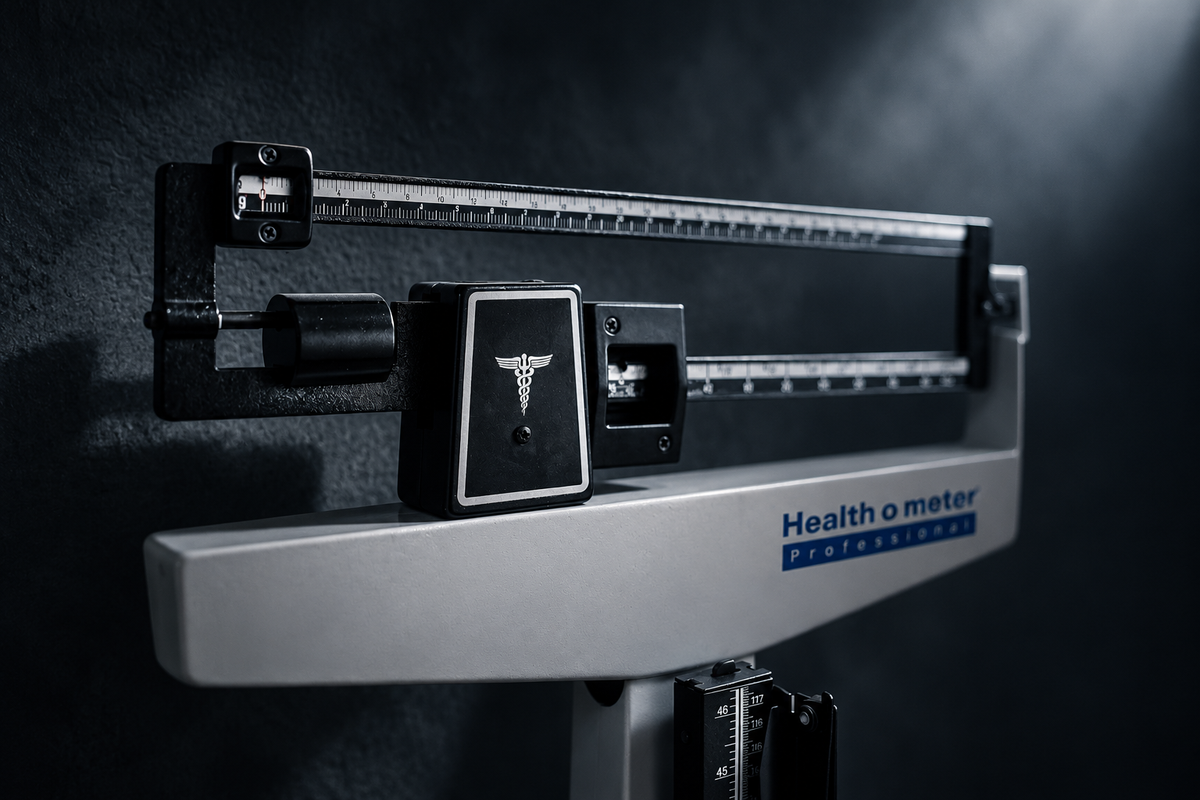
It’s weigh in day, and a drained-looking shadow of his former self steps onto the scales the day before a competition. He’s spent weeks training, preparing, watching his food and over-obsessing about the magic scales figure. The room is quiet for a moment. Someone checks the display, the official confirms the weight, and suddenly everybody relaxes. The athlete has made it. There might even be a small celebration, although anyone who has watched a severely dehydrated, cracked out looking fighter attempt to celebrate will know that enthusiasm and physical capability don’t necessarily go hand in hand.
A few hours later, the same athlete may be several kilos heavier. He hasn't suddenly gained several kilos of muscle, and unless the laws of human metabolism have changed overnight, he hasn't gained that much body fat either. What has changed is the amount of water, stored carbohydrate and digestive material his body is carrying. He may feel considerably better, he may even perform better. But whether he has genuinely recovered from the process that got him onto those scales is another question entirely.
This is what makes weight cutting such an interesting subject from a sports nutrition perspective. The number on the scales is simple enough, but the biology behind it is anything but. And somewhere between the calorie deficit, the carbohydrate restriction, the sodium manipulation, the sauna and the enormous post weigh-in meal, it becomes surprisingly easy to forget what the athlete was trying to achieve in the first place.
The purpose of making weight is to qualify for a competition category, but the purpose of preparing for competition is to perform.
Those two objectives are supposed to work together. Unfortunately, it doesn’t always work like that.
What does making weight actually mean?
Making weight is the process of reaching a specified body mass for an official competition weigh-in. It’s common in boxing, mixed martial arts (MMA), wrestling, judo, taekwondo, powerlifting, Olympic weightlifting and other sports where athletes compete within defined weight categories.
Athletes may achieve their target through gradual fat loss, short term changes in muscle glycogen, reduced digestive contents or temporary losses of body water. These approaches affect different components of body mass, operate over different timescales and carry different implications for health and performance. In other words, making weight and losing body fat are not necessarily the same thing.
An athlete who weighs 2 kg less than yesterday might have less water in circulation, less glycogen in their muscles, less food passing through their digestive tract or some combination of the three. The display will report the same reduction regardless.
We tend to talk about weight as though it were one thing, but Biologically, it’s the combined mass of many different things, and some of them change rather quickly.
|
Component |
What actually changes |
Timescale |
Main consideration |
|
Body fat |
Stored energy within adipose tissue |
Usually weeks to months |
Energy availability and preservation of lean mass |
|
Glycogen and associated water |
Stored carbohydrate and its associated water |
Hours to days |
Fuel availability and exercise performance |
|
Gut content |
Food, fluid and waste in the digestive tract |
Hours to days |
Digestion, nutritional adequacy and tolerance |
|
Body water |
Fluid within and outside cells |
Hours to days |
Hydration, circulation, temperature regulation and health |
These mechanisms can overlap. An athlete restricting food, carbohydrate and fluid simultaneously may see a substantial reduction on the scales without being able to identify exactly how much came from each source. That’s why a successful weight cut strategy needs to be assessed by more than the amount of weight lost.
Why athletes compete below their normal body weight
Weight categories exist for sensible reasons. In sports where body size influences strength, reach, leverage or physical contact, dividing competitors by weight can help create fairer competition and reduce certain mismatches in physical size.
The complication is that the rules generally specify what an athlete must weigh at a particular moment, not necessarily what they will weigh when the competition begins.
That creates an obvious incentive.
If a fighter normally weighs considerably more than the upper limit of a particular division, but can temporarily reduce body mass for the official weigh-in and recover enough before competing, he may enter the contest physically larger than an opponent who maintains a body weight close to the category limit.
The theory isn't difficult to understand. A larger athlete may retain advantages in muscle mass, reach or absolute strength.
What’s less certain is how much of that theoretical advantage survives the process of getting there.
The American College of Sports Medicine addressed this problem in its 2021 expert consensus statement on weight-category sports, examining both the chronic body composition changes and acute weight loss practices used by athletes. Importantly, the statement also considered how competition rules and weigh-in arrangements influence the behaviour of competitors.
I think this is an important part of the discussion because weight cutting isn't simply a collection of questionable decisions made by individual athletes. It’s also a response to the incentives created by the sport itself.
When competitors believe everyone else is cutting weight, choosing not to cut can begin to feel like accepting a disadvantage before the competition has even started.
That doesn't establish that the strategy is beneficial, but it does explain why it persists.
Fat loss is the part that takes time
If an athlete needs to reduce actual body fat to reach an appropriate competition weight, the fundamental mechanism is an energy deficit. Over time, energy expenditure must exceed energy intake, allowing stored energy to contribute towards meeting the body's requirements.
That principle is straightforward enough, although the physiology surrounding it is considerably more complicated.
As energy intake falls, the body can respond through changes in appetite, spontaneous physical activity, training output, recovery and hormonal signalling. The magnitude and duration of the deficit matter, as do the athlete's existing body composition, training demands and nutritional status.
For someone who spends several hours a day training, dieting isn't simply a matter of eating less until the magic scales figure is achieved.
Training requires energy. muscle repair requires amino acids, high intensity exercise often depends heavily on carbohydrate availability, and the body still needs sufficient dietary fat, vitamins and minerals to maintain normal physiological function.
Protein intake is particularly important during planned fat loss phases because it can help preserve lean tissue when combined with appropriate resistance training. Carbohydrate intake also needs to reflect the work being performed, rather than being reduced indiscriminately simply because the athlete wants to become lighter.
We've explored this in more detail in our guide to scaling your diet with training intensity, because an athlete's nutritional requirements should reflect the work they're actually doing, not simply the number they're trying to reach on the scales.
The International Society of Sports Nutrition's 2025 position stand on nutrition and weight cutting in combat sports emphasises planned reductions in body mass during the training camp, with attention to protein intake, carbohydrate availability and overall nutritional adequacy.
The wider concern is low energy availability, where insufficient energy remains for normal physiological functions after exercise demands have been accounted for.
The International Olympic Committee's 2023 consensus statement on Relative Energy Deficiency in Sport (REDs) describes the potential consequences of prolonged or severe low energy availability in both male and female athletes, including disturbances affecting bone health, reproductive function, immunity, metabolism and performance. An athlete can therefore become lighter while simultaneously becoming less capable of training, recovering and competing.
The ideal fat loss phase should be planned far enough ahead that it doesn't require sacrificing the very adaptations the athlete has been training to develop.
Otherwise, the athlete may reach the intended weight with a rather less impressive version of the body they started with. It's something we also discuss in our fundamental diet principles article, particularly what happens when nutritional intake fails to keep up with training demands.
Glycogen, carbohydrates and the weight of stored fuel
One of the more interesting aspects of making weight is the relationship between carbohydrate storage and water.
When we eat carbohydrates, they’re digested and absorbed primarily as simple sugars, including glucose. Some glucose is used immediately for energy, while some is stored as glycogen, particularly in skeletal muscle and the liver.
Muscle glycogen provides an important fuel reserve during exercise, especially when intensity rises and the demand for rapid energy production increases.
But, and this is the important bit: glycogen doesn't exist in isolation!
It’s stored in association with water, and changes in glycogen content are therefore accompanied by changes in body mass. The familiar approximation is that each gram of stored glycogen is associated with several grams of water, often described as roughly three grams, although the relationship isn’t fixed and varies with physiological conditions.
This helps explain why a substantial reduction in carbohydrate intake can produce an unexpectedly rapid drop on the scales.
Some of that reduction reflects depleted glycogen stores, and some reflects associated water changes. But neither should automatically be mistaken for body fat disappearing at extraordinary speed.
The reverse happens when carbohydrate intake increases and glycogen is replenished. An athlete can become heavier without gaining meaningful body fat, simply because muscle and liver glycogen stores have been restored along with associated water. This relationship between glycogen, water and performance is also why carb cycling and carb loading have legitimate applications in sports nutrition, even if they're frequently misunderstood.
There’s an obvious attraction here for athletes trying to make weight. Reducing carbohydrate intake can lower temporary body mass without relying exclusively on sweating or fluid restriction.
The problem is that glycogen is not merely inconvenient weight. It is fuel.
Boxing, wrestling, MMA, Jits and judo involve repeated periods of muscular effort, including explosive movements and high intensity exchanges. Even when aerobic metabolism contributes substantially to the overall energy demand, the ability to produce repeated bursts of power remains important.
Depleting glycogen to reduce scale weight may compromise that capacity, particularly when there’s insufficient time to restore carbohydrate stores before competition.
This is where the difference between a theoretical strategy and a useful one becomes important. A kilo of weight lost through glycogen depletion isn't necessarily equivalent, from a performance perspective, to a kilo lost through another mechanism.
The scales couldn’t give a shit where the kilo came from, but the muscles almost certainly do.
Gut content: becoming lighter without losing tissue
Another approach involves changing the amount of material within the digestive tract.
Every meal adds mass before its contents have been fully digested, absorbed and eliminated. Dietary fibre, particularly when it increases stool bulk or holds water within the gut, can contribute to this process.
This is completely normal physiology, but it becomes relevant when an athlete is trying to reach a precise weight at a precise time.
Reducing dietary fibre and choosing lower residue foods for a short period may reduce the amount of material passing through the digestive tract, creating a modest reduction in body mass without requiring an equivalent loss of body water through dehydration.
This isn't merely a theoretical idea.
A 2022 study by Foo and colleagues examined a short term low fibre diet in 19 healthy men. After four days of reduced fibre intake, participants experienced a modest reduction in body mass relative to their habitual dietary condition, with the difference reaching approximately 0.58 kg on the following morning.
The study was small and involved healthy men rather than a large group of competition athletes, so its findings shouldn't be treated as a guaranteed result for everybody. Nevertheless, it provides useful evidence that changes in digestive contents can contribute to short term weight management.
Foods such as white rice, lower fibre cereals, peeled potatoes and refined breads may be easier to accommodate in a temporary low residue approach than large portions of beans, bran or fibrous vegetables.
This isn't an argument that white bread is inherently healthier than wholegrain bread (although maybe it is - that’s a convo for another time!) or that athletes should avoid fibre throughout training. We've actually explored some of this in The Gut Check, looking at why foods considered healthier on paper aren't necessarily better tolerated in every situation.
Fibre remains important for digestive health and normal dietary quality.
The question is whether a temporary modification has a specific purpose, whether nutritional needs can still be met, and whether the athlete tolerates the change.
There’s also a limit to what reducing gut content can achieve. Attempting to force the digestive system to become empty through excessive food restriction, laxatives or other aggressive measures introduces risks that are rather different from temporarily choosing lower fibre foods.
A sensible strategy works with normal digestive physiology, but we don’t need to make it a declaration of war.
Water, sodium and a body that prefers stability
Water manipulation is where weight cutting becomes considerably more complicated, and potentially more dangerous.
Water is distributed throughout the body, both inside cells and in the extracellular spaces surrounding them. It contributes to blood volume, circulation, temperature regulation, nutrient transport and the chemical environment in which normal cellular processes occur.
Fluid balance is regulated through several interacting physiological systems.
The kidneys continually adjust how much water and dissolved material they retain or excrete. Arginine vasopressin, also known as antidiuretic hormone, helps regulate water conservation, while the renin–angiotensin–aldosterone system contributes to sodium balance, extracellular fluid volume and blood pressure regulation.
Sodium is particularly important because it’s the principal positively charged ion in extracellular fluid and contributes substantially to extracellular fluid osmolality.
Its concentration helps determine how water moves between compartments, but sodium regulation isn’t the same thing as simply eating more salt and becoming heavier or eating less salt and becoming lighter.
The body is constantly adjusting…
An athlete who changes sodium intake may alter fluid balance, but the response depends on hydration status, kidney function, hormones, recent diet, sweat losses and the timing of those changes. We explore this in more detail in our article on why sodium helps hydration,including its role in extracellular fluid balance, nerve signalling and muscle function.
This is one reason I find simplistic sodium advice a bit annoying. There’s a tendency to present sodium as though it were a switch that can be turned off when weight needs to fall and switched back on when performance matters. Yeh right, if only Biology were that obliging.
Sodium also contributes to nerve transmission, muscle function and the absorption of nutrients within the intestine. In appropriate amounts, it plays an important role in fluid replacement, particularly when substantial sodium has been lost through sweating.
However, it would be equally misleading to suggest that every episode of muscle cramping or poor performance is caused by a sodium deficiency. Exercise induced cramping has several proposed contributing mechanisms, and dehydration or electrolyte disturbances don’t explain every case.
What matters for sure, is maintaining the balance required for normal function.
Deliberately disrupting that balance to achieve a lower scale figure may work in the short term, but the physiological cost can become substantial as the degree of disturbance increases.
What about water loading?
Water loading generally refers to deliberately increasing fluid intake before a subsequent reduction in drinking, with the aim of manipulating urine production and temporary body mass.
It’s been studied in weight category sports and is discussed in the 2025 ISSN combat-sports position stand. That doesn’t make it a suitable general recommendation.
Its effects are influenced by kidney responses, sodium intake, the size of the fluid changes and the athlete's circumstances.
Excessive fluid consumption can also be dangerous. Drinking too much relative to the body's ability to excrete water can contribute to hyponatraemia, a potentially serious reduction in blood sodium concentration. At the other extreme, aggressive restriction or sweating can produce substantial hypohydration and cardiovascular strain.
Saunas, hot baths, restrictive clothing and prolonged sweat sessions are used by some athletes to increase water loss. They can also increase heat stress and the risk of heat related illness, particularly when combined with exercise and restricted fluid intake. And because sweat isn't simply water, understanding which electrolytes we actually lose through sweating.
There’s an important distinction between explaining why a method changes body weight and recommending that somebody uses it.
Water loading and acute dehydration are specialist practices, not something that should be copied from an influencers social media account because a (manipulated) photograph looked impressive.
Why the timing of the weigh-in changes everything
The interval between the official weigh-in and competition is one of the most important factors in evaluating a weight cut strategy.
Some sports allow only a short period between weighing in and competing. Others provide considerably longer recovery windows, sometimes extending into the following day.
With a same day weigh-in, the athlete has limited opportunity to restore fluids, replenish carbohydrate stores, consume food and allow digestion before performance begins.
That makes substantial last minute weight losses especially problematic.
An athlete who has reduced body mass through dehydration may begin competition with compromised circulating fluid volume, altered cardiovascular responses and reduced capacity to tolerate heat or prolonged exertion.
A longer interval creates more opportunity for recovery, which is why larger acute cuts are often associated with sports offering day before weigh-ins.
However, opportunity and recovery are not the same thing.
Restoring body water takes time. Replenishing depleted glycogen depends on carbohydrate intake, muscle uptake and the degree of depletion. Digestive tolerance also limits how quickly an athlete can replace everything that was restricted before the weigh-in.
The rules of a particular sport therefore change the practical and physiological considerations. A strategy developed around a professional MMA weigh-in should not automatically be transferred to a powerlifting comp, wrestling tournament or Olympic weightlifting event with a different schedule. The metabolism may be broadly the same, but the available recovery time isn't.
Does rapid weight loss actually reduce performance?
This is where I think the discussion needs more scientific honesty.
It’s tempting to give a very simple answer: rapid weight cutting is dangerous, therefore it always makes athletes perform worse.
The first concern is legitimate; the second conclusion is more complicated than that.
A 2022 meta-analysis examining weight cutting in combat-sport athletes found small reductions in certain performance measures immediately following rapid weight loss, including maximal strength and repeated high intensity efforts. However, performance after subsequent recovery didn’t show a consistent overall deterioration across the measured outcomes.
Another systematic review published in 2023 examined 16 studies involving 184 combat sport athletes. Some studies found no meaningful impairment following rapid weight loss, while others reported negative changes in performance related or physiological measures.
These findings are not necessarily contradictory.
Different studies examine different athletes, cutting methods, amounts of weight loss, recovery periods and performance tests. A short maximal effort test isn’t the same thing as a prolonged competitive contest involving physical contact, tactical decisions, fatigue and repeated exertion.
There’s also a difference between what can be detected in a lab and what ultimately determines whether somebody wins a fight, completes a successful lift or performs well across several rounds.
A weight cut might leave one performance measure largely unaffected while influencing another. An athlete could retain maximal strength yet experience greater perceived fatigue, reduced training quality or difficulty recovering between repeated efforts.
So the evidence does not establish that every modest, supervised weight cut necessarily reduces every measure of performance.
Nor does it establish that aggressive weight cutting is harmless simply because some athletes recover well enough to compete successfully.
And that’s important. Scientific research becomes almost redundant when we selectively quote only the studies that support the conclusion we wanted to reach.
I’d rather acknowledge the uncertainty.
We know that severe dehydration and inappropriate weight cutting practices carry real risks, and we know that different nutritional strategies affect different physiological systems. What remains less certain is the precise point at which the theoretical advantage of competing in a lower category is outweighed by the physical and psychological cost of getting there.
And that point is unlikely to be identical for every athlete.
Rehydration: why gaining the weight back is not the same as recovering
Once the weigh-in is complete, the emphasis usually changes from losing weight to restoring it.
For an athlete who’s deliberately reduced glycogen, food intake and body water, this means replacing lost fluids and electrolytes, consuming sufficient carbohydrate, restoring normal feeding and allowing time for absorption and recovery.
This sounds straightforward, although the digestive system isn’t particularly interested in how quickly an athlete would like to gain five kilos.
Fluid consumed after weigh-in must be absorbed and distributed appropriately. Carbohydrates need to be digested, absorbed and used to replenish glycogen stores. Sodium may be needed to support fluid retention and replacement of sweat losses, but the amount required depends on what has actually been lost.
Consuming a large quantity of food and drink doesn’t guarantee that the athlete is immediately ready to perform.
In fact, excessively large meals, unfamiliar foods or poorly tolerated drinks can introduce gastrointestinal discomfort at precisely the moment the athlete needs their digestive system to be on top form.
One of the more revealing pieces of recent research is a 2026 systematic review and meta-analysis by Sun and colleagues, which examined recovery following rapid weight loss in combat sport athletes.
The review included 40 studies and found that athletes commonly regained substantial body mass after weigh-in. Across the studies suitable for pooling, mean body mass regain was approximately 6.2%, although variation between studies was extremely high.
Crucially, the authors found that regaining weight shouldn’t be interpreted as proof of complete rehydration or restored performance readiness. The available evidence was also too heterogeneous to identify one clearly superior recovery strategy.
That’s an important finding, because athletes sometimes judge the success of a weight cut by how much body mass they regain before competition.
But body mass isn't a direct measurement of circulating blood volume, electrolyte balance, glycogen restoration or physical readiness.
An athlete may regain several kilos while still experiencing residual effects of the cut.
Equally, the absence of a spectacular weight rebound doesn’t automatically mean the athlete has recovered poorly.
The useful objective is to restore normal function, not simply to produce the largest possible difference between two photographs of a bathroom scale.
For a more detailed discussion of the recovery period, see our guide to refueling after a weight cut.
Why the sport itself matters
Making weight in MMA isn’t physiologically identical to making weight for a powerlifting competition.
The same biological systems are involved, but the demands placed upon them are different.
A fighter may need sustained aerobic capacity alongside repeated explosive efforts, rapid reactions, coordination and the ability to make decisions under substantial physical fatigue.
A powerlifter needs to produce extremely high levels of force during a small number of competitive attempts. Maximal strength, concentration, warm up quality and recovery between attempts are particularly relevant.
A wrestler or jits guy may face several bouts within a limited period, creating different fuelling and recovery demands from an athlete competing once.
Lightweight rowing introduces another set of considerations because athletes must meet weight requirements while sustaining substantial endurance based performance. Repeated weight management within a competition schedule can further complicate matters.
There are also athletes in cycling, running and other endurance disciplines who reduce body mass in pursuit of an improved power-to-weight ratio, even where no formal weight category exists.
The nutritional risks may overlap, particularly where excessive restriction or low energy availability is involved, but that shouldn’t be confused with making an official competition weight.
This is why I would be cautious about treating weight cutting as one universal practice.
The physiological demands of the event, the athlete's body composition, training history, competition frequency and recovery window all affect the decision.
A method that appears manageable in one setting may be entirely inappropriate in another.
Choosing the right weight class
Perhaps the most important weight cutting decision happens before anybody begins adjusting carbohydrate, sodium or water intake.
Which weight category should the athlete actually compete in?
This requires more thought than identifying the lowest category that seems mathematically possible.
An athlete's habitual body mass, fat free mass, body fat level, training demands and ability to maintain health during a planned reduction all matter, and so does the history of previous weight cuts.
Questions to be asked: Has the athlete repeatedly struggled to make a particular category? Are training performance and recovery deteriorating during preparation? Does reaching the target require increasingly severe short term restriction? Has the athlete experienced menstrual disruption, persistent fatigue, recurring injury or other signs of inadequate energy availability?
These aren’t minor inconveniences to be hidden until after the big day. They are relevant information about whether the chosen category is appropriate or not.
The percentage of body mass lost is also more informative than the number of kilos alone. A 3 kg reduction represents a different proportion of body mass for a 60 kg athlete than it does for a 110 kg athlete. However, percentages do need context.
Published combat sports guidance discusses ranges of body mass reduction used in professionally managed settings, but these shouldn’t be interpreted as universal safety thresholds. A particular percentage doesn’t guarantee safety, adequate hydration or preserved performance.
The method of loss, the athlete's health and the time available for recovery remain essential.
For younger athletes, additional caution is necessary because growth, development and nutritional adequacy take priority over achieving a lower category. Athletes with a history of disordered eating, medical conditions affecting fluid balance or signs of Relative Energy Deficiency in Sport (REDs) also require appropriate professional assessment rather than a generic weight cutting plan.
Sometimes the sensible decision is simply to just compete in a higher category.
That may feel counterintuitive when the culture surrounding a sport places so much emphasis on becoming the largest competitor in the smallest possible division.
But a slightly smaller athlete who arrives properly fuelled, hydrated and physically capable is surely better prepared than a larger athlete still recovering from an unnecessarily severe cut?
The best category isn't necessarily the lowest one an athlete can reach, but rather it’s the category in which the athlete can repeatedly prepare, qualify and perform without compromising health.
When making weight becomes a medical problem
There’s a point at which weight cutting stops being a sports nutrition strategy and becomes a medical concern.
Fainting, confusion, severe weakness, persistent vomiting, chest pain, marked disorientation, seizures or symptoms of heat illness should never be interpreted as normal signs that a weight cut is progressing successfully. These can indicate serious physiological disturbance and require urgent medical assessment.
Severe dehydration can affect cardiovascular stability, kidney function and temperature regulation. Excessive fluid intake can also be dangerous, particularly when it contributes to hyponatraemia.
There are additional concerns around diuretics and other drugs used to manipulate body mass. Diuretics can affect fluid and electrolyte balance, and many are prohibited in regulated sport under the 2026 World Anti-Doping Agency Prohibited List.
The use of anabolic steroids, stimulants, thyroid medication, insulin or other drugs may introduce further physiological complications depending on the substance, dose and circumstances.
This is one reason copying another athlete's weight cut can be particularly unwise. You may know the number they weighed at the beginning and the number they reached at the end, but you probably don't know their hydration status, medical history, medication use, blood chemistry or what happened behind the scenes.
Two bodies showing the same change on a scale may have reached it through very different processes.
And neither the scale nor the Instagram post will tell you whether the process was safe.
What a sensible weight cut strategy should consider
A well designed approach begins with the athlete's health, the requirements of the sport and the realistic amount of weight that needs to be lost.
If body fat needs to be reduced, that should normally be addressed through a planned nutritional phase that preserves lean mass and supports sufficient training quality. Short term changes to carb intake or food residue may have specific applications, but they should be evaluated against the potential costs to fuel availability, gut comfort and performance.
The final stages also need to account for the competition schedule and the time available for normal eating, drinking and recovery.
Professional supervision becomes particularly important whenever acute fluid manipulation is being considered. A qualified sports dietitian or sports nutrition professional, working alongside medical support where appropriate, can help assess whether a strategy is justified and monitor the athlete's response.
Making weight is ultimately just one part of advanced performance nutrition, and as with a particular strategy, understanding when something is appropriate is every bit as important as understanding how it works.
I’d also want to know what success actually looks like.
Is it simply reaching the weigh-in limit, or does the plan account for how the athlete feels, trains and performs afterwards? Has the athlete demonstrated that the approach is tolerable under suitable supervision? Is the chosen weight category sustainable across a season, or does every competition require another increasingly difficult period of restriction?
These questions might not seem obviously important, but they're considerably more useful than deciding how much time somebody should spend sweating their back out in a sauna.
The question behind the number
There’s something slightly strange about the way making weight has become normalised in certain sports.
Athletes spend months developing strength, endurance, power, technical ability and the capacity to recover from demanding training. Then, in the final days before competition, some deliberately introduce physiological stress that may compromise the very qualities they have spent all that time developing.
Sometimes the strategy is carefully managed and the athlete recovers well. Sometimes it isn't, and the consequences range from reduced performance to serious illness.
The scientific literature reflects that complexity: We have useful evidence concerning energy availability, carbohydrate metabolism, fluid balance, acute weight loss and post-weigh-in recovery. We also have substantial gaps in our understanding of long term health effects, individual tolerance and the relationship between weight cutting and actual competition outcomes.
What we don't have is a biological rule stating that being heavier than your opponent after a weigh-in automatically makes you better at your sport.
That remains a much more complicated question.
I think the purpose of sports nutrition should be to help athletes adapt to training, maintain health and arrive at competition capable of producing their best performance. Weight management can be part of that process, but it should serve those objectives rather than become an entirely separate contest.
Because the scales will happily confirm that you've reached the required figure.
They won't tell you what it cost to get there.
And they certainly won't tell you whether it was worth it.
Key scientific references
The following publications provide the scientific foundation for this article.
1. Burke LM, Slater GJ, Matthews JJ, Langan-Evans C, Horswill CA. (2021). ACSM Expert Consensus Statement on Weight Loss in Weight-Category Sports. Current Sports Medicine Reports, 20(4), 199–217. DOI: 10.1249/JSR.0000000000000831.
2. Ricci AA et al. (2025). International Society of Sports Nutrition Position Stand: Nutrition and Weight Cut Strategies for Mixed Martial Arts and Other Combat Sports. Journal of the International Society of Sports Nutrition, 22(1). DOI: 10.1080/15502783.2025.2467909.
3. Mountjoy M et al. (2023). 2023 International Olympic Committee's Consensus Statement on Relative Energy Deficiency in Sport (REDs). British Journal of Sports Medicine, 57, 1073–1097. DOI: 10.1136/bjsports-2023-106994.
4. Foo WL et al. (2022). A Short-Term Low-Fiber Diet Reduces Body Mass in Healthy Young Men: Implications for Weight-Sensitive Sports. International Journal of Sport Nutrition and Exercise Metabolism, 32(4), 256–264. DOI: 10.1123/ijsnem.2021-0324.
5. Effects of Weight Cutting on Exercise Performance in Combat Athletes: A Meta-Analysis. (2022). International Journal of Sports Physiology and Performance. DOI: 10.1123/ijspp.2021-0104.
6. Effects of Different Rapid Weight Loss Strategies and Percentages on Performance-Related Parameters in Combat Sports: An Updated Systematic Review. (2023). International Journal of Environmental Research and Public Health, 20(6), 5158. DOI: 10.3390/ijerph20065158.
7. Sun J, Song H, Sun J. (2026). Effects of Rehydration and Nutritional Recovery Strategies After Rapid Weight Loss on Body Mass Recovery, Hydration Status, and Performance in Combat Sports Athletes: A Systematic Review and Meta-Analysis. Frontiers in Nutrition, 13. DOI: 10.3389/fnut.2026.1943678.
8. Hew-Butler T et al. (2015). Statement of the 3rd International Exercise-Associated Hyponatremia Consensus Development Conference. British Journal of Sports Medicine, 49, 1432–1446. DOI: 10.1136/bjsports-2015-095004.
Written by
Written by Chris Simon, Founder of One Life Foods.
Chris has worked in the supplement industry since 2009 and is known for seeking out exceptional ingredients, products, and formulations. Read more about Chris and the story behind One Life Foods.
Important information
This article is provided for educational purposes and does not constitute an individual weight-cutting protocol or medical advice. Rapid weight loss, dehydration, water loading, sodium manipulation and heat-based weight-cutting practices can cause serious harm. Athletes preparing for weight-category competition should seek individual guidance from an appropriately qualified sports dietitian, sports nutrition professional or medical practitioner.
Anyone experiencing severe symptoms during a weight cut, including confusion, fainting, chest pain, seizures or symptoms of heat illness, should seek urgent medical attention. Extra caution is needed for younger athletes, people with a history of disordered eating, athletes showing signs of low energy availability, and anyone with a medical condition or medication that affects hydration, cardiovascular function or electrolyte balance.

Share:
How to Read a Mushroom Certificate of Analysis Without Being Fooled by the Paperwork