


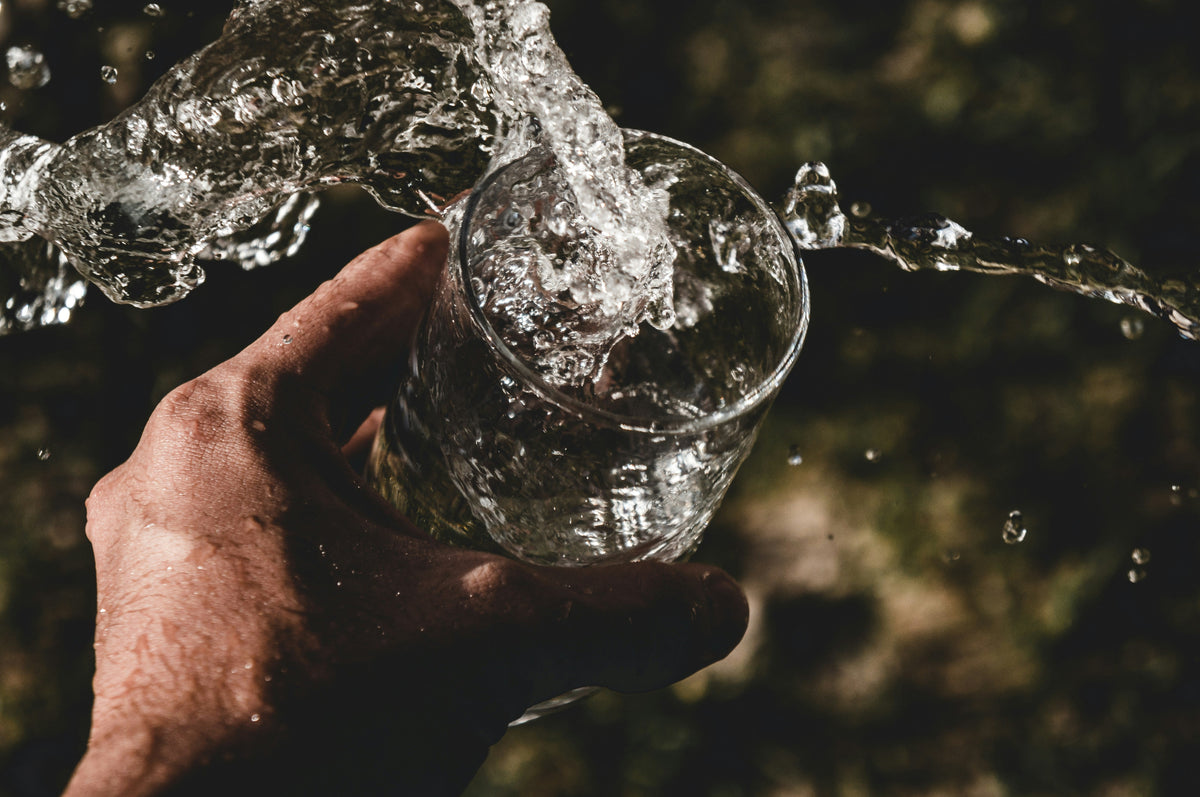
There's something slightly strange about the way water loading is discussed in certain corners of the fitness industry. Water, something the body needs continuously to maintain blood volume, regulate temperature and keep its various systems functioning, suddenly becomes an inconvenience that needs to be carefully manipulated. Drink enormous amounts of it for a few days, dramatically change your intake, perhaps remove some sodium for good measure, and apparently you can arrive at a competition looking considerably leaner, drier and more muscular than you did earlier in the week.
Or that's the theory, anyway.
Anyone who's spent much time around bodybuilding, combat sports or the more adventurous end of fitness nutrition will probably have encountered some variation of this approach. Gallon-sized water containers, precisely timed drinking schedules, arguments about sodium, distilled water, saunas and the mysterious pursuit of getting 'dry'. Occasionally accompanied by someone looking rather unwell while insisting that everything is going exactly to plan.
The interesting thing is that water loading isn't entirely without scientific support. There is genuine research suggesting it can increase short-term body-water losses under controlled conditions, and specialist sports nutrition guidance recognises its use in certain weight-category sports. But that doesn't mean every version of the practice works, that its effects are predictable or that manipulating water and electrolytes before a bodybuilding competition produces the appearance people are hoping for.
Those are different questions, and the answers aren't necessarily the same.
There's also a fairly important distinction between temporarily reducing body mass, changing the appearance of a physique and improving athletic performance. Water loading is often discussed as though all three were part of the same process, when biologically they're rather different objectives.
To understand where the practice might have a legitimate role, and where it starts drifting into questionable territory, it helps to look at what the body actually does with water in the first place.
What is water loading?
Water loading is a short-term fluid manipulation strategy in which water intake is deliberately increased above normal levels, usually for several days, before being reduced. The intention is to influence urine production and temporarily reduce body water, often to meet a competition weight limit or alter physical appearance.
It's used primarily in weight-category sports, including boxing, mixed martial arts (MMA), wrestling and powerlifting, as well as in some bodybuilding and physique competition preparations.
The theory is that increasing fluid consumption encourages the kidneys to produce more urine. When drinking is subsequently reduced, urine output may remain elevated for a period, potentially allowing additional water to be lost.
Water loading does not directly cause body-fat loss, permanently change body composition or detoxify the body. Any reduction in body mass attributable to the strategy is primarily a temporary change in water balance.
It also shouldn't be confused with normal hydration. Drinking enough to support training, replace sweat losses and maintain physiological function is quite different from deliberately manipulating the body's fluid-regulating systems to achieve a short-term result.
And because these systems are closely connected to sodium balance, blood volume and kidney function, the potential consequences go well beyond an inconvenient trip to the toilet.
Why do athletes use water loading?
There are several reasons athletes might deliberately manipulate fluid intake, although the distinction between them isn't always made particularly clear.
| Application | Intended outcome | Main scientific consideration |
|---|---|---|
| Weight-category sports | Temporarily reduce body mass before an official weigh-in | Can increase acute water loss, but recovery time and dehydration risks matter |
| Bodybuilding and physique competitions | Improve muscle definition and create a fuller, drier appearance | Evidence for reliably improving appearance through selective water manipulation is limited |
| Photoshoots or short-term appearance goals | Temporarily influence scale weight or visual appearance | Changes are temporary and may worsen appearance or well-being |
In weight-category sports, the objective is generally straightforward. An athlete needs to reach a specified body mass at an official weigh-in, and temporarily reducing body water may help achieve that number.
A bodybuilding competitor has a different objective. The aim isn't necessarily to become lighter, but to improve the visible appearance of muscularity, definition and fullness. Water and sodium manipulation are sometimes used in an attempt to reduce water beneath the skin while preserving water within the muscles.
That's a considerably more ambitious physiological claim.
Then there are people who use water loading before photoshoots or body-composition assessments, often because they've heard that temporarily losing water will make them look leaner.
It might change the number on the scales, and hydration can influence appearance, but neither of those establishes that the person has improved their underlying body composition.
Water loss is not fat loss, regardless of how convincing the before-and-after photographs might be.
How does water loading actually work?
The human body contains a substantial amount of water, distributed between fluid inside cells, known as intracellular fluid, and fluid outside cells, known as extracellular fluid.
Extracellular fluid includes blood plasma and the fluid surrounding tissues. Both compartments are essential, and water continually moves between them according to differences in dissolved substances, osmotic forces and the body's regulatory systems.
It's not a simple arrangement of separate containers that can be emptied independently.
The kidneys play a central role in regulating fluid balance, adjusting how much water and dissolved material is retained or excreted in response to changing physiological conditions.
One particularly important hormone is arginine vasopressin, also known as antidiuretic hormone (ADH).
Vasopressin helps regulate water conservation by influencing how much water the kidneys reabsorb. When the body needs to conserve water, vasopressin signalling generally increases, promoting water reabsorption through specialised channels called aquaporins, particularly aquaporin-2 in the kidney's collecting ducts.
When the body has more water than it needs, vasopressin secretion can fall, allowing the kidneys to excrete a larger quantity of dilute urine.
This is the main physiological principle behind water loading.
By deliberately increasing water intake, the athlete attempts to encourage a greater rate of urine production. When drinking is subsequently reduced, the idea is that the physiological response may not adjust instantaneously, leaving a short period in which urine output remains elevated.
It's an interesting idea, and the mechanisms involved are biologically plausible.
However, the kidneys aren't simply responding to the amount of water somebody has swallowed.
They respond to a complicated combination of circulating fluid volume, plasma osmolality, blood pressure, hormonal signalling and electrolyte balance.
The renin–angiotensin–aldosterone system also contributes to sodium regulation, blood pressure and extracellular fluid volume. Changes in sodium intake and circulating volume can therefore influence the response to water manipulation, sometimes in ways that aren't particularly convenient for an athlete's competition schedule.
The body is constantly making adjustments.
And it isn't especially interested in the fact that somebody would like to look their absolute best on Saturday morning.
Does water loading actually work? What the research shows
This is where the discussion becomes considerably more interesting, because water loading has been investigated under controlled conditions.
A 2018 study by Reale and colleagues, published in the International Journal of Sport Nutrition and Exercise Metabolism, examined whether water loading increased acute body-mass loss in combat-sport athletes.
The researchers recruited 21 male athletes and divided them into a water-loading group and a control group. Both groups followed standardised diets, with differences in fluid intake during the initial phase of the investigation, followed by a period of fluid restriction.
Researchers measured body mass, urine production, urine concentration, blood electrolytes, kidney-related hormonal responses and physical performance.
Following the fluid-restriction period, the water-loading group experienced a greater reduction in body mass, with an additional loss of approximately 0.6% of body weight compared with the control group.
That might not sound particularly dramatic, but in a sport where the difference between qualifying and missing weight can be relatively small, even a modest additional reduction may be relevant.
Importantly, the researchers didn't detect significant differences in physical performance between groups, and measured blood electrolytes and urea remained within reference ranges during the study.
The authors concluded that water loading appeared to be an effective and tolerable method of increasing short-term body-mass loss under the conditions they investigated.
That's useful evidence.
But there are some important limitations.
The study involved a small group of male athletes, followed a controlled intervention and assessed outcomes over a relatively short period. It doesn't tell us whether much larger fluid manipulations are safe, how people with different medical conditions might respond, or what happens when water loading is combined with extreme heat exposure, aggressive sodium restriction or diuretic drugs.
It also doesn't establish that everybody will experience the same amount of additional water loss.
And perhaps most importantly, it doesn't demonstrate that water loading improves competitive performance.
The researchers showed that the method could influence acute body mass under controlled conditions.
That's not quite the same thing as proving it's a universally beneficial strategy.
What does the 2025 ISSN position stand say?
The International Society of Sports Nutrition's 2025 position stand on nutrition and weight-cutting strategies for MMA and other combat sports recognises water loading as one of several methods used to influence acute body mass.
The statement discusses its potential effectiveness alongside sodium manipulation, carbohydrate restriction, reduced digestive contents and sweat-based approaches.
But it also emphasises the importance of the particular sport, the athlete's preparation, weigh-in timing, nutritional status and opportunity for recovery.
A fighter with an extended period between weigh-in and competition faces different considerations from a wrestler or judo athlete who may have considerably less time to restore fluids and fuel.
And the position stand acknowledges that the long-term consequences of repeated weight cutting remain insufficiently understood.
This is the sort of distinction that's worth making when discussing advanced sports nutrition.
A technique can have a measurable physiological effect without automatically being suitable for everyone who wants to use it.
Water loading, sodium and glycogen: why everything is connected
One of the biggest problems with the way water loading is discussed online is the tendency to treat water, sodium and carbohydrates as independent variables.
They aren't.
Sodium is the principal positively charged ion in extracellular fluid and contributes substantially to its osmolality. It plays an important role in maintaining fluid balance, transmitting nerve signals and supporting normal muscle function.
Changes in sodium intake can influence the body's handling of water, but the relationship isn't as simple as eating more salt and retaining water, or eating less and immediately becoming lighter.
The kidneys and hormonal systems continually adapt to changing sodium intake, blood volume and hydration status.
This is why the familiar instruction to 'just cut sodium' before a competition can be problematic. It overlooks the physiological systems responsible for maintaining normal function, and the fact that athletes may also be losing substantial sodium through sweating.
Sodium isn't some unnecessary contaminant that needs removing before an athlete can look lean.
It's an essential electrolyte.
We've explored the underlying physiology in more detail in our article on why sodium helps hydration.
Glycogen also changes water storage
Carbohydrates introduce another complication.
When carbohydrates are consumed, some of the resulting glucose is stored as glycogen, particularly in skeletal muscle and the liver.
Glycogen is stored in association with water. The commonly quoted approximation is around three grams of water per gram of glycogen, although the relationship varies depending on the tissue and physiological conditions.
This means carbohydrate intake can influence body mass and muscle appearance independently of deliberate fluid manipulation.
Reducing carbohydrate intake may decrease glycogen stores and associated water, lowering scale weight. Increasing carbohydrate intake can restore glycogen and associated water, potentially increasing muscle fullness.
But there's a trade-off.
Muscle glycogen is an important fuel source during exercise, particularly repeated high-intensity activity. Depleting it may help lower body mass while simultaneously reducing the fuel available for performance.
Conversely, aggressively restricting water while trying to increase muscle glycogen can introduce competing physiological demands.
This is part of the reason bodybuilding peak-week strategies become so complicated. Competitors may be trying to increase carbohydrate storage and muscle fullness while also reducing overall body water.
The two objectives don't necessarily cooperate.
For the wider nutritional context, see our guide to carb cycling and carb loading.
Water loading for bodybuilding and peak week
Physique competitors have a rather different relationship with water manipulation from athletes simply trying to reach a competition weight.
In bodybuilding, the aim is generally to maximise the appearance of muscle size, separation and definition.
One common theory is that manipulating water and sodium intake can selectively reduce subcutaneous water, meaning fluid beneath the skin, while retaining water within muscle cells.
The proposed result is a physique that looks both fuller and drier.
It sounds fairly straightforward until the actual physiology gets involved.
Water is constantly distributed and redistributed between intracellular and extracellular compartments. The movement of water depends upon osmotic gradients, electrolyte concentrations, blood circulation and the body's regulatory systems.
There isn't an established dietary switch that allows somebody to remove precisely the amount of water they want from beneath their skin while leaving muscle hydration and circulating blood volume exactly as they were.
A 2021 evidence-based review by Escalante and colleagues examined the nutritional and fluid manipulation strategies commonly used by bodybuilders during peak week.
The review found that water and sodium manipulation were widespread, but the evidence supporting specific protocols for reliably improving competition-day appearance was limited.
In one of the observational investigations discussed, competitors reported using substantial water-loading and water-restriction practices, yet their perceived results were inconsistent.
The authors acknowledged that carbohydrate manipulation may have potential applications for increasing muscle fullness, but water and sodium strategies were much harder to evaluate because so many physiological factors were being changed simultaneously.
That's the difficulty with judging the success of a peak-week protocol.
If a competitor looks better on stage, was it because of carbohydrate loading, water manipulation, changes in digestive contents, reduced training fatigue, improved lighting or simply arriving leaner than before?
And if several things were changed simultaneously, how would anyone know which intervention actually produced the result?
It's entirely possible for an athlete to complete a complicated peak-week protocol and look excellent.
That doesn't establish that every part of the protocol was necessary.
Can water loading make muscles look flat?
Yes, excessive dehydration can contribute to a reduction in muscle fullness and compromise aspects of normal muscle function.
Skeletal muscle contains substantial amounts of water, and both intracellular hydration and glycogen availability contribute to its physical characteristics.
Reducing body water too aggressively may affect circulating blood volume, exercise tolerance and the ability to achieve the familiar muscular 'pump' during training or stage preparation.
However, not every small fluid change produces an obvious visual deterioration. The effect depends on the individual, the degree of dehydration, carbohydrate availability and other variables.
The important point is that becoming lighter or more dehydrated doesn't guarantee a better-looking physique.
And water manipulation can't compensate for a level of body fat that remains too high for the intended competitive appearance.
No amount of carefully timed distilled water is going to replace several months of appropriate preparation.
Rather inconvenient, but there we are.
Water loading for combat sports and making weight
In weight-category sports, the objective is different.
The athlete generally needs to reach a specified body mass at an official weigh-in. What matters immediately is the number on the scales, rather than achieving a particular appearance.
However, reaching that number is only the first part of the problem.
The athlete then needs to recover sufficiently to compete.
Short-term reductions in body mass can come from several sources, including reduced glycogen, digestive contents and body water. Water loading specifically attempts to manipulate the fluid component.
The biological distinction matters because losing body fat over several weeks is not physiologically equivalent to losing substantial amounts of body water over a short period.
Severe dehydration can affect blood volume, cardiovascular function, temperature regulation and exercise capacity. Rehydration and glycogen restoration also take time, and simply regaining body mass after weigh-in doesn't guarantee that every aspect of physiological recovery is complete.
The time available between weigh-in and competition is therefore extremely important.
Same-day weigh-ins generally leave much less room for recovery than arrangements where competition takes place the following day.
There's also a difference between an experienced adult athlete working with qualified sports nutrition and medical professionals, and somebody attempting to copy a professional fighter's water manipulation strategy from a social media video.
The numbers on the scales might be similar.
The physiological circumstances may be very different.
We've discussed these considerations in considerably more detail in Making Weight: Fat Loss, Water Loss and Performance Risk, including the relationship between body composition, water loss and athletic performance.
What are the risks of water loading?
Water loading can influence normal fluid regulation, but the potential risks depend on the amount consumed, the degree of subsequent restriction, the individual's health and whether other practices are used alongside it.
There are two particularly important problems to understand: excessive fluid intake and excessive fluid loss.
Drinking too much water can cause hyponatraemia
Hyponatraemia refers to an abnormally low sodium concentration in the blood.
It can develop when water intake exceeds the body's capacity to eliminate excess fluid, particularly when water retention is increased by inappropriate vasopressin activity or other physiological circumstances.
The resulting dilution of blood sodium can disrupt the normal movement of water between fluid compartments.
In severe cases, water can move into brain cells, causing cerebral swelling and potentially life-threatening neurological complications.
This is why the idea that somebody can safely drink unlimited water because 'it's only water' is misguided.
Water is essential for life, but excessive amounts can also be dangerous.
The 2015 international consensus statement on exercise-associated hyponatraemia describes the mechanisms and clinical consequences of excessive fluid intake in exercise settings, including the potential for severe neurological symptoms.
Although exercise-associated hyponatraemia isn't identical to every possible complication of deliberate water loading, the underlying concern about excessive water retention and dilution of blood sodium is directly relevant.
An important point is that hyponatraemia doesn't necessarily mean someone has simply failed to consume enough dietary salt.
Blood sodium concentration reflects the relationship between sodium and water, and can fall because of excessive retained water.
This distinction matters because attempting to solve complicated fluid-balance problems by randomly adding or removing salt can create further difficulties.
Excessive dehydration creates different problems
At the other extreme, aggressive fluid restriction and sweating can reduce circulating blood volume and increase cardiovascular strain.
Substantial dehydration can compromise heat regulation, increase perceived exertion and impair some aspects of exercise performance, particularly in prolonged or hot conditions.
The size of the effect varies with the degree of dehydration, environmental conditions, exercise demands and individual characteristics.
Dehydration and electrolyte disturbances may also contribute to symptoms such as dizziness, headache, weakness and nausea.
But not every episode of muscle cramping can be explained by dehydration or sodium deficiency. Exercise-associated muscle cramps have several potential contributing mechanisms, so presenting electrolytes as the universal explanation would be misleading.
Combining methods can increase the danger
This is where some weight-cutting and physique protocols become especially concerning.
Water loading may be combined with aggressive fluid restriction, sodium manipulation, sauna use, hot baths, restrictive clothing, diuretics or other strategies intended to increase water loss.
Each intervention can influence fluid balance, circulation or electrolyte handling.
Using several together may create a situation in which the combined physiological stress is considerably greater than the athlete anticipated.
Diuretic drugs introduce additional risks and may also be prohibited under anti-doping regulations.
It's also worth recognising that the effects of extreme fluid manipulation can differ in people with kidney, cardiovascular or endocrine conditions, and in those using medications that affect water or electrolyte regulation.
None of this means every supervised water-loading intervention will necessarily cause harm.
It means the existence of a controlled study showing a measurable effect shouldn't be interpreted as permission to experiment with extreme protocols.
Warning signs that require medical attention
Water manipulation should be stopped and medical assessment sought if concerning symptoms develop.
Confusion, seizures, collapse, chest pain, severe disorientation or altered consciousness require urgent emergency medical attention.
Persistent vomiting, severe headache, marked weakness, palpitations or substantially reduced urination also warrant prompt medical evaluation.
These symptoms shouldn't be dismissed as the normal discomfort of a successful weight cut.
And because some symptoms can occur with both excessive fluid retention and dehydration, attempting to self-correct a serious problem by rapidly consuming more water or salt without knowing the cause may make matters worse.
Water loading versus normal hydration: what's the difference?
Although both involve drinking water, water loading and an appropriate hydration strategy have very different purposes.
Water loading attempts to influence fluid balance for a temporary outcome.
Normal sports hydration aims to maintain physiological function during training, competition and recovery.
A sensible hydration strategy considers training duration, exercise intensity, environmental temperature, individual sweat rate, sweat composition, fluid access and personal tolerance.
It doesn't necessarily require drinking a large quantity of water, nor does it mean everybody needs additional electrolytes throughout the day.
For shorter or less demanding activity, normal eating and drinking habits may be entirely sufficient.
For prolonged training, repeated high-intensity sessions or substantial sweating in the heat, fluid and electrolyte replacement may become more important.
Sodium and chloride are generally the main electrolytes lost in meaningful quantities through sweat, although the amount lost varies considerably between individuals.
We've explored these differences in our article on what electrolytes you lose in sweat.
The key distinction is that effective hydration aims to support performance and normal physiology, not temporarily disrupt fluid balance in pursuit of a scale weight or particular appearance.
And more water isn't automatically better.
Drinking far beyond physiological need can be just as misguided as deliberately restricting fluid when the body requires it.
Is water loading ever worth doing?
There are specialist situations in which water loading may have a legitimate application, particularly in weight-category sports where small changes in body mass can determine whether an athlete qualifies for competition.
The controlled research provides some support for that application.
However, the decision needs to account for more than whether the method can produce additional water loss.
The athlete's health, the amount of weight involved, the sport's weigh-in arrangements, recovery opportunities, previous experience and professional support all matter.
In bodybuilding, the argument is less convincing because the intended outcome is usually a specific visual appearance, and evidence that water manipulation reliably improves that appearance remains limited.
For ordinary gym-goers, recreational athletes and people trying to lose body fat, there's generally little reason to consider water loading at all.
It doesn't accelerate fat loss, replace a sensible diet or offer an established long-term performance benefit.
And for someone who's simply trying to stay hydrated during training, deliberately overconsuming water before restricting it is solving a problem that probably didn't exist in the first place.
That's an important part of evaluating advanced nutrition strategies.
A method shouldn't be considered useful simply because it's complicated, uncomfortable or associated with professional athletes.
There needs to be a clear objective, a reasonable expectation of benefit and an acceptable level of risk.
Otherwise, the complexity is doing rather more work than the science.
Water loading: useful physiology, questionable promises
Water loading is a real physiological strategy, and controlled research shows that it can increase short-term body-mass loss under particular conditions.
That makes it more than simply an internet myth.
But it doesn't establish that the practice improves athletic performance, that every athlete should use it, or that manipulating fluid and sodium before a bodybuilding competition will reliably produce a sharper physique.
Those claims require separate evidence.
The body's water-regulating systems are complicated, with the kidneys, vasopressin, sodium balance, blood volume and other factors continually responding to changing conditions.
Manipulating one variable influences others, and the response isn't necessarily predictable.
There's also the question of what the athlete is actually gaining.
A small reduction in scale weight may be relevant when qualifying for a competition category. But significant dehydration may compromise the recovery and performance that follow, particularly when the weigh-in window is short.
For a physique athlete, manipulating water could potentially alter appearance, but the available evidence doesn't establish a reliable formula for achieving the ideal balance of muscle fullness and subcutaneous fluid.
And for everybody else, the benefits are considerably harder to justify.
Perhaps the strangest part of the whole discussion is how easily water, something so fundamental to human physiology, becomes another variable to manipulate as aggressively as possible.
The science doesn't suggest that everybody should avoid changing fluid intake under all circumstances. It suggests that the circumstances matter, the mechanisms are complicated and the risks deserve considerably more respect than they're sometimes given.
Water loading may have a place in specialist sports nutrition.
But if the objective is simply to train well, recover properly and remain healthy, deliberately confusing the body's fluid-regulating systems probably isn't a particularly sensible place to start.
Key scientific references
1. Reale R, Slater G, Cox GR, Dunican IC, Burke LM. (2018). The Effect of Water Loading on Acute Weight Loss Following Fluid Restriction in Combat Sports Athletes. International Journal of Sport Nutrition and Exercise Metabolism, 28(6), 565–573.
2. Ricci AA et al. (2025). International Society of Sports Nutrition Position Stand: Nutrition and Weight Cut Strategies for Mixed Martial Arts and Other Combat Sports. Journal of the International Society of Sports Nutrition, 22(1), 2467909.
DOI: 10.1080/15502783.2025.2467909
3. Escalante G, Stevenson SW, Barakat C, Aragon AA, Schoenfeld BJ. (2021). Peak Week Recommendations for Bodybuilders: An Evidence-Based Approach. BMC Sports Science, Medicine and Rehabilitation, 13, 68.
DOI: 10.1186/s13102-021-00296-y
4. Hew-Butler T et al. (2015). Statement of the 3rd International Exercise-Associated Hyponatremia Consensus Development Conference, Carlsbad, California, 2015. British Journal of Sports Medicine, 49, 1432–1446.
DOI: 10.1136/bjsports-2015-095004
Research on water loading is limited and highly context-dependent. In particular, evidence concerning short-term body-mass manipulation should not automatically be applied to bodybuilding appearance strategies, routine hydration or long-term health. The studies discussed here establish certain physiological effects, but they don't provide a universally safe or appropriate water-loading protocol.
Written by
Chris Simon, Founder of One Life Foods.
Chris has worked in the supplement industry since 2009 and is known for seeking out exceptional ingredients, products, and formulations. Read more about Chris and the story behind One Life Foods.
Important information
This article is for educational purposes only and doesn't constitute medical advice or an individual water-loading or weight-cutting protocol. Excessive water consumption, deliberate dehydration, aggressive sodium manipulation and heat-based fluid-loss practices can cause serious physiological harm.
Athletes considering acute weight manipulation should seek guidance from appropriately qualified sports nutrition and medical professionals. People with kidney, cardiovascular or endocrine conditions, those taking medication affecting fluid or electrolyte regulation, younger athletes and anyone with relevant medical concerns require particular caution.
Confusion, seizures, collapse, altered consciousness, chest pain or other severe symptoms associated with fluid manipulation require urgent medical attention.
Share:
Reverse Dieting: Smart Recovery Strategy or Overcomplicated Fitness Myth?
A Chemical Map of Shilajit: What the Whole Matrix Is Actually Made Of