
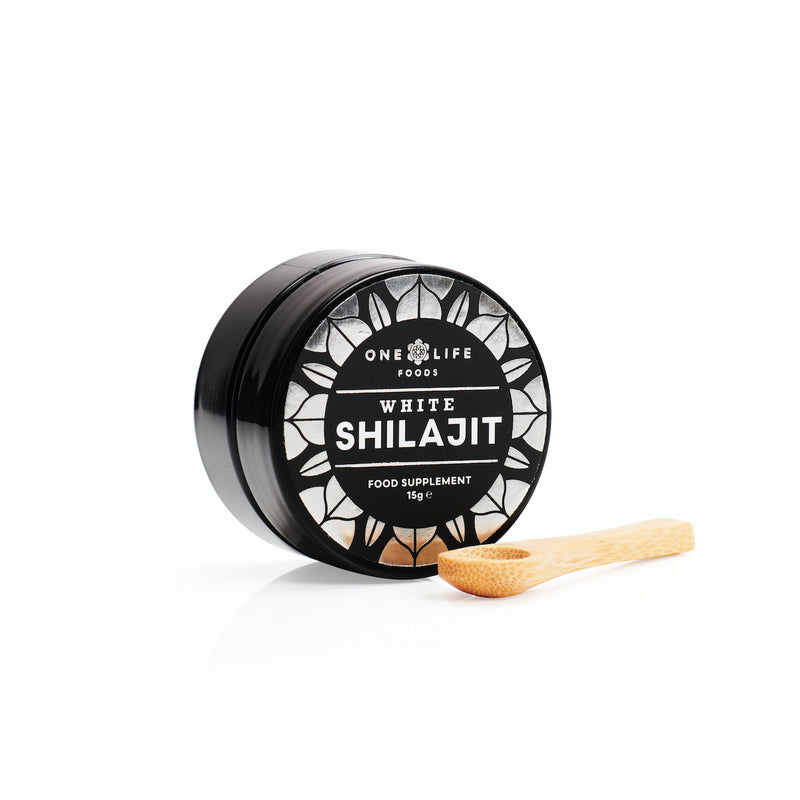
White Shilajit - Altai Mineral Stone 15 g
Pure Altai white shilajit. Nothing diluted. Nothing unnecessary.
Sourced from the Altai Mountains, this is a mineral-derived material traditionally known as white shilajit or more accurately as brakshun.
Not all shilajit is the same.
White shilajit differs significantly from traditional resin in both structure and composition.
White shilajit mineral stone
A rare, mineral-derived material traditionally known as stone oil or brakshun.
Supplied as a natural mineral stone, typically ground into powder prior to use.
This format reflects traditional mineral-based materials from the region.
Ideal for those looking to buy white shilajit in the UK, with fast domestic delivery and full transparency.
What makes it different
Most shilajit products are:
- Resin-based
- Softened or purified exudates
- Standardised around fulvic content
This is different.
White shilajit is:
- Mineral-derived, not resin-based
- Brittle in structure, not sticky or tar-like
- Typically used in powdered form
It sits closer to mineral stone traditions than conventional resin formats.
Composition and structure
Shilajit broadly refers to a complex material formed under specific environmental conditions over time. This material sits outside typical shilajit resin-based classifications.
Traditional resin-based shilajit is often described in terms of:
- Fulvic and humic substances
- Organic decomposition products
White shilajit differs.
Its composition is more closely associated with:
- Mineral content derived from surrounding rock
- Trace elements in naturally occurring forms
- Reduced emphasis on resin-based organic fractions
As with all naturally occurring materials, composition varies depending on source.
Beyond fulvic acid
Shilajit is often reduced to a single metric, typically fulvic acid percentage. This does not apply to mineral-derived materials such as brakshun, where fulvic content is not a defining metric.
With white shilajit, it is not a defining factor.
This material is better understood through its mineral composition and origin rather than isolated values.
Why form matters
Form reflects origin.
Resin:
- Soft, tar-like
- Derived from organic exudates
White shilajit:
- Brittle mineral stone
- Ground into powder before use
This is not a processed extract or standardised material.
It is a raw mineral-derived substance with minimal intervention.
Quality and source
- Sourced from the Altai region
- Selected for mineral integrity and appearance
- No artificial processing or refinement
- No added ingredients
Quality is defined by authenticity, handling, and source conditions, not marketing claims.
Buying white shilajit - what matters
With a product this uncommon, quality varies significantly.
Key considerations include:
- True mineral origin rather than modified resin
- Correct physical form (stone or powder, not resin)
- Source region and environmental conditions
- Transparency of presentation
This product is:
- Mineral stone, typically ground before use
- Sourced from the Altai region
- Supplied from within the UK
Traditional use and context
This material aligns with what is traditionally referred to as stone oil or brakshun in regions such as the Altai and Siberia.
This differs from classical resin-based shilajit and are valued for their mineral composition rather than organic fractions.
They are typically used as part of a broader approach to general wellbeing and lifestyle support.
White shilajit vs resin
If you are comparing this with our Altai shilajit resin:
Resin:
- Soft, sticky, tar-like
- Rich in organic fractions such as fulvic substances
- Traditionally the most recognised format
White shilajit:
- Brittle mineral stone
- Ground into powder before use
- More closely aligned with mineral-based materials
The difference is structural and compositional.
Who it’s for
- Individuals familiar with different forms of shilajit
- Those interested in mineral-based materials
- People looking beyond standard resin products
Not ideal for:
- Those expecting a resin format
- Users focused on fulvic acid content
- Those looking for convenience formats
How to use white shilajit
White shilajit is typically used in small, measured amounts.
- Add 1 level spoon (approx. 0.3 g) to 300 ml of water
- Stir until fully dissolved
- Take once or twice daily
Usage can be adjusted depending on individual preference and routine.
It is generally used in cycles rather than continuously.
- Typical course: up to 4 weeks
- Follow with a break period before resuming
This is not a product that benefits from excess. Consistency and measured use matter more than high intake.
Preparation and storage
- Prepared solution can be stored for up to 48 hours
- Shake before use
Using a straw is recommended to minimise contact with tooth enamel.
FAQ
What is white shilajit?
A mineral-derived form of shilajit associated with stone-based deposits rather than resin exudate.
Is it the same as resin?
No. It differs in structure, composition, and typical use.
Does it contain fulvic acid?
Not in the same way or relevance as resin-based shilajit. It is not defined by fulvic content.
How is it used?
Typically ground into powder and dissolved in liquid.
Is it the same as stone oil or brakshun?
Yes. This material is a form of what is traditionally referred to as stone oil or brakshun, a mineral-derived substance sourced from regions such as the Altai.
Can it be combined with other supplements?
Yes, it is often used alongside other products as part of a broader routine.
How should it be stored?
Store in a cool, dry place away from direct sunlight.
Pure Altai White Mumijo-Shilajit mineral stone. Hand harvested and crafted by indigenous farming families in the Altai mountains of Siberia.
Drink through a straw. Duration - Keep any pre-made solution no more than 2 days and shake before use.
It is recommended you drink white Shilajit concoctions through a straw, so there is limited contact with tooth enamel. Not recommended for persons with individual intolerance of the components, obstructive jaundice, heart diseases, hypertension, thrombosis, breastfeeding, pregnancy. Consult your doctor before use.