


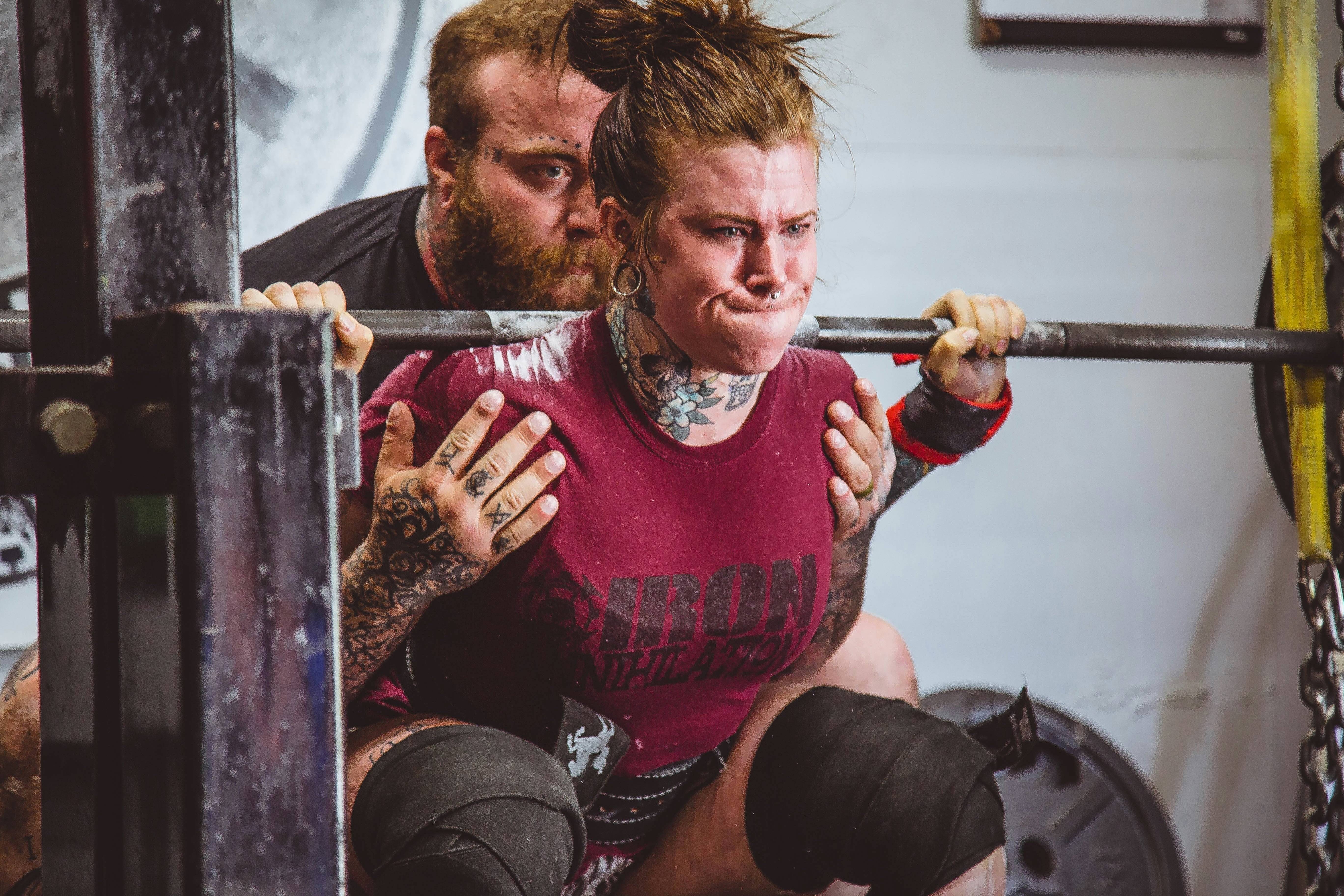
Strength training has a hydration problem
Hydration is usually spoken about like it belongs to runners, cyclists and people wearing tiny race vests with alarming confidence.
Strength athletes often get left out of the conversation.
That is a mistake.
Strength training can create serious hydration demands, especially when sessions are long, hot, high-volume or sweat-heavy.
A slow technical session in a cool gym may not need more than water.
A hard leg session, a bodybuilding-style volume block, a strongman circuit, a conditioning finisher or a hybrid session can be a very different animal.
If the session makes you sweat heavily, hydration matters.
If performance fades across the workout, hydration may be part of the picture.
If your pre-workout is shouting but your body feels flat, more caffeine may not be the answer.
Sometimes the boring basics are the missing piece.
Deeply irritating. Often true.
Why hydration matters for lifting
Strength training is not just muscles contracting.
It involves:
-
Nervous system output
-
Blood volume
-
Temperature regulation
-
Muscle contraction
-
Fluid balance
-
Joint function
-
Energy availability
-
Recovery between sets
-
Focus
-
Repeated effort
Hydration supports several of these systems.
That does not mean an electrolyte drink will add 20 kg to your squat.
If it did, the queue would be longer.
But poor hydration can make hard sessions feel harder, reduce consistency and add friction to performance.
Most serious training progress does not come from one spectacular set.
It comes from repeated good sessions.
Hydration supports the conditions that allow those sessions to happen properly.
Strength training is repeated output
A strength session is rarely one lift.
It is warm-up sets, working sets, back-off sets, accessories, rest periods, possibly conditioning, then the long walk down the stairs after legs while pretending everything is fine.
That repeated output creates demand.
Hydration can influence how well you maintain performance across that whole session.
Poor hydration may show up as:
-
Reduced pump
-
Higher perceived effort
-
Slower recovery between sets
-
Earlier fatigue
-
Less focus
-
Performance fading in later exercises
-
Cramping in some people
-
Feeling unusually flat
None of these signs proves hydration is the only issue.
Sleep, food, programming, stress and caffeine use all matter.
But if these problems appear during longer, sweatier sessions, hydration deserves a look.
Hydration and muscle contraction
Muscle contraction depends on electrical signalling.
Electrolytes help support that signalling.
Sodium and potassium help maintain electrical gradients across cell membranes.
Calcium helps trigger contraction.
Magnesium contributes to normal muscle function and energy metabolism.
Chloride supports fluid balance and electrical neutrality.
We have covered the electrolyte basics in more depth in Electrolytes Explained, so we will not rehash the chemistry here.
The practical point for lifters is simple:
If fluid and electrolyte balance are disrupted during hard training, the body’s working environment becomes less favourable.
That may not show up as an obvious collapse in strength.
It may show up as a session that feels harder, flatter and less consistent.
A less dramatic problem.
Still a problem.
Hydration and nerve signalling
Heavy training is neurological.
Your nervous system has to recruit muscle fibres, coordinate movement and repeat effort across sets.
Electrolytes such as sodium and potassium are involved in nerve impulse generation.
That matters because muscles do not work in isolation.
A lift is a conversation between brain, nerves, muscles, joints, energy systems and, occasionally, ego.
Hydration supports the environment for that conversation.
If sweat loss is high and fluid balance is poor, focus and repeated output may suffer.
Not always dramatically.
Often subtly.
And subtle performance drops still matter when training quality is the goal.
Hydration and the pump
The pump is not just vanity.
Although let’s not pretend it is completely innocent.
A good pump reflects increased blood flow and fluid movement into working muscles. It is influenced by training style, carbohydrate intake, sodium intake, hydration status, nitric oxide pathways and total volume.
Hydration matters because fluid volume matters.
Sodium matters because it helps support extracellular fluid balance.
Citrulline may matter because it supports nitric oxide pathways and blood flow.
This is where hydration-focused intra-workout support can make sense for lifters.
Not because electrolytes are “pump ingredients” in the same narrow way citrulline is often discussed.
Because fluid balance helps create the conditions where training feels better and output is easier to maintain.
A dry, underfuelled, underhydrated body is not exactly primed for a glorious leg session.
Poetic? No.
Useful? Yes.
Hydration and blood volume
Blood volume matters during training.
It helps transport oxygen, nutrients and waste products. It also supports temperature regulation.
During hard sessions, blood flow increases to working muscles and skin.
If fluid loss is high, maintaining blood volume becomes more challenging.
This can increase cardiovascular strain and make training feel harder.
This is especially relevant in:
-
High-rep leg sessions
-
Supersets
-
Conditioning circuits
-
Strongman-style work
-
Loaded carries
-
Hot gyms
-
Long sessions
-
Larger athletes with high sweat rates
Strength training may not look like endurance sport, but a difficult session can still produce heat and sweat.
Ignoring hydration because you are not running is a poor argument.
The body did not receive that memo.
Hydration and recovery between sets
Recovery between sets is not just waiting around while pretending not to look at your phone.
It involves breathing, blood flow, nervous system readiness, energy recovery and heat management.
Fluid balance can influence that environment.
When sweat loss is high, the body may work harder to regulate temperature and maintain circulation.
That can affect how the next set feels.
Hydration support may help lifters who notice:
-
Later sets falling off sharply
-
High perceived effort
-
Poor focus
-
Feeling cooked halfway through
-
Longer rest needed than usual
-
Reduced training quality in the back half of sessions
Of course, if you programmed 30 sets of legs and feel terrible, hydration may not be the villain.
It may be the programme asking for a solicitor.
But for sensible hard training, hydration can be part of maintaining output.
Dehydration and strength performance
Dehydration may not always destroy one maximal lift.
You might still hit a heavy single while not perfectly hydrated.
But strength training is rarely judged by one lift alone.
Most progress is built through volume, repeated quality work and the ability to recover between efforts.
Fluid loss can become more relevant as:
-
Session length increases
-
Sweat loss increases
-
Heat increases
-
Training volume increases
-
Conditioning is added
-
Rest periods shorten
-
Frequency increases
This is why hydration matters most for lifters during demanding sessions.
The issue is not always “Can I lift this once?”
It is often:
Can I keep performing well across the whole session?
That is where hydration becomes useful.
Electrolytes for strength training
Electrolytes are most useful for strength training when sweat loss is meaningful.
That usually means:
-
Longer sessions
-
Hot gyms
-
High-volume work
-
Conditioning
-
Hybrid training
-
Heavy sweaters
-
Sauna use
-
Multiple sessions per day
Sodium and chloride are especially relevant because they are the main electrolytes associated with sweat loss.
Potassium, magnesium and calcium support the wider electrolyte profile.
For the full sweat-loss breakdown, see What Electrolytes Do You Lose in Sweat?
For strength athletes, the main point is not to use electrolytes for every easy session.
It is to recognise when the session has moved beyond what plain water is likely to handle well.
Sodium for lifters
Sodium can be useful for strength athletes when sweat loss is high.
It supports fluid balance, nerve signalling and muscle function.
It may also help with training feel and pump when fluid intake is appropriate.
This is why some lifters deliberately manage sodium and fluids before hard sessions.
Not because salt is a secret pre-workout.
Because sodium helps support the fluid environment around training.
It is especially relevant for:
-
High-volume sessions
-
Hot gyms
-
Conditioning work
-
Heavy sweaters
-
Larger athletes
-
Long training blocks
-
Late-session performance drop-off
The key is context.
Sodium is not automatically needed in high amounts all day.
But during sweat-heavy training, it deserves more respect than many low-sodium hydration products give it.
Pump, citrulline and hydration support
Strength athletes often use citrulline for pump and blood flow support.
Hydration sits beside that.
Citrulline may support nitric oxide production and blood flow.
Sodium and fluid help support blood volume and fluid balance.
Taurine and betaine can sit in the osmolyte and cellular-support layer.
These do not all do the same thing.
That matters.
A strong intra-workout formula should not pretend every ingredient is an electrolyte.
Better to understand the layers:
-
Electrolytes support hydration fundamentals
-
Fluid supports volume
-
Citrulline supports blood-flow pathways
-
Osmolytes support cellular environment
-
Stimulants, if used separately, support drive
That is a more honest performance system.
Also less insulting to anyone who reads labels.
Water vs electrolytes for lifting
Water is enough for many strength sessions.
Use water when:
-
The session is short
-
Sweat loss is low
-
The gym is cool
-
You have eaten and drunk normally
-
Performance feels consistent
Consider electrolytes when:
-
The session is long
-
Sweat loss is heavy
-
You train in heat
-
You do high-volume work
-
You add conditioning
-
You train fasted
-
You see salt marks on clothing
-
You feel flat during sessions
-
You struggle to rehydrate afterwards
The more sweat and session demand, the more relevant electrolytes become.
No need to complicate a simple session.
No need to under-support a hard one.
Hydration and pre-workout stacking
Many strength athletes use pre-workouts.
That can make sense.
A pre-workout may support energy, focus, blood flow and drive.
But a pre-workout is not a hydration strategy.
Pre-workout may drive the session.
Hydration helps maintain it.
That is why a stimulant-free intra-workout can be useful alongside a pre-workout.
You get stimulation before training if you want it, then fluid and electrolyte support during training.
This is especially useful for:
-
Long sessions
-
Hot gyms
-
High-volume work
-
Conditioning
-
Late-session performance drop-off
-
People who do not want to keep increasing caffeine
Sometimes the answer is not more stimulants.
A disappointing truth, but a useful one.
Hydration during a cut
Dieting can change hydration needs.
When food intake drops, mineral intake may drop too.
When carbohydrate intake drops, body water can shift.
When training stays hard while calories are lower, performance margins become tighter.
During a cut, some lifters feel flatter, more fatigued or more prone to performance drop-off.
That is not always hydration-related, but hydration can be part of the picture.
Electrolytes may be useful when:
-
Food volume is lower
-
Carbohydrate intake is reduced
-
Training remains intense
-
Sweat loss is high
-
You feel flat during sessions
-
You are using stimulants
-
Conditioning has increased
A hydration formula will not make dieting easy.
Nothing respectable does.
But it can support training consistency when the margin for error is smaller.
Hydration for conditioning and hybrid training
Conditioning and hybrid training make hydration demands more obvious.
These sessions often include:
-
Sled pushes
-
Rowing
-
Ski erg
-
Assault bike
-
Battle ropes
-
Loaded carries
-
Circuits
-
Kettlebell work
-
Running intervals
-
Mixed modal training
They create sweat, heat and repeated output.
For these sessions, electrolytes during training can be very useful.
A stimulant-free intra-workout is especially sensible because conditioning already places a high demand on the nervous system.
There is a point where adding more caffeine stops being strategy and starts sounding like a cry for help.
Hydration and recovery after lifting
Recovery starts during training, but post-session rehydration still matters.
After sweat-heavy strength training, recovery should consider:
-
Fluid
-
Sodium
-
Food
-
Protein
-
Carbohydrate
-
Sleep
-
Overall training load
Electrolytes can support rehydration when sweat loss is high.
Food remains essential.
Protein supports repair.
Carbohydrate can support glycogen restoration.
Sleep quietly does more than half the products on most shelves.
A hydration formula can help support the process.
It cannot replace the process.
Where RE-UP fits
RE-UP fits strength training when the session demands more than water.
That usually means long, hot, high-volume or sweat-heavy training.
It is designed as a stimulant-free intra-workout, which makes it useful alongside pre-workout or during late sessions.
For lifters, the main appeal is not that RE-UP turns hydration into a performance fantasy.
It is that it gives structured fluid and electrolyte support during sessions where consistency matters.
Pre-workout drives the session.
RE-UP maintains it.
Simple. Useful. No hidden blend theatre.
The One Life Foods view
Strength training is not exempt from hydration.
If you train hard, sweat heavily or demand repeated output, fluid balance matters.
Hydration will not replace progressive overload.
It will not fix poor sleep.
It will not make skipping warm-ups a personality trait worth keeping.
But it can support the basic conditions needed for better training.
For serious lifters, that matters.
Because strength is not built from one dramatic set.
It is built from repeated sessions where the basics are handled properly.
Hydration is one of those basics.
Not exciting.
Very useful.
The bottom line
Hydration matters for strength training because it supports blood volume, muscle function, nerve signalling, pump, recovery between sets and consistency across the session.
Water may be enough for short, low-sweat sessions.
Electrolytes become more useful during longer, hotter, sweatier or higher-volume sessions.
Sodium and chloride are especially important when sweat loss is high.
For lifters, hydration is not just something endurance athletes worry about.
It is part of the performance system.
And if the session is hard enough to make you sweat through your clothes, it is probably worth taking seriously.
Continue learning
Explore more from the One Life Foods hydration hub:
-
Hydration for Performance: Electrolytes, Sweat Loss and Intra-Workout Consistency Explained
-
Electrolytes Before, During and After Training: Timing Your Hydration Properly
-
Why Sodium Helps Hydration: Fluid Balance, Nerve Signals and Performance
-
What Makes a Good Electrolyte Formula? Hydration Dosing, Label Tricks and Formulation Science
-
What Electrolytes Do You Lose in Sweat? Sodium, Chloride, Potassium and Magnesium Explained
Written By
Written by Chris Simon, Founder of One Life Foods.
Chris has worked in the supplement industry since 2009 and is known for seeking out exceptional ingredients, products, and formulations. Read more about Chris and the story behind One Life Foods.

Share:
Electrolytes Before, During and After Training: Timing Your Hydration Properly
Hydration for Endurance Athletes: Sweat Rate, Sodium Loss and Carbohydrate Transport