


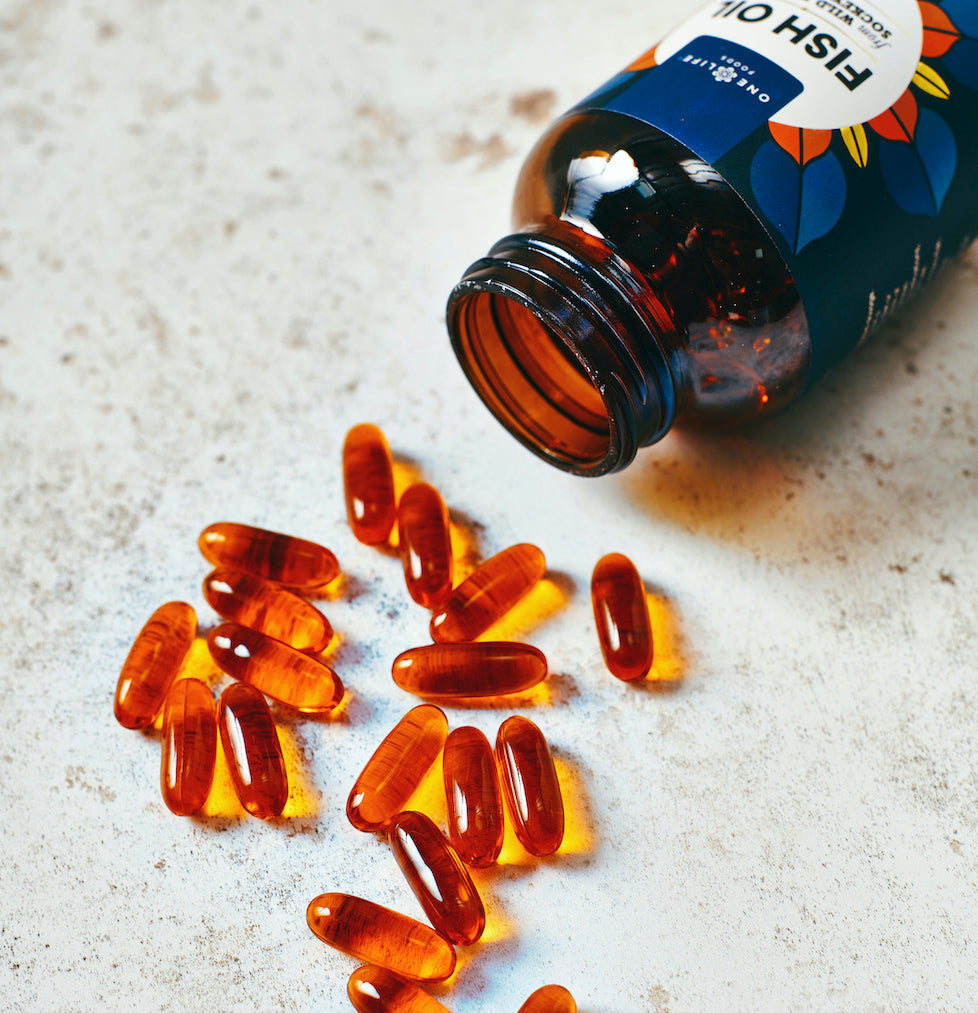
Part 1: Purity, Processing and the Power of Triglycerides
A fish oil supplement might proudly advertise 1,000 mg on the front of the bottle, but that figure tells you surprisingly little about its quality. It doesn't necessarily tell you how much EPA or DHA you're getting, where the oil came from, whether it has begun to oxidise, or even what form the omega-3 fatty acids are in.
Two fish oils can look almost identical on paper yet differ considerably in their composition, processing and absorption characteristics.
With so many products competing on concentration, price and claims of superior purity, understanding what actually determines quality makes choosing a supplement considerably easier.
Why Fish Oil Matters
Fish oil is an important dietary source of two long-chain omega-3 fatty acids: eicosapentaenoic acid (EPA) and docosahexaenoic acid (DHA).
Both have established biological functions, although their roles differ.
Cardiovascular health: EPA and DHA contribute to the normal function of the heart, with a beneficial effect established at a combined daily intake of 250 mg. Higher intakes have also been investigated for reducing elevated blood triglycerides, although these findings shouldn't be confused with evidence that ordinary fish oil supplements prevent cardiovascular disease.
Brain function and vision: DHA is an important structural component of cell membranes, particularly in the brain and retina. It contributes to the maintenance of normal brain function and vision, with beneficial effects associated with a daily intake of 250 mg DHA.
Inflammation and joint health: EPA and DHA are involved in the production of lipid signalling molecules that influence inflammatory processes. Research has investigated their potential in inflammatory and autoimmune conditions, including rheumatoid arthritis (research review). Their effects on exercise-induced inflammation, muscle damage and recovery have also been studied, although findings remain mixed (systematic review).
Mood: Omega-3 fatty acids, particularly EPA-rich formulations, have attracted considerable interest in depression research. Some trials have reported promising results, but differences in study design, dosage and patient populations make the evidence difficult to generalise (research review).
The NHS recommends eating at least two portions of fish per week, including one portion of oily fish. Supplements offer another way of obtaining EPA and DHA, particularly for people who rarely eat oily fish.
The question is how to distinguish a well-produced fish oil from one relying primarily on an impressive-looking label.
1. Processing: What Happens to the Oil Matters
Fish oil presents a challenge during production because EPA and DHA are polyunsaturated fatty acids. Their chemical structures contain multiple double bonds, making them particularly susceptible to oxidation.
Exposure to oxygen, excessive heat and light can accelerate this process, altering the oil's chemical composition and eventually producing the familiar unpleasant smell associated with rancidity.
Poor handling can begin to affect quality long before an oil reaches the capsule.
Extraction and Refining
Fish oils can be extracted and processed using several methods, including mechanical extraction, controlled heating, enzymatic processing and subsequent refining.
The choice of method influences the finished product.
Carefully controlled, low-temperature processing can help preserve the original composition of an oil. Limiting oxygen exposure, using nitrogen during manufacturing and choosing suitable packaging can also reduce oxidation.
However, claims that all heating or chemical processing necessarily destroy omega-3s are misleading.
Some refining methods serve legitimate purposes, including removing environmental contaminants and unwanted compounds. Molecular distillation, for example, is widely used to purify and concentrate marine oils.
Similarly, deodorisation isn't automatically evidence that a manufacturer is attempting to disguise rancidity. It can be a normal refining procedure.
The relevant considerations are how carefully these processes are controlled and whether the finished oil meets appropriate quality standards.
An oil marketed as cold-extracted isn't necessarily superior to a refined product if its oxidation results, contaminant levels or fatty acid composition are poor.
Oxidation Testing
Manufacturers commonly assess fish oil oxidation using several analytical measurements:
-
Peroxide value (PV): Measures primary oxidation products formed during the earlier stages of deterioration.
-
Anisidine value (p-AV): Measures certain secondary oxidation compounds, particularly aldehydes.
-
TOTOX: Combines the two measurements using the formula 2 × PV + p-AV.
The Global Organization for EPA and DHA Omega-3s (GOED) publishes voluntary industry limits, including a maximum peroxide value of 5, anisidine value of 20 and TOTOX value of 26 for oils where these methods are applicable.
A complication arises with strongly coloured oils.
Naturally pigmented salmon oils can interfere with the anisidine method, potentially making conventional TOTOX comparisons misleading. Appropriate testing should account for the characteristics of the oil being analysed.
Purity testing is equally important. Relevant analyses can include dioxins, polychlorinated biphenyls (PCBs) and heavy metals.
Ideally, manufacturers should have appropriate laboratory results demonstrating both the purity and condition of the finished product, rather than relying on vaguely defined claims of pharmaceutical-grade quality.
2. Triglyceride vs Ethyl Ester: Why Molecular Form Affects Absorption
Most fish oil labels concentrate on the quantity of EPA and DHA. Fewer explain how those fatty acids are structured.
Yet molecular form can influence digestion and bioavailability, particularly under different dietary conditions.
Natural Triglycerides (TG)
In fish, omega-3 fatty acids occur predominantly as triglycerides, with fatty acids attached to a glycerol backbone.
During digestion, pancreatic lipase and other digestive processes break down these triglycerides, allowing the constituent fatty acids to be absorbed through the intestine.
Natural triglyceride fish oils retain this original molecular arrangement.
They also tend to contain a broader fatty acid composition than highly concentrated products, although the exact profile depends on the species and processing methods.
Ethyl Esters (EE)
Ethyl esters are produced by chemically modifying fatty acids, replacing their attachment to glycerol with an ethyl group derived from ethanol.
This enables manufacturers to concentrate EPA and DHA, producing oils that can contain considerably higher percentages of omega-3 fatty acids than unmodified fish oil.
Ethyl esters require a different digestive process, which can influence their absorption, particularly when consumed with meals containing very little fat.
What Does the Research Show?
Human studies have demonstrated differences in the bioavailability of omega-3 fatty acids supplied in triglyceride and ethyl ester forms.
One particularly relevant study was conducted by Dyerberg and colleagues in 2010.
In this study, 72 volunteers received approximately 3.3 g of EPA and DHA daily for two weeks. Researchers compared several formulations, including natural triglycerides, ethyl esters and re-esterified triglycerides.
Using natural triglyceride fish oil as the reference, the reported relative bioavailability was:
| Omega-3 form | Relative bioavailability |
|---|---|
| Natural triglycerides | 100% |
| Ethyl esters | 73% |
| Re-esterified triglycerides | 124% |
Under the conditions studied, ethyl esters demonstrated lower relative bioavailability than natural triglyceride fish oil.
Re-esterified triglycerides performed even better, achieving approximately 70% greater relative bioavailability than ethyl esters.
Read the original study: Dyerberg et al. (2010), Bioavailability of Marine n-3 Fatty Acid Formulations.
Other human research has also reported advantages for triglyceride formulations, although the size of the difference varies.
Absorption is influenced by factors including meal composition, formulation and the period over which supplementation is measured. Short-term changes in circulating EPA and DHA aren't necessarily equivalent to differences in long-term clinical outcomes.
Nevertheless, the evidence provides a credible reason to consider molecular form when selecting fish oil.
Natural triglycerides have demonstrated favourable bioavailability compared with ethyl esters in human research, without requiring the chemical conversion used to manufacture concentrated ethyl ester oils.
One Life Foods Wild Alaskan Sockeye Salmon Oil contains omega-3 fatty acids in their naturally occurring triglyceride form. The oil hasn't been converted into ethyl esters to increase its EPA and DHA concentration.
This was a deliberate formulation choice, reflecting our preference for retaining the original molecular structure of the salmon oil.
Part 3 of this series examines omega-3 molecular forms and the bioavailability research in greater detail.
3. Naturally Occurring Nutrients: More Than EPA and DHA
Some fish oils contain additional naturally occurring compounds alongside their omega-3 fatty acids.
Wild sockeye salmon oil is particularly interesting because its composition can include vitamin A, vitamin D and astaxanthin.
Vitamin D
Vitamin D contributes to normal immune function, muscle function and the maintenance of normal bones.
Wild salmon oil can provide naturally occurring vitamin D, although the quantity varies according to the source and processing.
Vitamin A
Vitamin A contributes to normal vision, immune function and the maintenance of normal skin and mucous membranes.
Its presence in fish oil can be useful nutritionally, although total vitamin A intake deserves consideration, especially when combining supplements.
Excessive intake of preformed vitamin A can be harmful, particularly during pregnancy. Some fish liver oils can contain substantial quantities, so the actual amount on the label should always be checked.
Astaxanthin
Astaxanthin is a carotenoid pigment responsible for much of the distinctive red colour of wild salmon.
It has antioxidant properties and is naturally associated with the salmon's diet.
Its presence contributes to the characteristic composition of certain salmon oils, although laboratory antioxidant activity shouldn't automatically be interpreted as evidence of additional health benefits in humans.
Why Retaining Natural Composition Appeals to Us
Concentrating fish oil to achieve very high EPA and DHA percentages can change its original fatty acid composition and remove other naturally occurring compounds.
That isn't inherently a problem, particularly when the objective is to provide a specific high dose of EPA or DHA.
However, there are reasons to value an oil that retains more of its original composition.
Our preference has been to use naturally occurring sockeye salmon oil rather than reconstructing or heavily concentrating its omega-3 content.
This allows us to provide EPA and DHA alongside the other compounds naturally present in the oil, without suggesting that every one of those compounds has a proven additional clinical benefit.
4. Fish Sources: Species, Diet and Origin
Fish oil is produced from numerous species, including anchovies, sardines, mackerel, tuna and salmon.
Their fatty acid profiles differ, and even within the same species, composition can vary according to diet, season and environmental conditions.
Small oily fish such as sardines and anchovies are widely used because they provide EPA and DHA and can be processed into concentrated oils.
Larger predatory fish can accumulate more mercury in their tissues. However, contaminant concentrations in the finished oil depend on processing and purification, so the reputation of a particular species shouldn't replace appropriate laboratory testing.
The distinction between farmed and wild salmon also requires some care.
Farmed salmon fatty acid composition is heavily influenced by feed. Depending on the diet used, farmed fish can contain substantial quantities of omega-3 fatty acids, although their omega-6 content and wider lipid profile may differ from wild salmon.
Wild salmon obtain their nutrients through their natural marine diet, including the carotenoids responsible for their pigmentation.
Neither wild origin nor farmed origin guarantees superior purity. Both require appropriate handling, testing and responsible management.
Why We Use Wild Alaskan Sockeye Salmon
Our salmon oil is derived from wild-caught Alaskan sockeye salmon, sourced through MSC-certified fisheries.
Sockeye salmon provides a distinct natural fatty acid composition, along with naturally occurring astaxanthin and fat-soluble vitamins.
We also value traceability. Knowing which species an oil comes from, where it was harvested and how it was processed makes it easier to assess the integrity of the supply chain.
The Marine Stewardship Council (MSC) provides independent certification against fisheries sustainability standards. Certification is relevant to environmental sourcing, although it doesn't establish the nutritional quality or purity of an individual fish oil product.
The environmental implications of fishing methods, species selection and manufacturing are substantial enough to warrant their own discussion.
Our next article examines these questions in Part 2: The Truth About Fish Oil Sourcing and Sustainability.
5. EPA vs DHA: Which Should You Look For?
Although EPA and DHA are often grouped together, their biological functions aren't identical.
EPA is involved in cellular signalling and the production of lipid mediators associated with inflammatory processes. It has attracted particular interest in research involving blood triglycerides, inflammatory conditions and certain aspects of mental health.
DHA is an important structural component of cell membranes and is particularly concentrated in the brain and retina. Its role in normal brain function and vision is well established.
Different research applications may involve different EPA-to-DHA ratios, but there isn't a single ideal ratio that applies to everyone.
For general nutritional supplementation, checking the combined EPA and DHA intake is a reasonable starting point. Where supplementation is being considered for a particular medical condition, the appropriate formulation and dose may be very different from those used in ordinary food supplements.
A higher EPA or DHA concentration is useful only when considered alongside the intended intake, the product's quality and the evidence supporting its use.
What to Look for in a High-Quality Fish Oil
When comparing products, the following details are worth investigating:
| Factor | What to look for |
|---|---|
| EPA and DHA content | Clearly stated quantities per recommended serving |
| Molecular form | Identification of triglyceride, re-esterified triglyceride or ethyl ester form |
| Processing | Transparent extraction and refining methods, with appropriate oxidation controls |
| Purity | Relevant contaminant testing, ideally supported by batch-specific results |
| Freshness | Suitable oxidation testing for the type of oil |
| Sourcing | Identifiable fish species and geographical origin |
| Sustainability | Traceable supply chains and independently supported certification |
| Additional nutrients | Verified quantities rather than vague claims of natural richness |
An expensive oil isn't automatically a good one, and a cheaper concentrated product isn't necessarily poor quality.
The most useful information is often found in the technical specifications rather than the promotional description.
One Life Foods Wild Alaskan Sockeye Salmon Oil
Our Wild Alaskan Sockeye Salmon Oil uses naturally occurring triglyceride-form oil from wild-caught Alaskan sockeye salmon.
We chose this source because of its traceability, naturally occurring fatty acid structure and wider lipid composition.
The product provides the following quantities:
|
Nutrient |
Per softgel |
Per serving (3 softgels) |
|---|---|---|
|
Total omega-3 fatty acids |
210 mg |
630 mg |
|
EPA |
85 mg |
255 mg |
|
DHA |
72 mg |
216 mg |
|
Combined EPA + DHA |
157 mg |
471 mg |
|
Vitamin D |
4.88 µg |
14.64 µg |
|
Vitamin A |
63 µg |
189 µg (630 IU) |
|
Astaxanthin |
17.7 µg |
53.1 µg |
The oil is sourced from MSC-certified wild Alaskan sockeye fisheries and retains its naturally occurring triglyceride structure.
We haven't pursued the highest possible EPA and DHA concentration at the expense of retaining the oil's original fatty acid arrangement.
Concentrated fish oils have their place, especially where a specific omega-3 intake is required. Our formulation takes a different approach, favouring a defined wild salmon source, natural triglycerides and the associated lipid composition.
Choosing Fish Oil on More Than Marketing Claims
The EPA and DHA figures on a supplement label are useful, but they only describe part of the product.
Processing methods, oxidation, purity, molecular structure and sourcing can all influence the quality of the finished oil.
Natural triglyceride fish oils have demonstrated favourable absorption characteristics in human research, while careful processing and appropriate testing help establish whether an oil has been produced to a suitable standard.
A good fish oil should offer more than a high number on the front of the bottle. Its specifications should provide enough information to understand what you're actually buying.
Next in the series: Part 2: The Truth About Fish Oil Sourcing and Sustainability.
We'll examine the origins of commercial fish oils, what sustainability certifications actually mean and why a brand's geographical identity doesn't always tell you where its fish were caught.


Share:
Unlocking Nature’s Potential: Adaptogens, Tonics, Bio-Enhancers, and the Power of Synergy
The Ultimate Guide to Choosing a High-Quality Fish Oil: Part 2 – Sourcing and Sustainability