


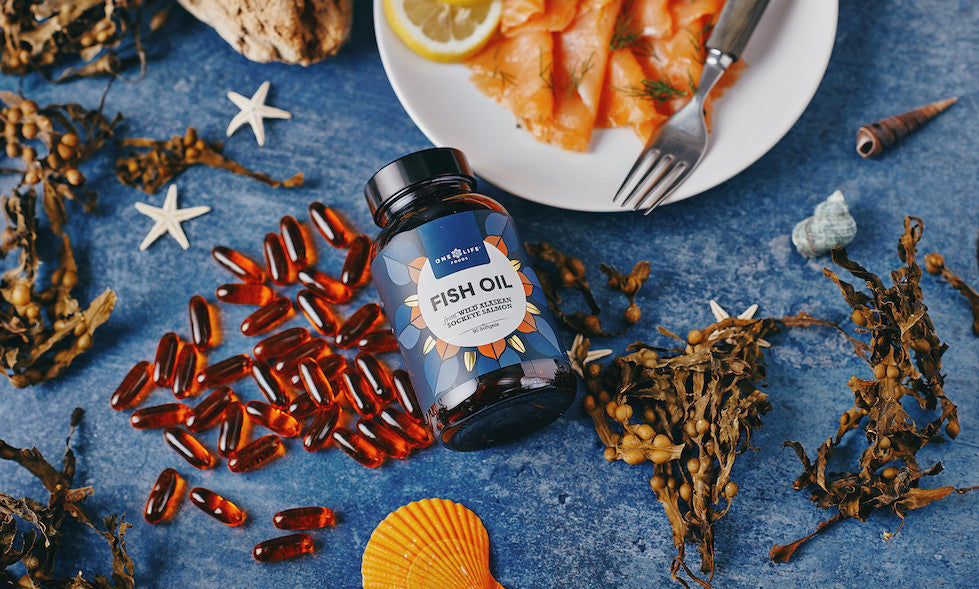
Where fish oil really comes from, what sustainability certifications tell us, and why the origin of the fish deserves more attention than the address on the bottle.
A fish oil brand might be based in Norway, manufacture its capsules in Germany and source its raw oil from anchovies caught thousands of miles away in the South Pacific.
There's nothing inherently wrong with that arrangement. International supply chains are common throughout the supplement industry, and some produce excellent products.
The problem arises when branding creates an impression about the origin of an ingredient that the company doesn't adequately explain.
Fish oil sourcing involves more than identifying the country where a supplement was manufactured. The species used, the fishery it came from, how that fishery is managed and what happens to the rest of the fish all contribute to the environmental considerations behind a product.
Does Nordic Fish Oil Actually Come From Nordic Waters?
Scandinavian countries have an established reputation for seafood production, marine research and fish oil processing. It's hardly surprising that Nordic imagery features so prominently in supplement marketing.
Norwegian flags, Arctic landscapes and references to pristine northern waters make an attractive combination. They don't necessarily tell you where the fish were caught.
A fish oil can be processed or encapsulated in Scandinavia using raw material sourced elsewhere.
Peru, for example, is one of the world's largest producers and exporters of fish oil, much of it derived from the Peruvian anchoveta (Engraulis ringens).
According to the Food and Agriculture Organization (FAO), Peruvian anchoveta is one of the most significant species used in global fishmeal and fish oil production.
Peruvian origin isn't itself a quality concern. Anchoveta can provide a valuable source of EPA and DHA, and fisheries in the region operate under management measures intended to control harvesting.
There are nevertheless legitimate environmental questions surrounding fishing pressure, ecosystem dependence and the effects of changing ocean conditions, particularly El Niño events.
The important consideration is the actual fishery and its management, rather than whether the oil comes from Peru, Norway or somewhere else entirely.
When examining a supplement's origins, four details are particularly useful:
-
Species: Which fish are used to produce the oil?
-
Country of catch: Where were those fish harvested?
-
Processing location: Where was the oil extracted, refined or concentrated?
-
Manufacturing location: Where were the finished capsules produced?
These can be four different answers.
A company willing to identify each stage provides considerably more useful information than one relying on an attractive geographical identity.
Wild-Caught vs Farmed Salmon Oil
Wild-caught salmon and farmed salmon are often presented as though one is automatically superior in every respect.
Farmed Salmon and the Influence of Feed
Farmed salmon are raised on formulated diets containing varying proportions of marine and terrestrial ingredients.
Fishmeal and fish oil have traditionally been important components, but increasing demand and limited marine resources have encouraged the use of alternative ingredients, including vegetable oils and plant proteins.
These changes can influence the fatty acid composition of the salmon.
Research has shown that replacing marine oils with vegetable oils can reduce EPA and DHA proportions while increasing omega-6 fatty acids in farmed salmon tissues.
Research: Changes to the feed fatty acid composition of farmed salmon and its effects through the food chain.
However, farmed salmon shouldn't automatically be described as lower in omega-3s. Total fat content, dietary formulation and the particular product being compared all affect the results. Some farmed salmon contain substantial amounts of EPA and DHA.
Farmed fish can also contain carotenoids such as astaxanthin, although these are generally supplied through formulated feed rather than acquired from the natural marine diet.
Environmental considerations include feed sourcing, waste accumulation, disease management, parasite transmission and the potential effects of escaped fish on wild populations.
The severity of these issues varies between production systems and locations. Responsible aquaculture standards, including those developed by the Aquaculture Stewardship Council (ASC), aim to address many of these concerns.
Wild-Caught Salmon
Wild salmon obtain their nutrients through their natural diet and marine food web.
Sockeye salmon are particularly recognised for their red pigmentation, derived largely from dietary carotenoids, including astaxanthin.
Their fatty acid composition reflects their species, diet and environment rather than a commercially formulated feed.
Wild capture also avoids some of the issues associated with aquaculture, such as fish escapes and waste accumulation beneath farming facilities.
However, wild fishing has its own environmental responsibilities.
Fishing pressure, incidental catches, habitat disturbance and the availability of sufficient spawning populations all need to be considered. Wild origin alone doesn't establish that a fishery is sustainable.
At One Life Foods, we've chosen wild Alaskan sockeye salmon because we value its identifiable origin, naturally occurring composition and the management systems associated with its fishery.
Why Alaska's Salmon Fisheries Are Worth Examining
Alaska has an extensive system for managing commercial salmon harvesting, including stock monitoring, fishing restrictions and escapement targets.
Escapement refers to the salmon that survive fishing activities and return to their spawning grounds.
Maintaining adequate spawning populations is fundamental to the long-term management of salmon fisheries. Alaska's fisheries authorities use biological information and ongoing monitoring to establish management objectives, with fishing opportunities adjusted according to stock conditions.
The Alaska Department of Fish and Game publishes information on salmon stocks and conservation concerns.
These management systems don't eliminate every environmental risk. Salmon populations are affected by changing ocean conditions, climate, habitat quality and natural fluctuations in abundance.
They do, however, provide a framework for monitoring and managing harvesting rather than treating the ocean as an unlimited supply of raw material.
The Alaska salmon fishery has also maintained Marine Stewardship Council certification since 2000, with its current certificate covering eligible fisheries and species, including sockeye salmon.
View the Alaska salmon fishery's MSC certification record.
Our Wild Alaskan Sockeye Salmon Oil is sourced from MSC-certified fisheries within this established management system.
MSC Certification: What Does It Actually Guarantee?
The Marine Stewardship Council (MSC) operates an internationally recognised certification programme for wild-capture fisheries.
Independent certification bodies assess fisheries against three principal areas.
1. Sustainability of Fish Stocks
Fishing activity must be managed at levels intended to maintain productive fish populations over time.
This involves assessing stock condition and whether harvesting is consistent with long-term sustainability.
2. Environmental Impact
The assessment considers the effects of fishing on the wider marine ecosystem, including non-target species and habitats.
A fishery needs to demonstrate that its operations are managed to limit unacceptable environmental impacts.
3. Effective Fisheries Management
Fisheries require appropriate management systems, compliance with relevant regulations and the ability to respond when circumstances change.
Certification also involves ongoing surveillance and periodic reassessment.
The MSC Fisheries Standard explains these requirements in greater detail.
Does MSC Certification Cover the Finished Fish Oil?
A certified fishery and a certified finished product aren't necessarily the same thing.
The MSC also operates a Chain of Custody programme, designed to ensure certified seafood remains identifiable and traceable as it passes through processors, manufacturers and distributors.
Products carrying the MSC ecolabel must comply with the relevant supply-chain certification and licensing requirements.
Read about the MSC Chain of Custody Standard.
MSC certification is primarily concerned with the environmental sustainability of fishing. It doesn't establish the EPA and DHA concentration, oxidation levels or contaminant profile of a particular fish oil.
Those are separate quality considerations requiring appropriate analytical testing.
Using More of the Fish: The Value of Salmon Head Oil
Our supplier extracts oil from salmon heads, making use of material generated through fish processing.
When salmon are processed for food, substantial portions of the fish remain after the main edible cuts have been removed. These can include heads, frames, skin, trimmings and internal organs.
Such material can be used for a range of purposes, including producing fishmeal, fish oil and other marine ingredients.
Using these resources can improve the overall utilisation of fish that have already been harvested.
For a fishery operating within sustainable catch limits, recovering valuable oil from processing by-products is a sensible approach to resource efficiency.
It doesn't mean the resulting oil has no environmental footprint. Collection, extraction, transportation and manufacturing all require resources, and processing by-products may have other productive uses.
Nevertheless, obtaining additional nutritional value from an existing catch is preferable to leaving usable resources unnecessarily wasted.
This approach is increasingly important within the wider marine ingredients industry.
According to IFFO, The Marine Ingredients Organisation, more than half of global fish oil production in 2024 came from fish-processing by-products.
Our supplier's use of sockeye salmon heads fits within this broader move towards improved utilisation of marine resources.
Overfishing, Bycatch and the Wider Environmental Impact
The environmental sustainability of fish oil cannot be assessed simply by examining its nutritional composition.
Several considerations deserve attention.
Fishing Pressure
Harvesting fish faster than populations can replenish themselves can undermine the long-term viability of a fishery.
This is particularly relevant for species that play an important role in marine food webs.
Small pelagic fish, including anchovies and sardines, provide food for larger fish, seabirds and marine mammals. Their abundance can also fluctuate considerably in response to environmental conditions.
Effective fisheries management needs to consider both commercial harvesting and wider ecosystem requirements.
Bycatch
Bycatch occurs when fishing activities capture species other than those primarily being targeted.
The scale and consequences vary according to fishing method, location and the species involved.
Measures such as gear restrictions, monitoring programmes and changes to fishing practices can help reduce unwanted catches.
Marine Pollution
Environmental contaminants can enter marine food webs through industrial pollution and other sources.
The presence and concentration of contaminants vary according to factors including species, feeding behaviour, location and processing.
Wild-caught fish aren't automatically free from contamination, just as farmed fish aren't automatically contaminated.
Appropriate testing of the finished oil is required to assess product purity.
Resource Efficiency
Some fish oils are produced from whole fish harvested specifically for reduction into fishmeal and oil. Others are obtained from material remaining after fish have been processed for human consumption.
Neither production route can be judged in isolation from the sustainability of the original fishery.
By-product utilisation does, however, offer an opportunity to recover additional value from an existing resource.
What Responsible Fish Oil Sourcing Should Look Like
There isn't a single geographical origin or species that guarantees sustainability.
A useful assessment considers the following:
| Consideration | What to investigate |
|---|---|
| Fish species | Whether the manufacturer identifies the species used |
| Country of catch | Where the fish were harvested, rather than just where the brand operates |
| Fisheries management | Stock monitoring, catch controls and environmental safeguards |
| Certification | Relevant independent fisheries or aquaculture certification |
| Traceability | Documentation connecting the raw material to its origin |
| Resource utilisation | Whether whole fish, processing by-products or both are used |
| Environmental impact | Fishing methods, bycatch, ecosystem effects and relevant management measures |
Quality testing deserves its own attention. Third-party purity and oxidation testing can help establish the condition of the finished supplement, but it shouldn't be confused with certification of sustainable fishing practices.
Why We Chose Wild Alaskan Sockeye Salmon Oil
Our decision to use wild Alaskan sockeye salmon reflects several characteristics of the source.
The species is clearly identified, the fish are harvested through a managed wild fishery, and the supply chain uses oil recovered from salmon heads.
We also value the naturally occurring triglyceride structure and wider lipid composition of the oil, which we examined in Part 1: Purity, Processing and the Power of Triglycerides.
These characteristics provide a clear basis for our formulation choices.
They don't mean every other fish oil is poorly sourced or that sustainability concerns disappear simply because a product originates in Alaska.
There are well-managed fisheries elsewhere in the world and responsibly produced oils from other species.
What matters is whether the claims made about a product can be supported by meaningful information about its origin, production and supply chain.
Our Wild Alaskan Sockeye Salmon Oil reflects the sourcing and formulation priorities we've chosen for One Life Foods.
Choosing a Fish Oil With Traceable Origins
A fish oil's geographical branding can be appealing, but it provides little assurance without information about the fishery behind it.
Species identification, harvesting location, independent certification and supply-chain traceability offer more useful ways of assessing sourcing practices.
Sustainability also involves managing the original fishery responsibly and making sensible use of the resources it provides.
Consumers should be able to establish where their fish oil comes from without having to reconstruct an international supply chain from the marketing on the bottle.
Next in the series: Part 3: Why Form Matters More Than Dose in Fish Oil Supplements.
We examine the research comparing triglyceride and ethyl ester forms, the factors influencing omega-3 bioavailability and how to interpret absorption studies when choosing a fish oil supplement.


Share:
The Ultimate Guide to Choosing a High-Quality Fish Oil: What You Need to Know
The Ultimate Guide to Choosing a High-Quality Fish Oil: Part 3, Why Form Matters Alongside Dose