


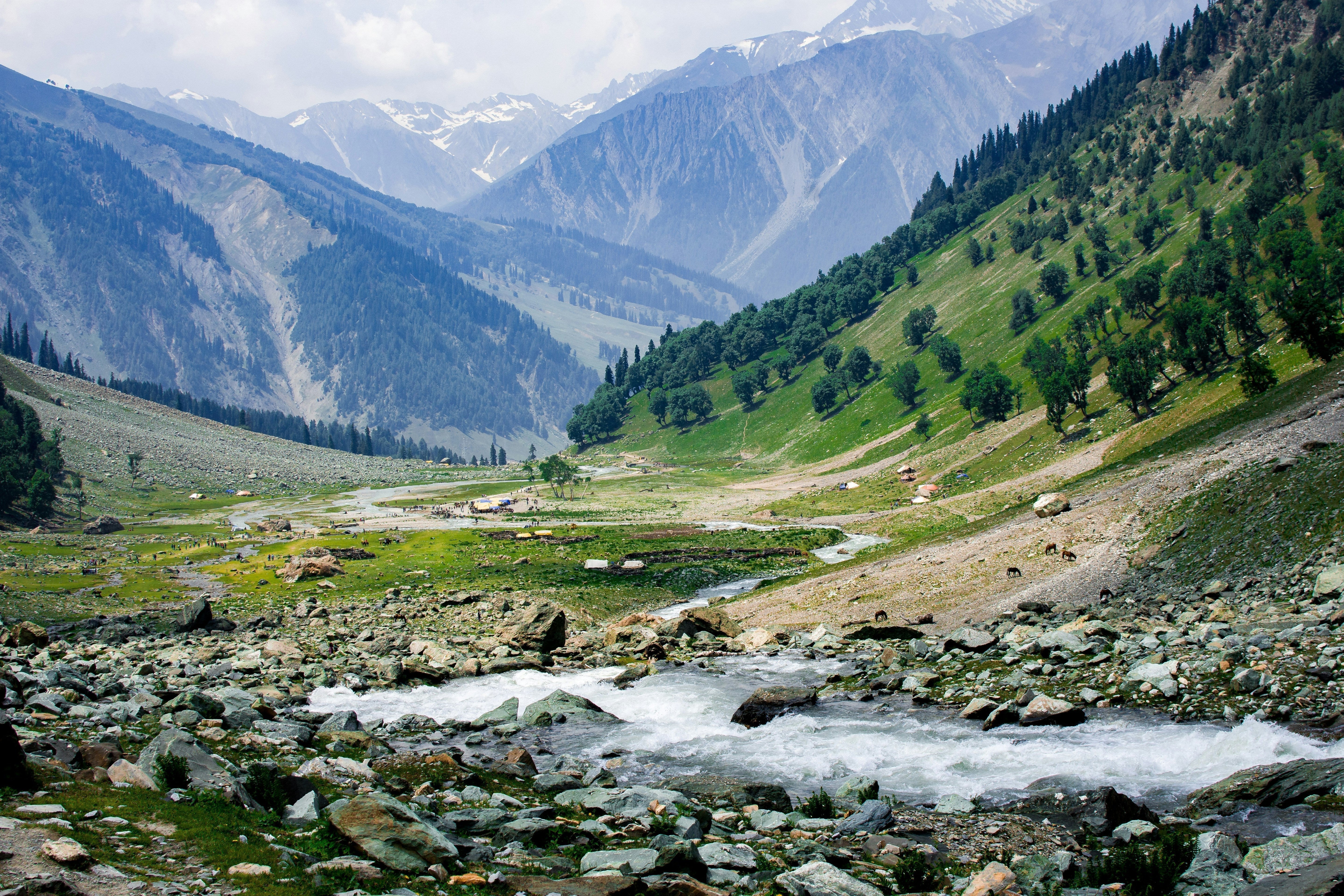
Kashmir has always carried more than one identity.
It is valley and mountain. Poetry and conflict. Snow and saffron. Green meadows beneath hard ridges. A place that can look impossibly beautiful one moment and brutally severe the next.
That dual character makes it a fitting origin for Shilajit. For readers new to the substance itself, our guide to what Shilajit is explains its composition, origin and traditional use in more detail. Here, though, the focus is Kashmir: its geology, its cultural setting and the old insistence that raw mountain resin had to be properly prepared.
Kashmiri Shilajit sits within one of the richest traditional contexts of all the origins. Here, the story is not only about geology or mountain collection. It is also about Ayurveda, purification, old medical texts, regional belief and the careful transformation of a raw mountain substance into something considered fit for use.
This is where the romance of Shilajit meets one of its most important practical lessons: the raw material was never the whole story.
The Pir Panjal and the Geology of Kashmir
Kashmiri Shilajit is often associated with the wider Kashmir Himalaya and the Pir Panjal range. This is a geologically layered region, shaped by volcanic, sedimentary and metamorphic history. That Himalayan association matters, but it should not be treated as a magic quality stamp. We have written more on this in our article asking whether Himalayan Shilajit is really the best, because origin can be meaningful without becoming marketing theatre.
Geological sources describe Kashmir bedrock units including the Panjal Volcanic series, also known as Panjal Trap, agglomeratic slate, gneiss or gneissose granite, Triassic limestone, shale, slate and dolomite.
That gives Kashmir a very different visual character from the sharp, icy drama of Hunza. The Kashmiri landscape can feel more layered. Dark volcanic rocks. Slate. Limestone. Dolomite. Sedimentary sequences. Fertile valleys set against mountain walls.
In other words, Kashmir is not just “pretty Himalaya”. It is old stone, pressure, uplift and weather, softened at the surface by valleys, forests and human culture.
What the Stones Tell Us
If Hunza feels austere and vertical, Kashmir feels deep and stratified.
The stones themselves help paint the scene. Slate suggests compression and layering. Limestone and dolomite point toward ancient marine environments transformed by time and tectonics. Volcanic formations add a darker, more dramatic geological note.
This matters for storytelling, but we should not overstate it. It would be irresponsible to claim that one visible rock type directly causes one exact benefit in the finished resin.
The honest point is more interesting anyway:
Shilajit comes from mountain environments where geology, organic matter, moisture, heat, pressure and time interact. Kashmir gives that story a particularly rich backdrop because its landscape is both geologically complex and culturally saturated.
Shilajit, Shilajatu and Ayurveda
Kashmir is the article where we can most naturally discuss the Ayurvedic tradition.
In Sanskrit and Ayurvedic literature, Shilajit is often referred to as Shilajatu or Silajatu. It is traditionally classed as a rasayana, a category associated with rejuvenation, vitality and restoration. Reviews of traditional Indian medicine describe Shilajit as an important rasayana substance, with classical sources discussing its origin, types, purification, properties and uses.
This is where things get colourful.
Classical and traditional references often treat Shilajit as a powerful restorative, sometimes in language that comes very close to panacea territory. It has been associated historically with strength, ageing, urinary complaints, vitality, metabolic disorders and general resilience. Some modern reviews note that traditional claims around Shilajit were extremely broad.
We should be clear. One Life Foods is not endorsing those traditional claims as modern medical claims.
But historically, this reputation explains why Shilajit became so important. It was not seen as a minor tonic. It was one of the heavyweights.
The Importance of Shodhana
The most important traditional concept for Kashmiri Shilajit is purification.
In Ayurveda, Shodhana refers to purification or detoxification processes used to prepare certain substances before use. For Shilajit, traditional purification may involve dissolving the raw material, filtering it, processing it with water or herbal decoctions, and drying it. Sources describe purification using Triphala decoction, cow’s milk, Bhringaraj juice and other media, with drying methods sometimes described as Suryatapi, sun-dried, or Agnitapi, heat-processed.
This matters because it challenges one of the laziest ideas in modern wellness marketing:
“Raw” equals better.
Not always. Sometimes raw means unfinished. Sometimes raw means unfiltered. Sometimes raw means contaminated. Traditional systems knew this long before modern brands started putting the word “raw” on everything in sight.
Shilajit was not simply scraped from a rock and revered. It was processed, purified and prepared.
That is also why the question is Shilajit safe cannot be answered with a romantic origin story alone. Safety depends on sourcing, processing, testing, dosage and whether the finished material is actually suitable for use.
What Was Kashmiri Shilajit Believed to Do?
In the Ayurvedic and Himalayan context, Shilajit was traditionally believed to support:
- Rejuvenation
- Strength and vitality
- Restoration after weakness
- Healthy ageing
- Urinary and metabolic balance in traditional frameworks
- General resilience
- The action of other herbs when used in combination
Some traditional sources describe Shilajit almost as a cure-all. That is historically interesting, but modern supplement brands should not repeat those claims as fact.
The better way to say it is:
Kashmiri Shilajit belongs to a tradition that treated purified mountain resin as a potent restorative substance. We can respect that history without pretending every ancient claim passes modern scientific scrutiny.
Myths, Memory and Mountain Medicine
Kashmir also gives us a broader cultural atmosphere. It has long been imagined as a place of beauty, sacred geography and natural abundance. In a landscape where herbs, minerals, water and mountains all carry symbolic weight, it is not surprising that a dark resin emerging from stone would be treated as significant.
The mythology here is less about one single fable and more about a worldview. The mountain is not inert. The land has potency. Materials that emerge from rock are not ordinary.
That is a very different way of seeing nature from the modern product spreadsheet. It is also why we need both perspectives.
The traditional worldview gives the resin meaning. Modern testing gives it accountability.
That is why understanding how Shilajit testing works matters. Origin stories are valuable, but they should sit alongside checks for identity, purity, contaminants and the details most brands prefer to keep conveniently misty.
Kashmiri Shilajit Today
Kashmiri Shilajit should not be positioned as “the best” just because it sounds ancient or Himalayan. That would be too easy, and frankly, rather dull.
Its real strength is cultural and traditional depth.
It is the origin most naturally tied to Ayurveda, Shodhana and the classical understanding of purified mountain resin. It allows us to discuss tradition without drifting into fantasy, and science without stripping the story of its soul.
A responsible Kashmiri Shilajit article should leave the reader with one clear idea:
The old traditions did not just value Shilajit. They insisted it had to be prepared properly.
That is still the right lesson.
For a wider comparison of the major origins, our guide to which Shilajit is best looks at Altai, Mongolian, Kashmiri and Hunza Shilajit side by side. The useful answer is rarely “this one wins”. It is usually: what is the origin, how is it processed, and what does the testing show?
Share:
Electrolyte Forms Explained: Mineral Salts, Bioavailability and Why Compound Weight Can Mislead