


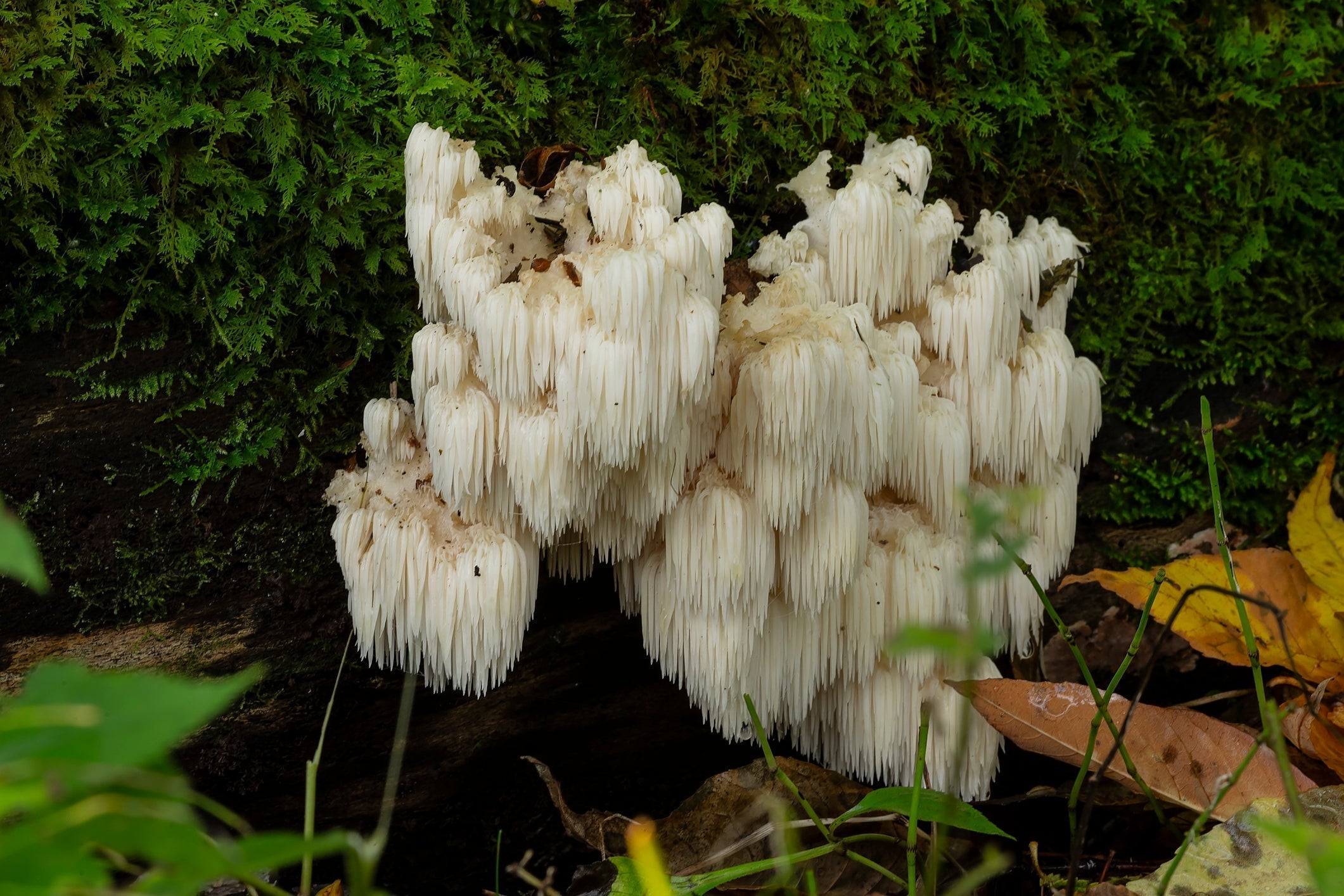
What is Lion’s Mane?
Lion’s Mane Mushrooms gained their name from their white shaggy appearance which resembles that of a lion’s mane. They are also known as hou tou gu or yamabushitake and have been used in Asian countries for many years. They can be taken in a variety of ways such as raw, cooked, dried or steeped as tea. Lion’s Mane contains bioactive properties which can be used to treat a variety of conditions. In our latest blog, we discuss the health benefits of Lion’s Mane which is favourable to the body, in particular the brain, heart and gut.
-
Powerful brain tonic
Lion’s Mane not only improves your memory but cognitive function too. Lion’s Mane has been used for many years to regenerate brain cells. It has two powerful compounds hericenones and erinacines. Hericenones aid the brains production of Nerve Growth Factor (NGF). This not only prevents but also treats nerve damage to the brain. This can help with the treatment of conditions such as Alzheimer’s, Parkinson’s Disease and dementia. Erinacines help to improve the production of neurons. This has a positive impact on many factors such as memory, mood and knowledge recollection.
-
Boosts your immune system
At this time of year, in particular, we’re all looking at ways to bolster our immune system and stave off winter bugs. Regular consumption of Lion’s Mane can help to boost the immune system by escalating the function of the intestinal immune system. This helps to safeguard the body from pathogens that enter the gut either through the nose or mouth.
-
Aids the management of Diabetes
Diabetes occurs when the body is unable to control blood sugar levels resulting in levels becoming elevated. This can lead to many health complications such as kidney disease and even loss of vision. Lion’s Mane can be helpful for diabetes sufferers as it can improve blood sugar regulation and minimise some of the side effects of diabetes.
-
Reduce symptoms of anxiety and depression
It’s believed that chronic inflammation can contribute to the symptoms of anxiety and depression. Lion’s Mane’s anti-inflammatory properties can help to reduce these symptoms. Lion’s Mane has also been linked to regenerating brain cells and improving the hippocampus. The hippocampus is the area of the brain which looks after the management of emotional responses and memories. Making improvements to the hippocampus is believed to aid the treatment of anxiety and depression.
-
Decrease the risk of heart disease
Lion’s Mane has a positive effect on some of the key causes of heart disease. Studies have found that regular consumption of Lion’s Mane has a positive impact on triglyceride levels (a type of fat found in the blood) as well as fat metabolism. Further studies have also found that Lion’s Mane has a positive impact on the oxidation of cholesterol in the blood. This is beneficial for heart health because oxidized cholesterol can attach itself to the walls of the arteries. This increases the risk of strokes and heart attacks.
-
Moderate oxidative stress and inflammation
Extreme inflammation and oxidative stress are linked to many serious health conditions such as auto-immune diseases, heart disease and even cancer. We’ve already discussed that Lion’s Mane has anti-inflammatory properties but in addition to this, it has antioxidant properties. Why does this matter? Reducing oxidative stress and inflammation can lead to positive outcomes when treating illnesses such as liver disease, obesity and strokes.
The benefits of regular consumption of Lion’s Mane are far-reaching there are studies that have even linked it to improving the nervous system following injuries and helping to fight cancer. For any questions, please do not hesitate to contact us: info@onelifefoods.co.uk



Share:
Shilajit for women
Supporting Your Immune System During Winter: The Science Behind Staying Well